
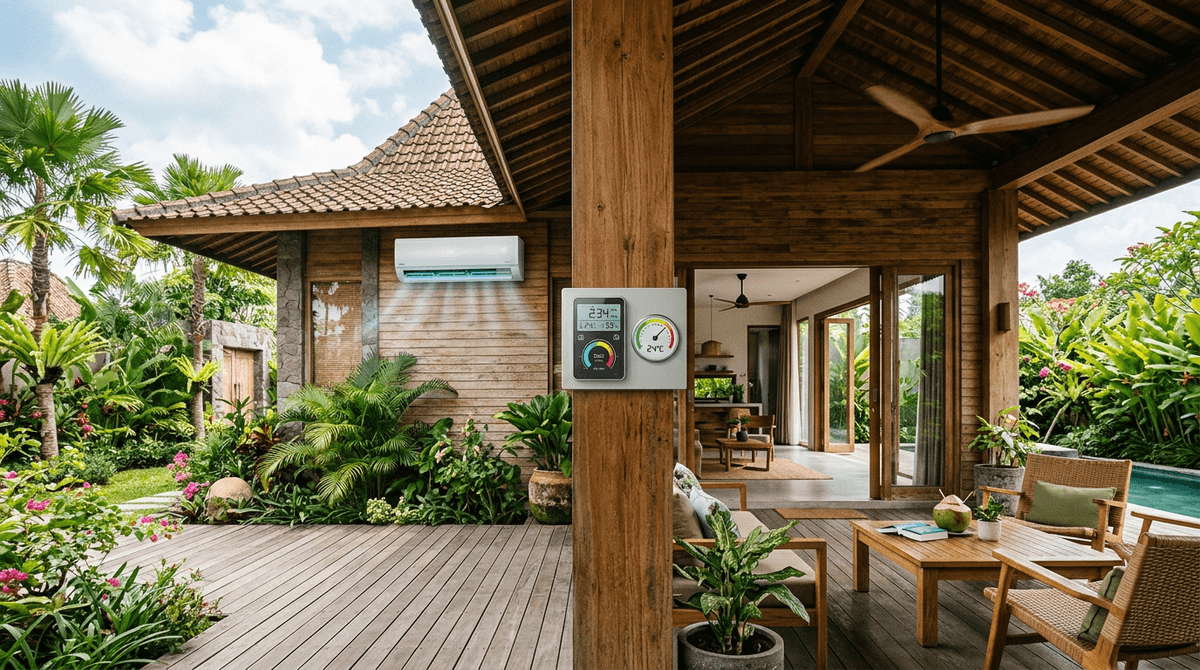
Average kWh Per Month in Indonesia
Average kWh per month for many households in Indonesia is around 100-350 kWh, while AC-heavy homes often use 400-1,000+ kWh depending on runtime, occupancy, and appliance mix.
Quick Answer
As an initial benchmark (illustrative ranges), many Indonesian households start around 100–350 kWh/month for everyday loads, while AC-heavy homes can reach 400–1,000+ kWh/month depending on hours and appliance mix. Your PLN bill is the final proof.
Helpful tools: How to Calculate Electricity Bill from kWh · How to Calculate kWh from Watts and Hours · WattSizing Calculator
PLN billing reality: where your kWh becomes a cost
PLN publishes Tarif Tenaga Listrik categories and also explains the idea of tariff adjustment. That means two homes with identical monthly kWh can still have different totals.
- Tariffs & tariff classes: https://web.pln.co.id/pelanggan/tarif-tenaga-listrik
- Tariff adjustment Q&A (high level): https://web.pln.co.id/en/customers/qa-about-electricity-rates
Typical monthly kWh ranges (how home profiles usually differ)
Use this table for benchmarking, not as a strict “national average”.
| Home profile (illustrative) | Typical kWh/month |
|---|---|
| Apartment with fans/LED, limited AC | ~90–240 |
| Family home with fridge + laundry + moderate AC | ~200–450 |
| Larger home with heavy AC or electric hot water | ~450–1,000+ |
What pushes Indonesian kWh higher
- Cooling runtime: small setpoint shifts can change hours used dramatically.
- Hot water & kitchen cycles: electric kettles, rice cookers, and (if used) electric water heating.
- Standby/repeat loads: entertainment stacks, chargers, and “always-on” appliances.
- Reliability behavior: some households use additional comfort equipment or backup behavior, changing how “average” feels vs a simple list of appliances.
Example cost (illustrative)
If your bill shows 300 kWh and your effective blended import rate is IDR 1,800/kWh (example only), then:
300 × 1,800 = IDR 540,000 (before any fixed/fee components that may appear on your actual invoice)
Always use the rate line items shown on your PLN bill/portal.
How to compare your home to a fair benchmark (3 checks)
- Identify your tariff category/golongan tarif wording on the bill.
- Compare your kWh/month to the correct home-profile band.
- If you have rooftop solar, treat import kWh separately from any self-consumption/export context (portals vary).
Three gaps most short guides miss
Most competitor pages stop at a single kWh band plus generic saving tips. This page goes deeper by covering:
- Tariff class → cost, not only kWh.
- Reliability/island reality, so “average” doesn’t feel inconsistent with your experience.
- A practical path to benchmark using the WattSizing Calculator (watts × hours).
FAQs
Does prepaid vs postpaid change my “average kWh”?
It can change the experience (token top-ups and how usage is monitored), but your measured consumption is still benchmarkable using the kWh shown in your billing context.
Why can my bill change without changing appliances?
Tariff mechanisms and billing periods can change cost even when your home equipment doesn’t.
Are apartments always lower kWh than houses?
Not automatically. AC hours, occupancy, and the number of daily-running devices can outweigh the size difference.
What are the most common “hidden” kWh drivers?
Standby electronics, repeated kitchen cycles, continuous refrigeration, and phone/laptop charging patterns.
How should I use these ranges without over-trusting them?
Treat the bands as a starting point, then compare to your last 12 months to get your personal baseline.
Where can I verify PLN tariff information?
Start with the official PLN pages for tariffs and the Q&A explaining tariff concepts: https://web.pln.co.id/pelanggan/tarif-tenaga-listrik
Sources & further reading
- PLN Tarif Tenaga Listrik: https://web.pln.co.id/pelanggan/tarif-tenaga-listrik
- PLN Q&A about electricity rates: https://web.pln.co.id/en/customers/qa-about-electricity-rates
- Indonesian Ministry of Energy and Mineral Resources (ESDM): https://www.esdm.go.id/
- WattSizing Calculator: /en/calculate/
Sources
- U.S. Energy Information Administration (EIA) - Electricity explained
- U.S. Department of Energy - Energy Saver
- ENERGY STAR - Save Energy at Home
CTA
Use the WattSizing Calculator to convert your appliance watts and hours into a realistic kWh/month estimate—then compare it directly to your PLN bill.


