
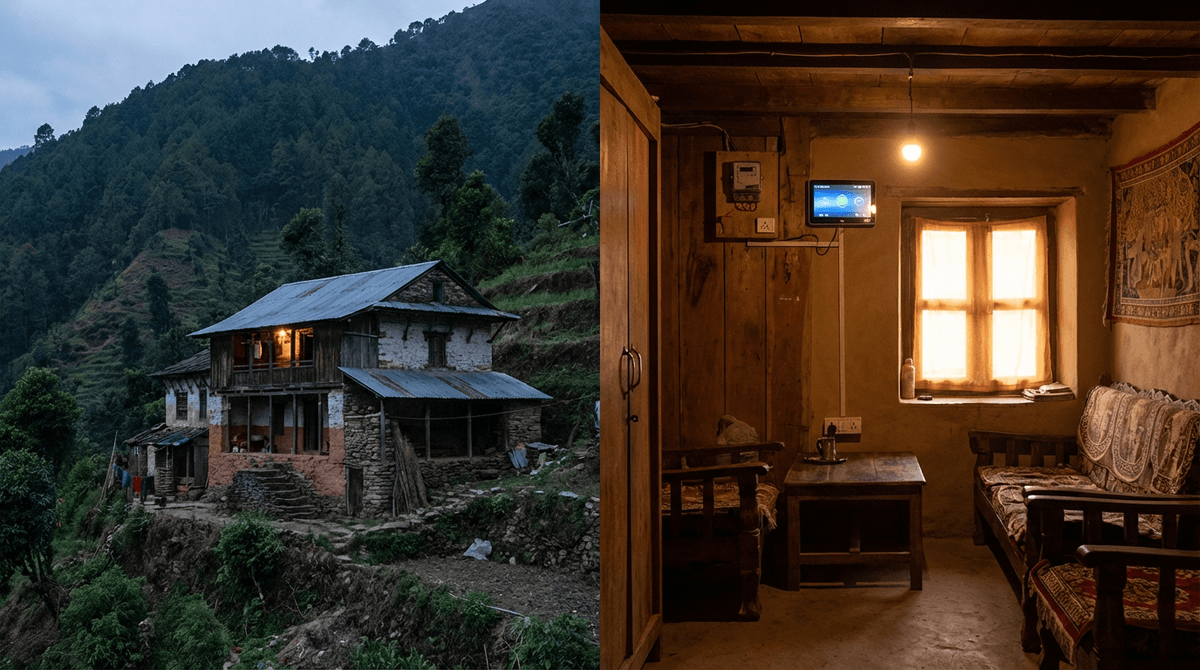
Nepal’s residential electricity story is not interchangeable with hot-climate or gas-heating countries: many homes rely on electric lighting and appliances while space heating may mix electric, wood, or gas depending on altitude and income. Nepal Electricity Authority (NEA) is the dominant grid operator—most readers benchmark bills against NEA tariffs and supply hours in their area.
One-paragraph answer: Urban apartments and smaller homes on stable supply often sit around 80–250 kWh/month for light-to-moderate use; larger homes with AC, electric water heating, or extended families can exceed 300–600+ kWh/month. Rural or intermittent-supply contexts may show lower metered kWh but higher backup energy (solar/battery/generator) that will not always appear on the same bill.
Links: How to Calculate Electricity Bill from kWh · How to Calculate kWh from Watts and Hours · WattSizing Calculator
Why this page is deeper than typical “Nepal kWh average” posts
Competitor pages often paste one kWh figure without naming NEA, voltage stability, or altitude/climate. Here we separate metered grid kWh from backup energy, outline who to trust for tariffs, and add FAQs that match the questions Nepali households actually search for.
National context
- Grid: NEA is the reference institution for most readers; verify current retail tariff tables on nea.org.np rather than trusting outdated blog tables.
- Supply quality: Voltage dips and scheduled outages in some areas push households toward inverters, batteries, or generators—your bill kWh may understate total household energy.
Illustrative monthly kWh bands
| Profile | Typical monthly kWh (illustrative) |
|---|---|
| Small flat, LED lighting, minimal cooling | 60–150 |
| Family home, fridge, washer, partial AC | 180–400 |
| Larger home, heavy AC, electric water heating | 400–800+ |
What generic guides usually miss
- Backup power: Significant consumption can occur off the NEA meter during outages.
- Seasonality: Winter heating load in hills vs summer cooling in Terai shifts monthly kWh curves.
- Appliance mix: Electric kettles, rice cookers, and irons are high short bursts that add up.
Example cost illustration (verify current NPR/kWh)
If your bill shows 220 kWh and your effective blended rate is NPR 12/kWh (example only):
220 × 12 = NPR 2,640 (excluding fixed charges, taxes, or minimums on your actual bill)
How to benchmark your own home
- Collect 12 months of NEA bills (kWh and NPR).
- Note seasonal peaks (festival months, winter heating).
- List top loads: AC, water heating, kitchen heating, iron, entertainment.
FAQs
What is a “normal” monthly kWh in Kathmandu?
Urban flats often fall in a sub-250 kWh band for efficient households; AC-heavy homes go higher. Use your own history as the baseline.
Why is my bill spiking in winter?
Electric heaters, hot water, and more indoor time can dominate—compare year-on-year months.
Does voltage affect my bill?
Poor voltage can damage motors and cause inefficient runtimes—repair and right-sizing matter.
Can tenants reduce usage?
Yes—usage habits, AC setpoints, and efficient lighting are often available without structural work.
How do I verify tariffs?
Use NEA’s official tariff publications rather than third-party tables.
Is solar worth it for my roof?
Depends on shade, tariff, export rules, and backup needs—model loads first with the calculator.
Sources & further reading
- Nepal Electricity Authority (NEA) — tariffs and announcements.
- Nepal government / energy ministry portals for policy updates (verify current URLs).
Sources
- U.S. Energy Information Administration (EIA) - Electricity explained
- U.S. Department of Energy - Energy Saver
- ENERGY STAR - Save Energy at Home
CTA
WattSizing Calculator — model appliances and hours into monthly kWh.


