
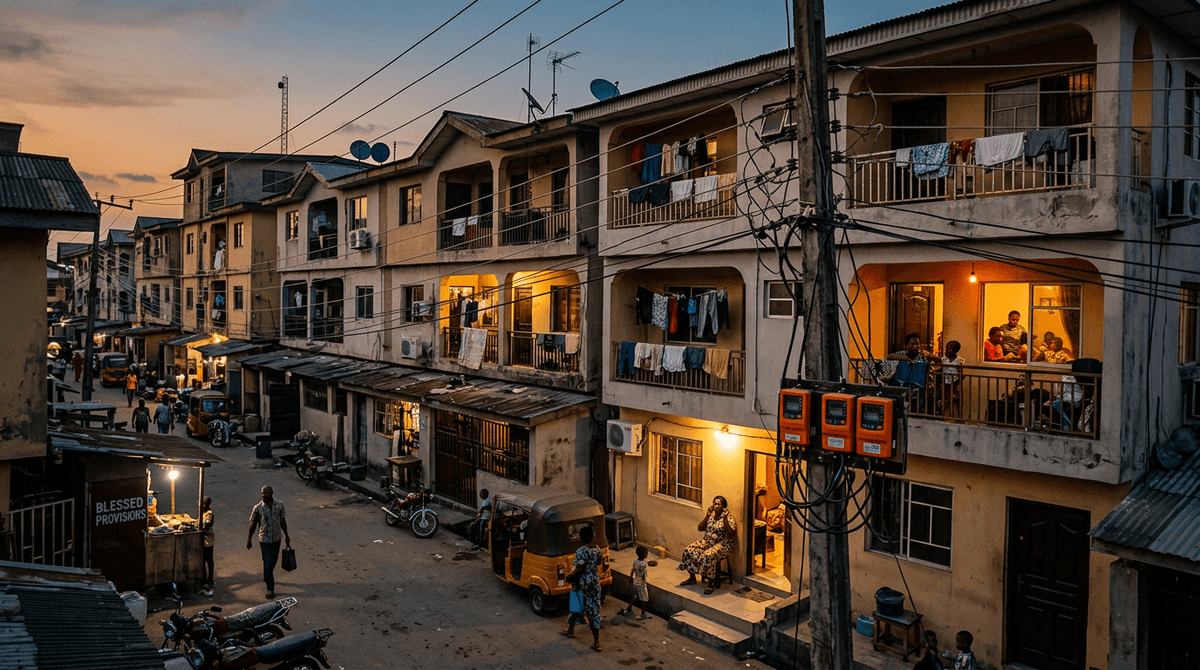
Power usage in Nigeria can change a lot by season, home size, and cooling needs. This guide gives practical ranges to benchmark your household.
Helpful links: How to Calculate Electricity Bill from kWh and How to Calculate kWh from Watts and Hours.
Quick Answer
A typical household in Nigeria often uses around 120 to 320 kWh per month. Smaller homes with fans and efficient appliances are usually lower, while AC-heavy homes are much higher.
Key Factors and Typical Usage
| Home profile | Typical monthly usage |
|---|---|
| Small home, fans, LED lighting | 90 - 170 kWh |
| Family home, fridge + laundry | 150 - 280 kWh |
| Cooling-heavy larger home | 260 - 520+ kWh |
Key factors are cooling/heating runtime, water heating type, appliance age, and occupancy.
Example Calculation
If your usage is 220 kWh/month and your blended rate is NGN 120/kWh:
220 x 120 = NGN 26400.00
Then add fixed charges, fuel adjustment, or taxes shown by your utility.
Actionable Tips
- Set efficient thermostat/fan habits before buying new gadgets.
- Replace one old high-use appliance first (often fridge or AC).
- Batch laundry and hot-water usage to reduce waste.
- Track scenarios with the WattSizing Calculator.
FAQs
Is 300 kWh/month considered high in Nigeria?
For many households, it is above average unless cooling or electric water heating is heavily used.
Which loads usually dominate bills?
Cooling/heating, water heating, and refrigeration are typically the top contributors.
Can renters still reduce usage meaningfully?
Yes. Behavioral changes and efficient settings can cut usage even without major upgrades.
CTA
Use the WattSizing Calculator to model your actual appliances and predict your monthly bill with clearer assumptions.


