
Apartment cooling patterns can differ from detached homes due to shared walls, solar exposure, and ventilation constraints.
For full system planning, use the WattSizing Calculator.
Quick Answer
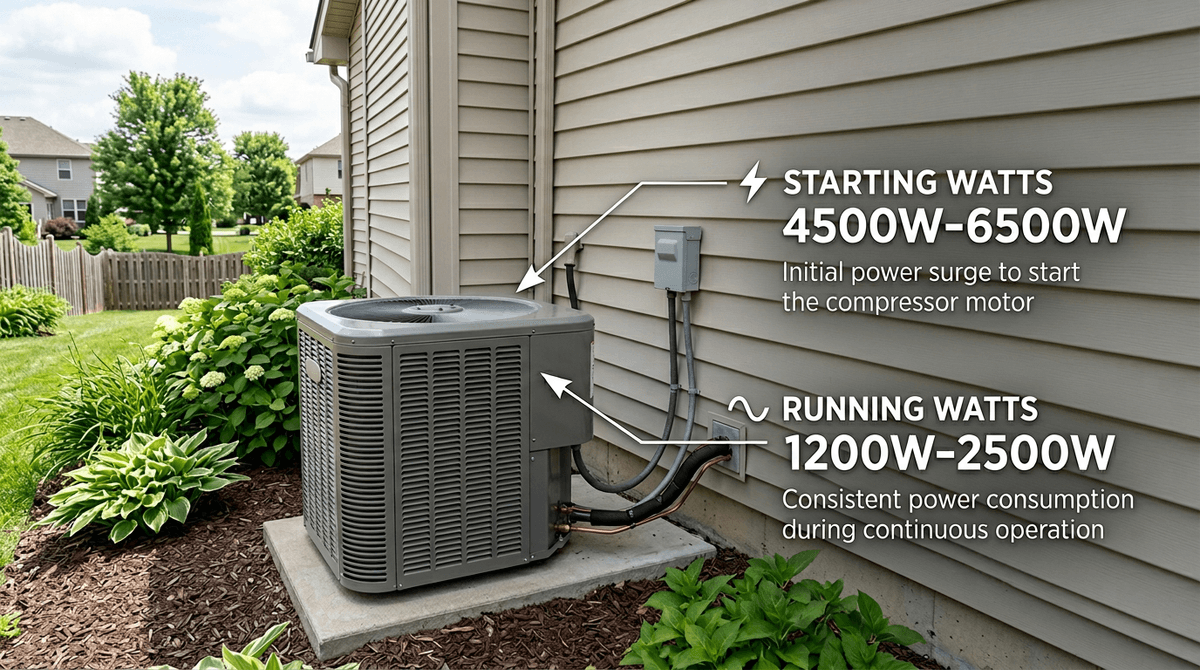
In apartments, central AC commonly operates around 2,000 to 4,200 W with typical consumption near 8 to 24 kWh/day.
Detailed Explanation
Top-floor units and west-facing windows often push runtime up, while shaded mid-floor units may run significantly less. Elevator shafts, corridor pressure, and building envelope quality can all change effective cooling load.
For related comparisons, see How Many Watts Does a Window Air Conditioner Use in Apartment and How Many Watts Does a Mini Split Use in Apartment.
Watt Table
| Apartment Condition | Typical Running Watts | Typical Daily Energy |
|---|---|---|
| Shaded or mid-floor unit | 2,000 - 2,900 W | 8 - 14 kWh/day |
| Typical mixed exposure | 2,500 - 3,500 W | 12 - 18 kWh/day |
| Top-floor/high sun gain | 3,200 - 4,200 W | 16 - 24 kWh/day |
Calculation Example
If central AC averages 2,900 W for 5 hours/day:
kWh/day = (2,900 x 5) / 1000 = 14.5 kWh/day
Tips
- Block afternoon solar gain with blinds or thermal curtains.
- Keep interior doors open to reduce short cycling.
- Replace clogged filters on schedule.
- Avoid large internal heat loads during peak heat.
FAQs
Why do similar apartments have different AC bills?
Orientation, insulation quality, occupant schedule, and floor position can change runtime significantly.
Does central AC always use more than mini split in apartments?
Not always, but ducted systems often have higher distribution losses.
Are smart thermostats useful in apartments?
Yes, especially for schedule control and setback optimization.
CTA
Model your apartment cooling profile with the WattSizing Calculator and build a more accurate monthly kWh estimate.


