
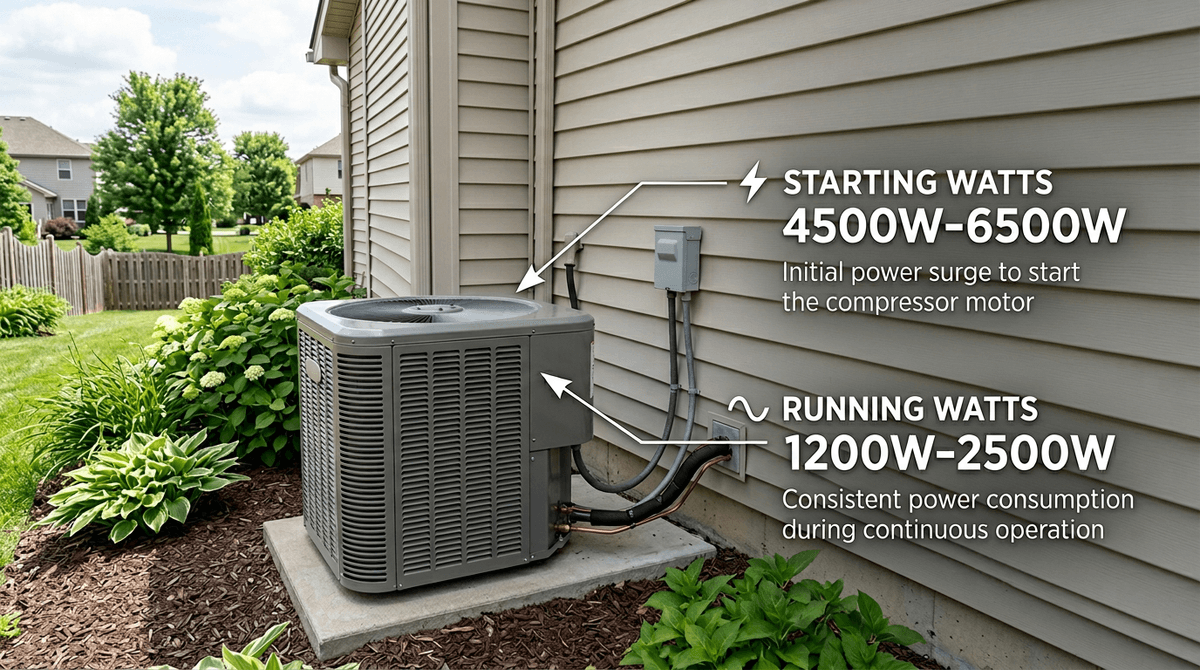
Nighttime often lowers cooling load, but indoor moisture and building heat retention can keep central AC active longer than expected.
For full system planning, use the WattSizing Calculator.
Quick Answer
For night use, central AC typically runs around 2,000 to 4,200 W when active, with many households consuming 6 to 18 kWh overnight.
Detailed Explanation
Overnight efficiency depends on how much heat the building stored during daytime and whether humidity remains high after sunset. Lower outdoor temperatures help, but poor insulation or high latent load can still produce long compressor cycles.
For seasonal context, review How Many Watts Does a Central Air Conditioner Use in Summer and How Many Watts Does a Central Air Conditioner Use in Peak Hours.
Watt Table
| Overnight Scenario | Typical Running Watts | Typical Overnight Energy |
|---|---|---|
| Cool and dry night | 2,000 - 2,800 W | 6 - 10 kWh/night |
| Warm normal night | 2,500 - 3,500 W | 8 - 14 kWh/night |
| Hot humid night | 3,000 - 4,200 W | 12 - 18 kWh/night |
Calculation Example
If AC averages 2,700 W for 4 hours overnight:
kWh/night = (2,700 x 4) / 1000 = 10.8 kWh/night
Tips
- Pre-cool before bedtime to reduce overnight compressor demand.
- Use ceiling fans to raise thermostat setpoint without comfort loss.
- Seal bedroom air leaks and insulate attic areas.
- Keep indoor humidity in a moderate range.
FAQs
Why is overnight usage sometimes still high?
Stored daytime heat and humidity can keep the system cycling for hours.
Is continuous fan mode efficient overnight?
Often no; auto fan usually lowers unnecessary blower energy.
Can smart scheduling reduce sleep-hour kWh?
Yes, ramp-down schedules can cut runtime while keeping comfort acceptable.
CTA
Estimate your overnight cooling cost with the WattSizing Calculator and tune night settings around real kWh data.


