
Peak hours are usually when outdoor temperatures and utility rates are both highest, so central AC cost impact rises quickly.
For full system planning, use the WattSizing Calculator.
Quick Answer
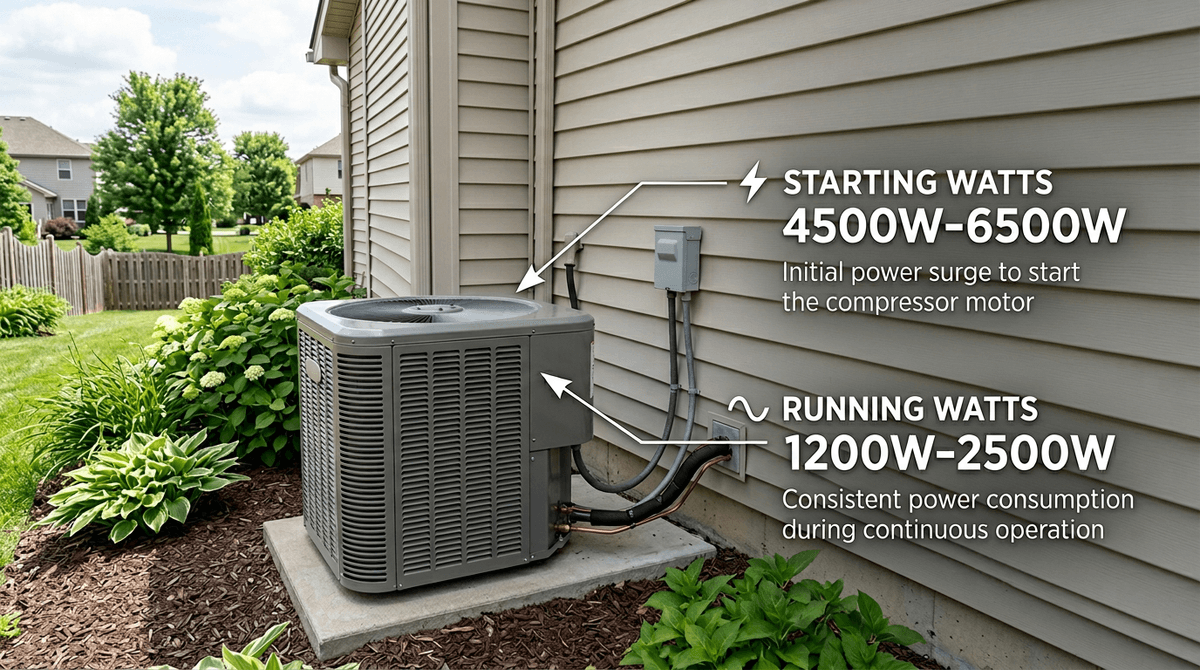
During peak hours, central AC commonly runs around 2,800 to 5,500 W, with typical usage near 6 to 20 kWh in the peak window.
Detailed Explanation
Even if total daily kWh stays similar, shifting runtime away from time-of-use peaks can reduce your bill significantly. Pre-cooling, envelope upgrades, and fan-assisted comfort are common strategies.
For related cost methods, see How to Calculate Electricity Bill from kWh and How Many Watts Does a Central Air Conditioner Use Per Day.
Watt Table
| Peak-Hour Context | Typical Running Watts | Typical Peak-Window Energy |
|---|---|---|
| Mild peak period | 2,800 - 3,600 W | 6 - 10 kWh |
| Typical summer peak | 3,200 - 4,500 W | 9 - 15 kWh |
| Extreme heat peak | 4,000 - 5,500 W | 13 - 20 kWh |
Calculation Example
If AC averages 3,800 W for 3.5 peak hours:
kWh(peak) = (3,800 x 3.5) / 1000 = 13.3 kWh
Tips
- Pre-cool one to two hours before peak pricing starts.
- Use blinds and shading to cut solar load during expensive windows.
- Raise thermostat setpoint slightly during peak time.
- Shift cooking and other heat-producing tasks to later hours.
FAQs
Does peak pricing change watt draw?
No, watt draw is similar, but each kWh costs more.
Is pre-cooling always worth it?
Usually yes when TOU rates have a strong price spread.
Can home automation reduce peak cost?
Yes, scheduled setpoint changes often reduce expensive runtime.
CTA
Use the WattSizing Calculator to model peak-hour cost and compare different thermostat and scheduling strategies.


