
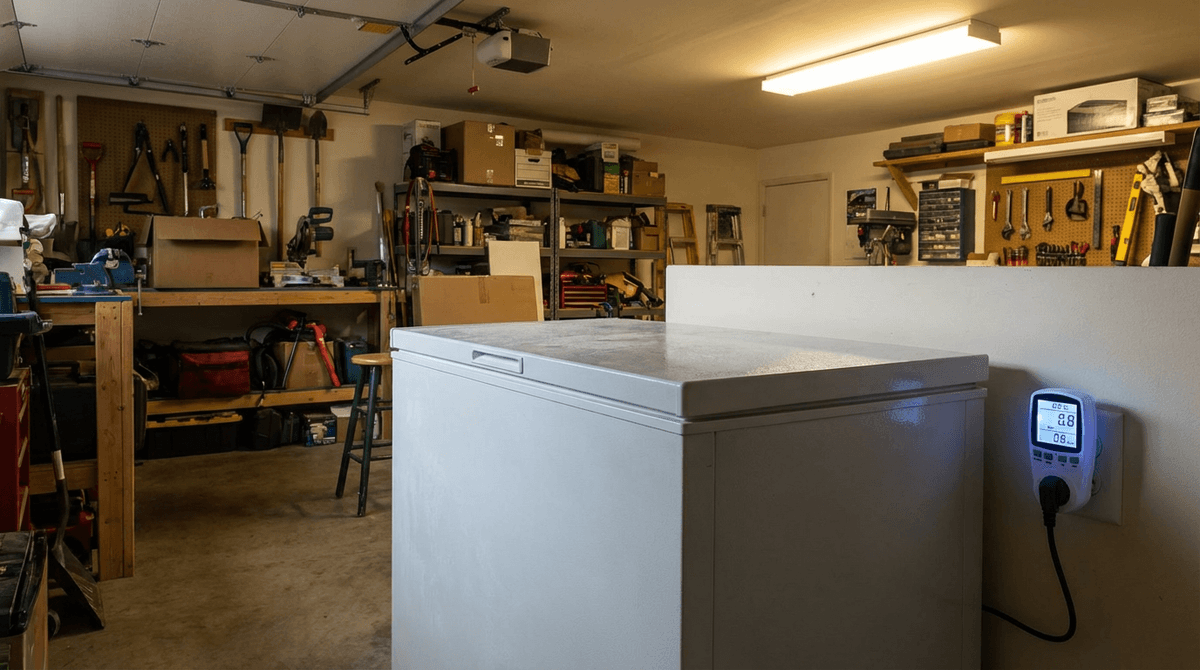
At night, chest freezers usually keep the same running watt range (80 to 250 W), while total overnight kWh may drop if ambient temperature is lower.
For full system planning, use the WattSizing Calculator.
Quick Answer
Plan for normal running and surge power, then adjust expected overnight energy based on local nighttime temperatures.
Night-Use Behavior
Lower evening temperatures can reduce compressor cycling. Still, power systems must handle startup surge whenever the compressor kicks in.
Typical Night Ranges
| Freezer Size | Running Watts | Starting Watts | Typical Overnight (10h) kWh |
|---|---|---|---|
| Small | 70 - 130 W | 400 - 800 W | 0.4 - 0.9 |
| Medium | 100 - 180 W | 600 - 1,100 W | 0.6 - 1.3 |
| Large | 140 - 260 W | 900 - 1,600 W | 0.8 - 1.8 |
Practical Example
If a freezer averages 110 W overnight for 10 hours:
- kWh = (110 x 10) / 1000 = 1.1 kWh
This is useful for battery-only overnight planning in hybrid systems.
FAQs
Does night usage always cost less?
With time-of-use tariffs, often yes. On flat tariffs, only kWh matters.
Can I turn the freezer off overnight?
Generally not recommended for food safety.
Is surge different at night?
Usually similar to daytime startup behavior.
CTA
Ready to size your setup accurately? Use the WattSizing Calculator to estimate panel, battery, and inverter requirements from your real appliance loads.


