
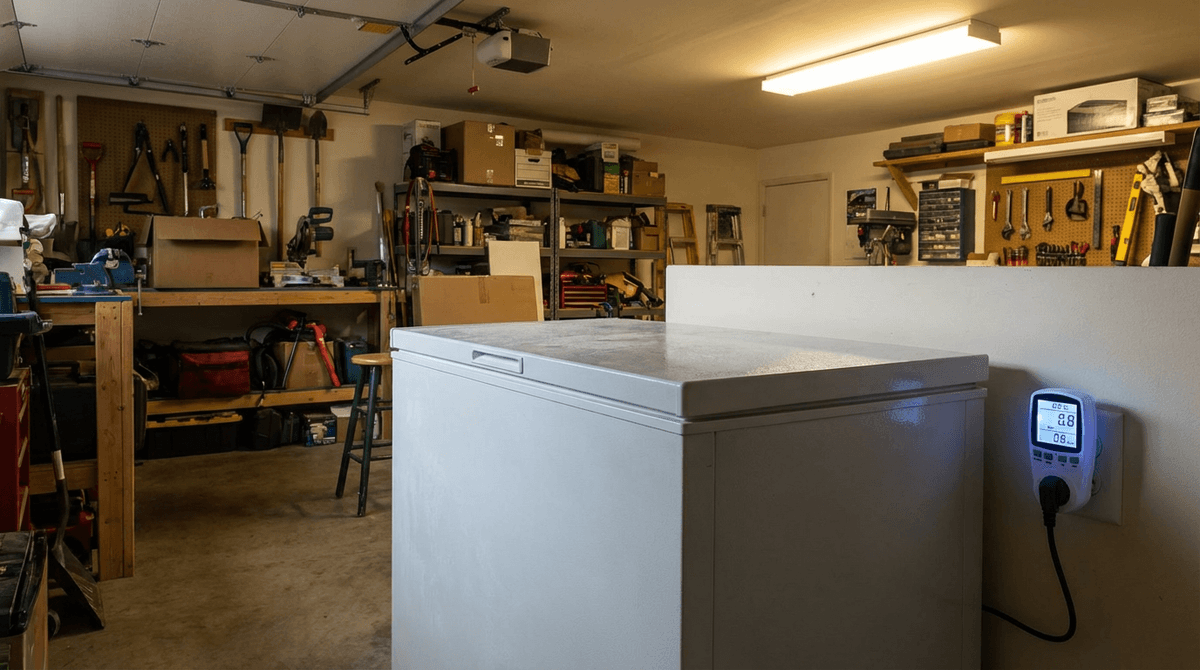
In RV setups, a chest freezer usually runs at 80 to 250 watts and can surge to 500 to 1,500 watts, which is often the critical design number.
For full system planning, use the WattSizing Calculator.
Quick Answer
Plan around 1.4 to 4.0 kWh/day based on freezer size and ambient heat, and ensure your inverter can start the compressor reliably.
RV Power Considerations
Limited battery capacity means compressor runtime and insulation quality matter a lot. Hot travel climates can increase daily energy by 20% or more.
Typical RV Ranges
| Size | Running Watts | Starting Watts | Typical RV kWh/day |
|---|---|---|---|
| Small | 70 - 130 W | 400 - 800 W | 1.3 - 2.3 |
| Medium | 100 - 180 W | 600 - 1,100 W | 1.9 - 3.2 |
| Large | 140 - 260 W | 900 - 1,600 W | 2.5 - 4.0 |
Practical Example
A compact freezer using 2.0 kWh/day in an RV would consume about 60 kWh/month equivalent. With 12V batteries, that load is significant after inverter losses, so sizing margin is important.
Related guide: How to Calculate Battery Runtime for Appliances.
FAQs
Can I run a chest freezer from a 1000W inverter?
Sometimes yes, sometimes no. Surge capacity is the deciding factor.
Is DC freezer better for RV than AC chest freezer?
DC models can reduce conversion losses, but cost and capacity differ.
Should I pre-cool before driving days?
Yes. Pre-cooling when shore power is available can reduce battery draw later.
CTA
Ready to size your setup accurately? Use the WattSizing Calculator to estimate panel, battery, and inverter requirements from your real appliance loads.


