
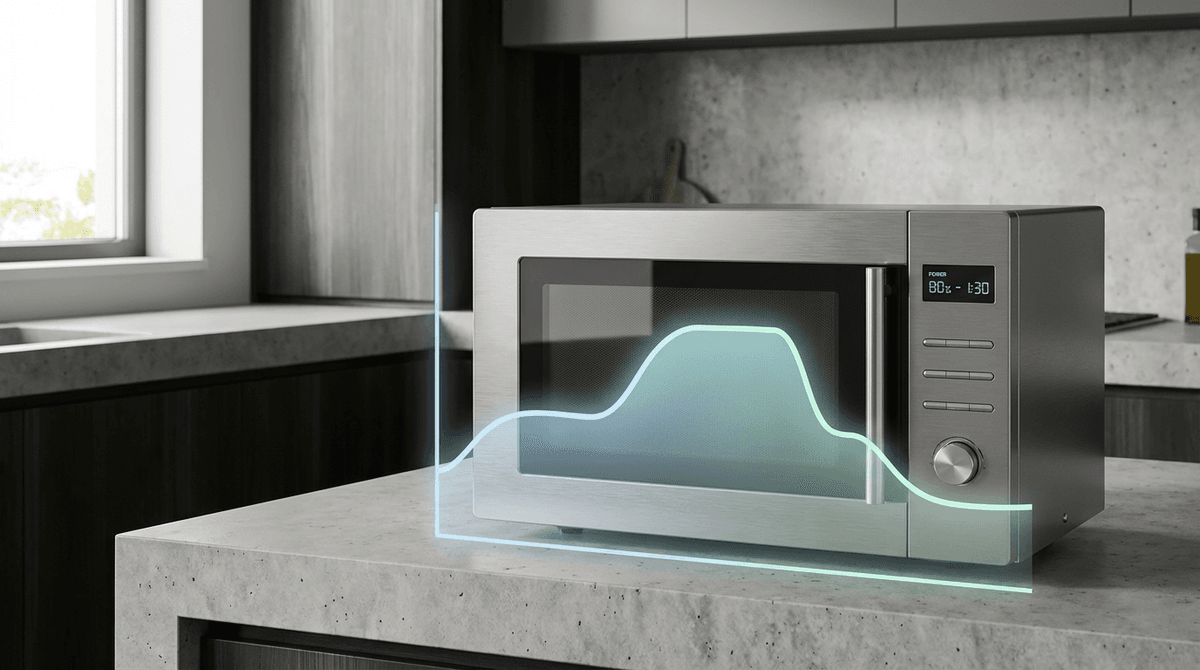
Microwaves usually draw around 900 to 1,600 watts while heating, and summer usage can slightly shift household energy due to meal patterns and cooling loads.
For full system planning, use the WattSizing Calculator.
Quick Answer
Most microwaves still run in the 900 to 1,600 W input range in summer. Daily kWh remains low in many homes because runtime is measured in minutes.
Summer Context
Using a microwave instead of a full oven in hot weather can reduce kitchen heat and indirectly reduce AC burden.
Typical Summer Ranges
| Microwave Type | Running Watts | Starting Watts | Typical Summer kWh/day |
|---|---|---|---|
| Compact | 900 - 1,200 W | 900 - 1,300 W | 0.08 - 0.30 |
| Mid-size | 1,100 - 1,400 W | 1,100 - 1,500 W | 0.12 - 0.40 |
| Large/Combo | 1,300 - 2,000 W | 1,300 - 2,200 W | 0.18 - 0.70 |
Practical Example
A 1,300 W microwave used 20 minutes/day:
- kWh/day = (1,300 x 0.33) / 1000 = 0.43
FAQs
Do microwaves have big summer surge changes?
No, surge behavior is generally modest compared with motor loads.
Is microwave more efficient than oven in summer?
For small meals, often yes.
Does standby clock use matter?
It can add small monthly energy over time.
CTA
Ready to size your setup accurately? Use the WattSizing Calculator to estimate panel, battery, and inverter requirements from your real appliance loads.


