
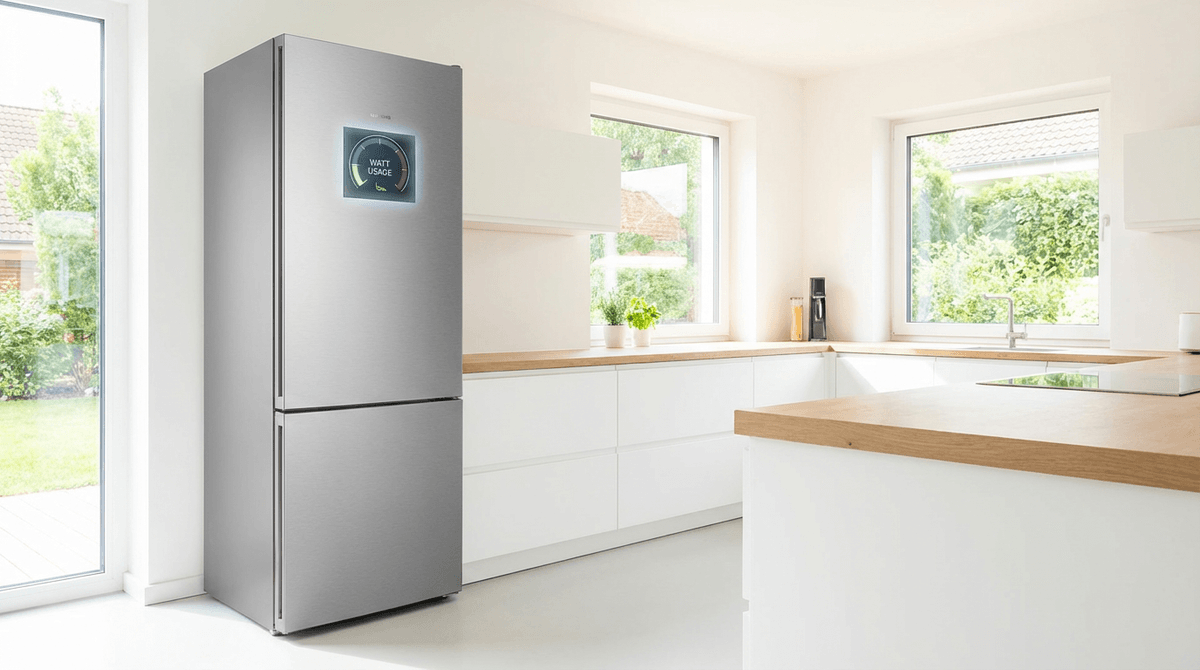
Refrigerators are a core overnight base load, typically cycling quietly through the night even when other appliances are off.
For full system planning, use the WattSizing Calculator.
Quick Answer
At night, refrigerators usually run around 90 to 220 W while the compressor is active, with typical overnight energy around 0.4 to 1.2 kWh/night.
Detailed Explanation
Night usage can be lower if kitchen ambient temperature drops and door openings are infrequent. However, loaded warm food before bedtime or high indoor humidity can increase overnight cycles.
For cost context, see How to Calculate Electricity Bill from kWh and How Many Watts Does a Refrigerator Use Per Day.
Watt Table
| Nighttime Fridge Pattern | Typical Running Watts | Typical Overnight Energy |
|---|---|---|
| Cool kitchen, low access | 90 - 140 W | 0.4 - 0.7 kWh/night |
| Typical household night | 120 - 180 W | 0.6 - 0.9 kWh/night |
| Warm kitchen or high cycling | 160 - 220 W | 0.9 - 1.2 kWh/night |
Calculation Example
If average overnight draw is 110 W for 8 hours:
kWh/night = (110 x 8) / 1000 = 0.88 kWh/night
Tips
- Avoid repeated late-night door opening.
- Let hot leftovers cool briefly before storage.
- Keep interior airflow paths clear.
- Check if seals are closing fully after each use.
FAQs
Is refrigerator power draw constant overnight?
No, compressor cycles on and off based on internal temperature.
Can I reduce overnight fridge energy safely?
Yes, with better maintenance and fewer door openings, not by unsafe temperature changes.
Does inverter noise mean high overnight use?
Not necessarily; check measured watts and daily kWh data.
CTA
Use the WattSizing Calculator to include refrigerator night load in your full home or backup energy plan.


