
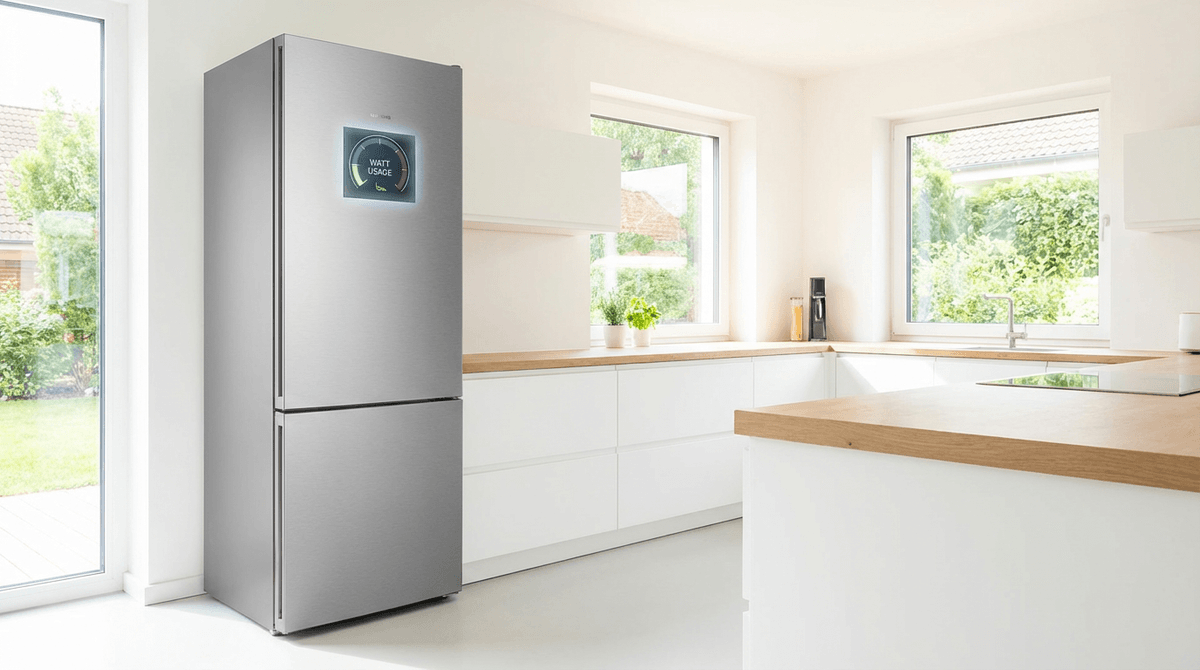
Refrigeration is usually non-negotiable off-grid, which makes it a priority load in inverter and battery design.
For full system planning, use the WattSizing Calculator.
Quick Answer
In off-grid systems, refrigerators typically run around 90 to 250 W with startup surges and often use about 1 to 3 kWh/day depending on size and climate.
Detailed Explanation
Off-grid planning should prioritize low idle losses, efficient compressor models, and surge-capable inverter capacity. Because a refrigerator cycles 24/7, even small efficiency gains can materially reduce battery size requirements.
Use these supporting guides: How to Calculate Battery Runtime for Appliances and Inverter Sizing for Off-Grid Solar.
Watt Table
| Off-Grid Refrigerator Type | Typical Running Watts | Typical Daily Energy |
|---|---|---|
| High-efficiency compact | 90 - 140 W | 1.0 - 1.6 kWh/day |
| Standard modern fridge | 120 - 190 W | 1.4 - 2.2 kWh/day |
| Large or older model | 170 - 250 W | 2.0 - 3.0 kWh/day |
Calculation Example
If your fridge averages 140 W over 24 hours:
kWh/day = (140 x 24) / 1000 = 3.4 kWh/day (continuous equivalent)
Measure real daily energy with a plug meter to account for duty-cycle behavior.
Tips
- Choose high-efficiency models before adding battery capacity.
- Minimize door openings during hot afternoon hours.
- Keep condenser coils clean and airflow unobstructed.
- Use thermal mass (filled bottles) to reduce cycling.
FAQs
Do refrigerators need high startup headroom off-grid?
Yes, compressor startup can exceed running draw by several times.
Is DC refrigeration better for off-grid?
It can be, but total system design and availability matter.
Can I turn the fridge off overnight to save power?
Not recommended for food safety unless carefully managed.
CTA
Use the WattSizing Calculator to test inverter surge, battery autonomy, and daily recharge targets for your off-grid fridge load.


