
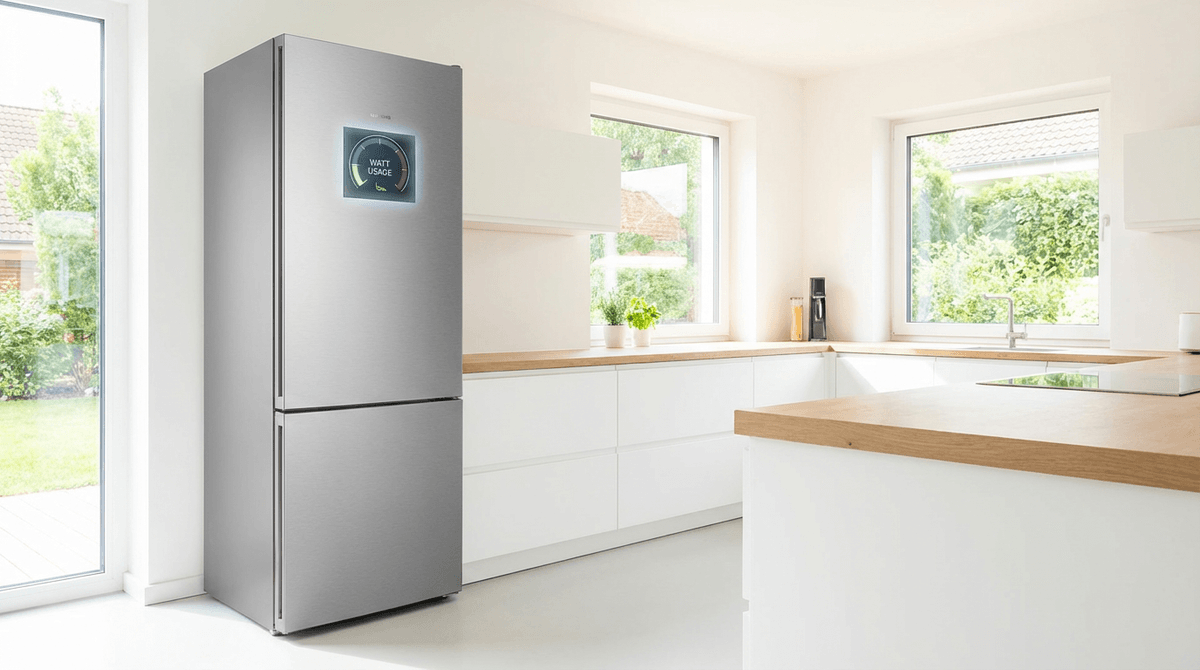
Unlike flexible appliances, refrigerators must keep cycling during peak-rate windows, making them a steady contributor to TOU bills.
For full system planning, use the WattSizing Calculator.
Quick Answer
During peak hours, refrigerators generally run around 100 to 240 W when cycling, with typical peak-window energy near 0.3 to 1.0 kWh.
Detailed Explanation
Peak-hour concern is mainly cost, not unusually high wattage. Since refrigeration is essential, savings usually come from efficiency upgrades and thermal management rather than shifting run time.
For billing and planning methods, review How to Calculate Electricity Bill from kWh and How Many Watts Does a Refrigerator Use.
Watt Table
| Peak-Hour Fridge Context | Typical Running Watts | Typical Peak-Window Energy |
|---|---|---|
| Efficient low-duty operation | 100 - 150 W | 0.3 - 0.5 kWh |
| Typical household cycling | 130 - 200 W | 0.4 - 0.7 kWh |
| Warm kitchen/high duty cycle | 170 - 240 W | 0.6 - 1.0 kWh |
Calculation Example
If the fridge averages 160 W across a 4-hour peak window:
kWh(peak) = (160 x 4) / 1000 = 0.64 kWh
Tips
- Improve insulation and door gasket quality to lower duty cycle.
- Reduce peak-hour door openings where practical.
- Keep condenser coils clean for efficient operation.
- Avoid placing fridge next to heat-generating appliances.
FAQs
Can I switch the refrigerator off during peak pricing?
Generally no, due to food safety and temperature stability requirements.
Does inverter compressor tech help in peak windows?
Yes, many modern units reduce cycling losses and average draw.
Is fridge peak-hour cost significant alone?
Usually moderate, but it adds up because it is a daily unavoidable load.
CTA
Use the WattSizing Calculator to estimate TOU impact and prioritize upgrades that reduce unavoidable base-load energy.


