
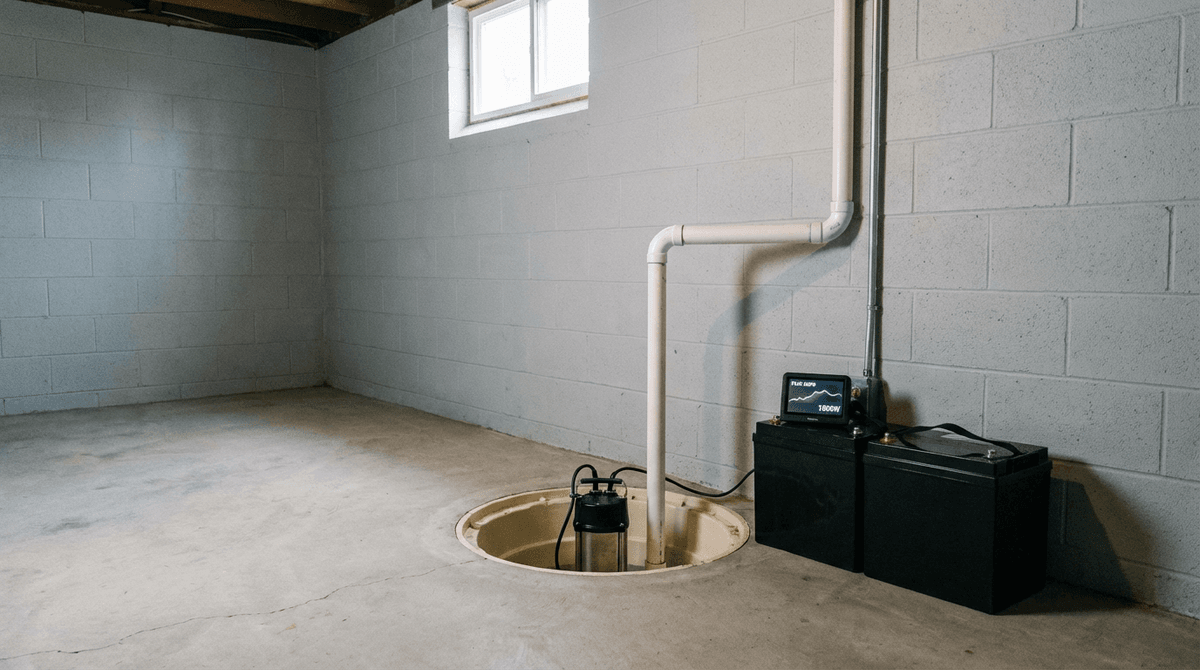
Sump pump watt ratings do not change during peak tariff windows, but storm-driven runtime during those windows can raise costs quickly.
For full system planning, use the WattSizing Calculator.
Quick Answer
Typical running demand is 500 to 1,500 watts with high startup surge. Peak-hour bill impact depends on how much pumping happens during expensive periods.
Peak-Hour Context
Unlike shiftable appliances, sump pumps run when water arrives. For TOU planning, use event-based cost ranges rather than fixed schedules.
Typical Peak-Window Ranges
| Pump Size | Running Watts | Starting Watts | Peak Window (4h) kWh |
|---|---|---|---|
| 1/3 HP | 500 - 800 W | 1,200 - 2,200 W | 0.0 - 0.8 |
| 1/2 HP | 700 - 1,100 W | 1,600 - 3,000 W | 0.0 - 1.2 |
| 3/4 HP | 900 - 1,400 W | 2,200 - 3,800 W | 0.0 - 1.8 |
Practical Example
If a wet evening causes 1.1 kWh usage during peak at $0.33/kWh:
- Peak-period cost = $0.36
FAQs
Can I shift sump pump usage out of peak hours?
Usually no. Pumping follows water conditions.
Should peak-hour pricing change backup sizing?
No. Sizing is based on power and runtime reliability.
Is this still a must-run load?
Yes, in most flood-risk situations.
CTA
Ready to size your setup accurately? Use the WattSizing Calculator to estimate panel, battery, and inverter requirements from your real appliance loads.


