
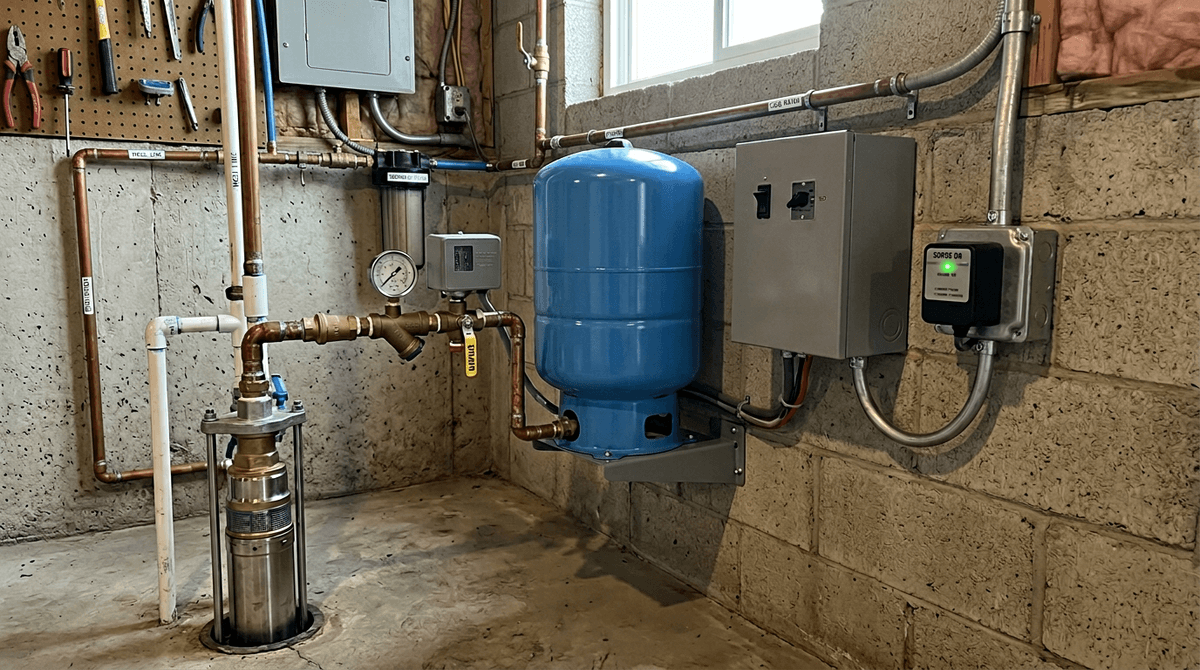
Most residential well pumps use around 700 to 2,000 running watts, while startup surge can reach 2x to 4x running power depending on pump type and depth.
For full system planning, use the WattSizing Calculator.
Quick Answer
Most residential well pumps use around 700 to 2,000 running watts, while startup surge can reach 2x to 4x running power depending on pump type and depth.
Detailed Explanation
Appliance power draw usually has two numbers: running watts and starting (surge) watts. Running watts represent steady operation. Starting watts are short spikes when motors or compressors begin. For backup systems, inverter sizing, or generator sizing, you should account for both.
Real usage also depends on duty cycle, ambient temperature, maintenance state, and load profile. That is why nameplate wattage alone can under- or overestimate daily energy consumption.
Watt Table
| Device Size / Type | Typical Running Watts | Typical Starting Watts |
|---|---|---|
| 1/2 HP | 700 - 1100 W | 1400 - 2500 W |
| 3/4 HP | 900 - 1500 W | 1800 - 3200 W |
| 1 HP | 1200 - 2000 W | 2400 - 4200 W |
| 1.5 HP | 1700 - 2800 W | 3200 - 5500 W |
| 2 HP | 2200 - 3600 W | 4200 - 7000 W |
Calculation Example
Example: A 1 HP pump averaging 1,400 W for 2 hours/day uses about 2.8 kWh/day. Generator/inverter must still handle startup surge around 3,000+ W.
If you need to convert this into battery and solar sizing, start with our guide on How to Calculate Daily Energy Use and then size your inverter using Inverter Sizing for Off-Grid Solar.
Tips to Reduce Power Usage
- Use a soft starter where compatible to reduce surge.
- Size inverter/generator for starting watts, not just running watts.
- Inspect pressure tank and switch settings to reduce short cycling.
- Fix leaks that cause unnecessary pump runtime.
FAQs
Does how many watts does a well pump use have startup surge?
Yes. Motor-driven loads or compressor-based devices can draw significantly more power at startup than during steady operation.
Can I run this appliance on a small inverter?
Check both running watts and startup watts, then add safety margin. For compressor and motor loads, size for surge first.
How do I estimate daily kWh quickly?
Use: kWh/day = (average watts x hours used) / 1000. Then compare with utility rate or backup system capacity.
CTA
Ready to size your setup accurately? Use the WattSizing Calculator to estimate panel, battery, and inverter requirements from your real appliance loads.


