
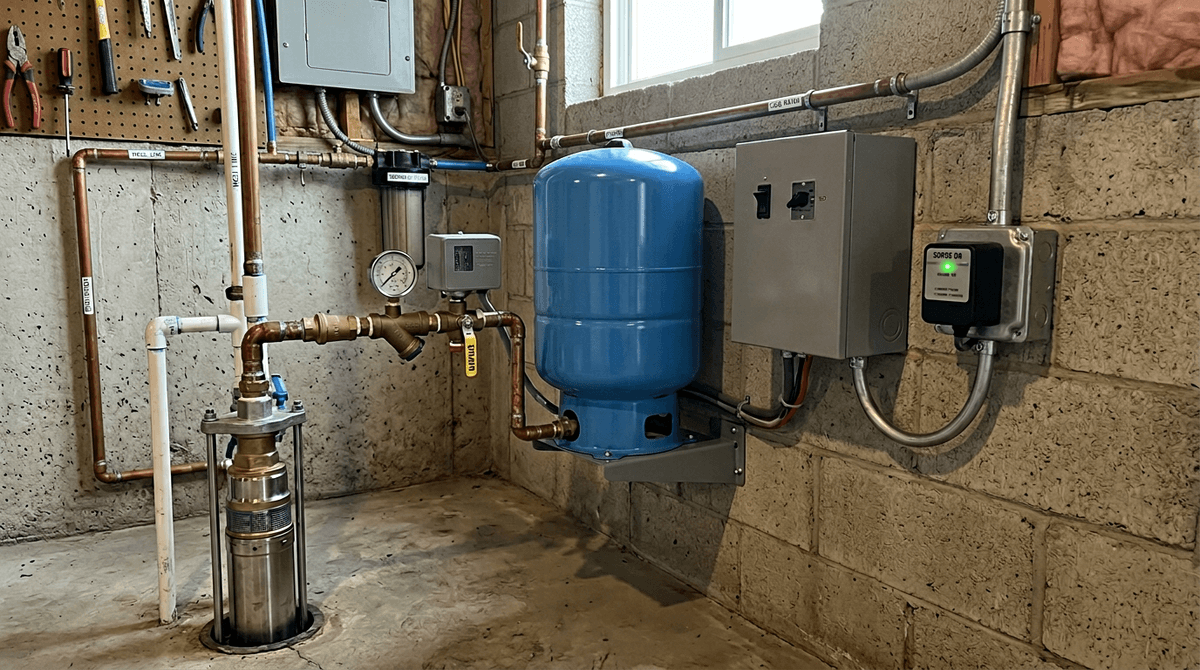
A well pump uses roughly the same running and startup watts during peak hours, but operating in expensive tariff windows can raise bills fast.
For full system planning, use the WattSizing Calculator.
Quick Answer
Typical running draw remains 700 to 2,000 watts, with substantial startup surge. Peak-hour impact mainly affects cost per kWh.
Peak-Hour Strategy
Where possible, schedule non-urgent water-intensive tasks outside peak windows, while keeping household comfort and pressure needs intact.
Typical Peak-Window Ranges
| Pump Size | Running Watts | Starting Watts | Peak Window (4h) kWh |
|---|---|---|---|
| 1/2 HP | 700 - 1,100 W | 1,400 - 2,500 W | 0.3 - 1.2 |
| 3/4 HP | 900 - 1,500 W | 1,800 - 3,200 W | 0.4 - 1.6 |
| 1 HP | 1,200 - 2,000 W | 2,400 - 4,200 W | 0.5 - 2.0 |
Practical Example
If the pump uses 1.4 kWh in peak time at $0.34/kWh, that window costs $0.48.
Related cost math: How to Calculate Electricity Bill from kWh.
FAQs
Do peak hours change motor surge?
No, startup behavior is essentially the same.
Should I oversize generator for peak-hour use?
Size for surge and total load, not tariff period.
Can storage tanks reduce peak pumping?
Yes, they can shift some pumping away from expensive periods.
CTA
Ready to size your setup accurately? Use the WattSizing Calculator to estimate panel, battery, and inverter requirements from your real appliance loads.


