
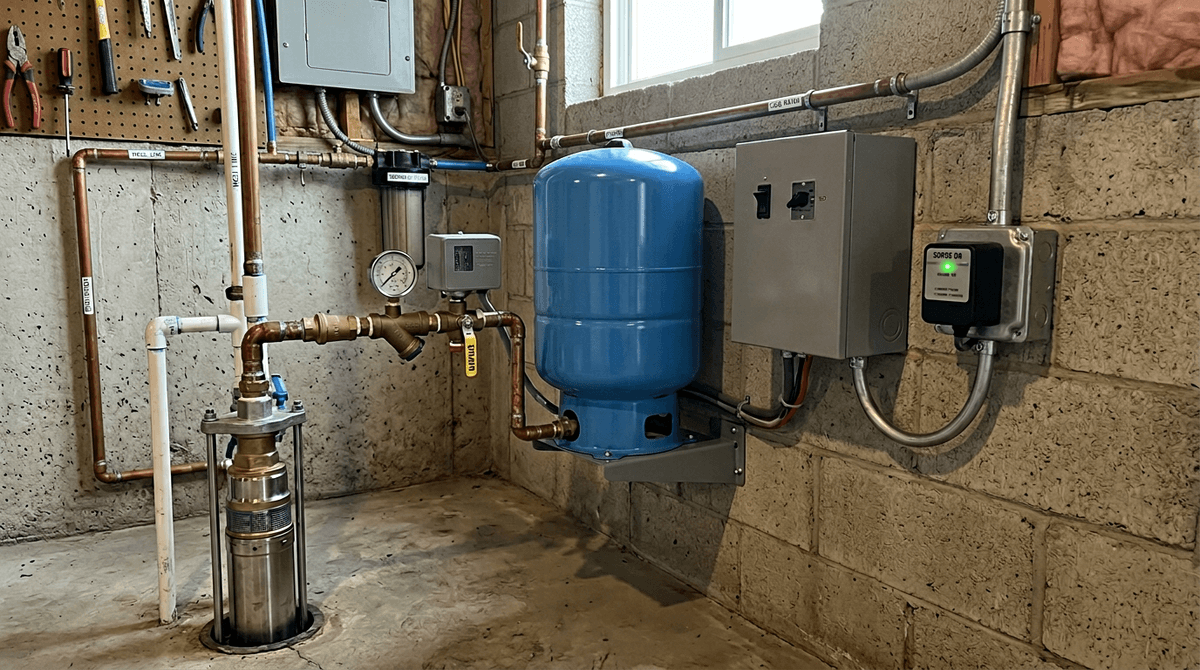
In rainy season, many homes run well pumps less for outdoor use, while indoor demand keeps baseline cycling active.
For full system planning, use the WattSizing Calculator.
Quick Answer
Running watts stay around 700 to 2,000 W depending on pump size, with high startup inrush. Rainy-season kWh/day is often moderate compared with summer.
Rainy-Season Notes
Less irrigation can reduce total hours, but storm outages can make backup-readiness more important.
Typical Ranges
| Pump Size | Running Watts | Starting Watts | Typical Rainy-Season kWh/day |
|---|---|---|---|
| 1/2 HP | 700 - 1,100 W | 1,400 - 2,500 W | 1.3 - 3.1 |
| 3/4 HP | 900 - 1,500 W | 1,800 - 3,200 W | 1.8 - 4.1 |
| 1 HP | 1,200 - 2,000 W | 2,400 - 4,200 W | 2.4 - 5.2 |
Practical Example
A 3/4 HP pump at 1,100 W average for 2.0 hours/day uses 2.2 kWh/day.
FAQs
Does rain lower pump watts directly?
No, it mainly changes how often and how long the pump runs.
Should rainy-season backup plans include surge?
Yes, always.
Is a soft starter useful for well pumps?
Where compatible, it can reduce startup stress.
CTA
Ready to size your setup accurately? Use the WattSizing Calculator to estimate panel, battery, and inverter requirements from your real appliance loads.


