
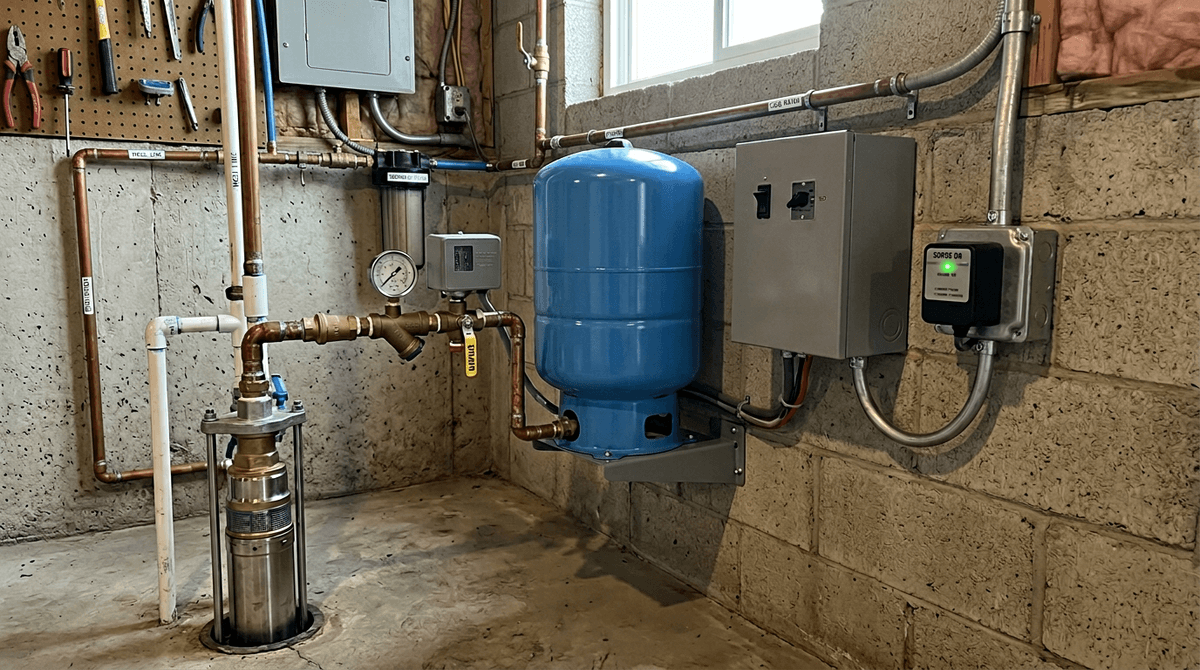
In summer, well pumps often keep the same power range per cycle but run more total hours due to watering and higher daily demand.
For full system planning, use the WattSizing Calculator.
Quick Answer
Typical residential well pumps draw about 700 to 2,000 running watts and can surge to 2x to 4x at startup. Summer usually increases total daily kWh by increasing runtime.
Summer Effects
Lawn irrigation, pool top-ups, and higher household use can add pump cycles. Longer runs drive energy cost more than nameplate watt changes.
Typical Summer Ranges
| Pump Size | Running Watts | Starting Watts | Typical Summer kWh/day |
|---|---|---|---|
| 1/2 HP | 700 - 1,100 W | 1,400 - 2,500 W | 1.8 - 4.0 |
| 3/4 HP | 900 - 1,500 W | 1,800 - 3,200 W | 2.4 - 5.0 |
| 1 HP | 1,200 - 2,000 W | 2,400 - 4,200 W | 3.0 - 6.2 |
Practical Example
A 1 HP pump averaging 1,400 W for 3 hours/day in summer:
- kWh/day = (1,400 x 3) / 1000 = 4.2
FAQs
Do summer temperatures increase pump surge?
Surge is mostly motor/electrical behavior; summer mainly increases run hours.
Should I size inverter for the largest surge?
Yes, always size for startup demand with safety margin.
Can leak repairs reduce pump kWh?
Absolutely. Fixing leaks and pressure settings can cut unnecessary cycling.
CTA
Ready to size your setup accurately? Use the WattSizing Calculator to estimate panel, battery, and inverter requirements from your real appliance loads.


