
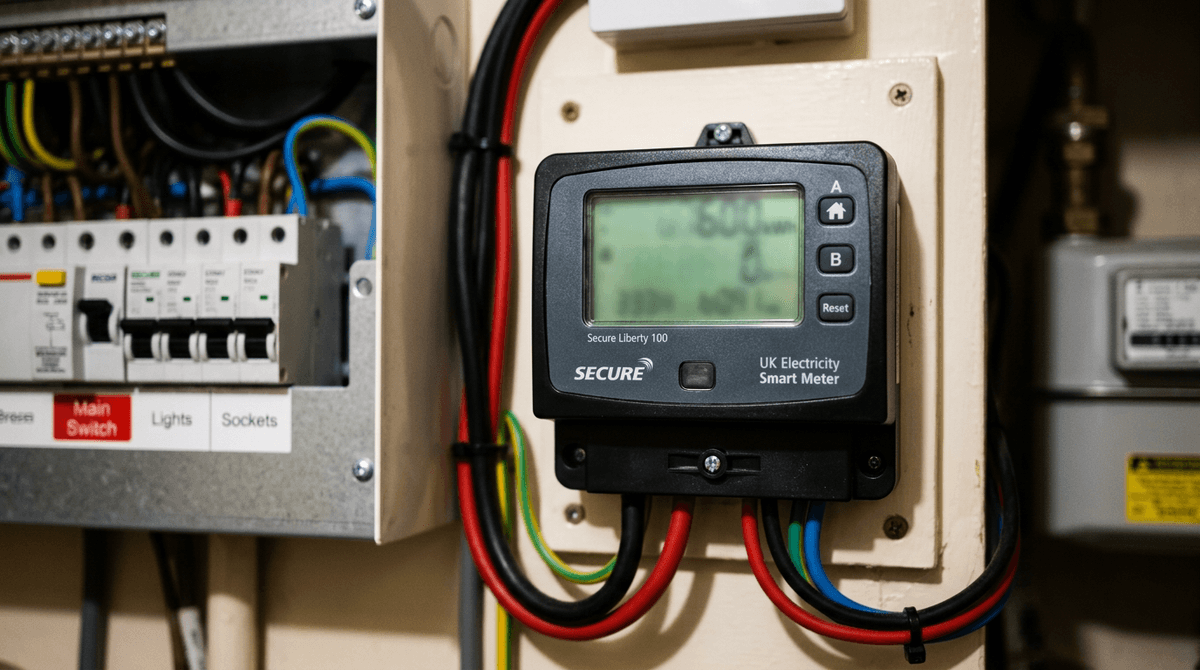
If you only stare at the total, British electricity feels like weather you cannot forecast. The useful view is narrower: how many days were in the period, your standing charge per day, your unit rate in pence per kWh (single-rate or multi-rate), and whether VAT is shown inclusive or listed separately. Once those are on one notepad, “why did January cost more?” stops being a mood and becomes arithmetic.
Benchmarks and bill math: Average Home Power Usage in United Kingdom and How to Calculate Electricity Bill from kWh.
Ofgem regulates energy suppliers and publishes consumer guidance at Ofgem. For government energy bill support schemes and official explainers, start at GOV.UK energy bills. Those pages change with policy announcements—always check dates footers when comparing to forum posts.
Standing charge vs unit rate: two different levers
Standing charge is the price of being connected and shared network costs spread per day. It often moves on plan changes or supplier pricing updates, not because you boiled the kettle once. Unit rate times kWh is where behaviour, insulation, and equipment live. Savings plans should name which bucket they attack; trimming kWh does not shrink standing charge.
Single-rate, Economy 7-style splits, and agile-style tariffs
You might see one unit rate all day, two rates (night storage traditions still echo in some homes), or time-of-use style products tied to half-hourly market shapes. The right product depends on whether you can move car charging, wet appliances, or storage heating into cheaper windows. If your routine cannot shift, fancy clocks on the tariff may not beat a simple well-priced single rate.
What dominates UK electricity (even when gas heats space)
Many homes use gas for central heating but still lean on electricity for hot water cylinders, towel rails, cooking, lighting, home offices, and increasingly heat pumps or partial electric heating in retrofits. Cold snaps that push immersion top-ups or portable heaters show up quickly in kWh.
Use the WattSizing Calculator to sanity-check “one hour of this heater daily” before you reorganise your entire week around it.
Illustrative pence example (VAT shown inclusive for simplicity)
Illustrative only—numbers are rounded teaching aids.
Assume a billing period of 31 days:
- Standing charge: 45p per day →
31 × £0.45 = £13.95 - Single-rate energy: 28p per kWh inclusive of VAT in this illustration
- Usage: **290 kWh
→290 × £0.28 = £81.20`
Illustrative total: 13.95 + 81.20 = £95.15
Cut usage 10% to 261 kWh:
- Energy:
261 × 0.28 = £73.08 - Standing unchanged:
£13.95 - New total:
£87.03
Illustrative saving about £8.12 for the period. If standing charge is a large share of your bill (low kWh homes), percentage savings on the total look smaller than percentage savings on kWh—that is expected.
A fortnight plan that respects British housing
- Note period length, standing charge, and p/kWh from the PDF.
- Immersion discipline: timer; avoid “boost all evening” habits.
- Wet appliances: fill loads; eco programmes where they actually save kWh on your machine.
- Lighting: LED everywhere; outdoor PIR not dusk-to-dawn flood.
- Home office: monitor sleep; printer off strip.
- Heat-pump users: flow temperature down where installer guidance allows; curtains closed at dusk.
Switching suppliers and the cooling-off habit
Comparison sites and Ofgem advice stress looking at standing charge + unit rate + exit fees. If you switch, diarise the cooling-off window and save welcome pack PDFs the day they arrive.
FAQs
Why did my standing charge rise when wholesale prices fell?
Suppliers unbundle network and policy costs differently over time. Compare both line items across quotes, not only the flashy unit rate.
Does a smart meter automatically save money?
It reveals timing and can unlock certain tariffs; savings still require usage change or a better-matched product.
Is Economy 7 still worth it without storage heaters?
Sometimes no—cheap night units can pair with EV or timed wet appliances; otherwise you overpay by day. Model your half-hourly shape if your supplier app provides it.
Can VAT be reduced on domestic electricity?
Policy changes surface on GOV.UK announcements; do not rely on older blog comments for current VAT treatment.
Why is my direct debit higher than last month’s bill?
DD is a forecast; true-ups happen later. Track meter kWh against statements.
Do voltage optimisation devices work?
Treat extraordinary claims with scepticism; measure kWh with and without if you experiment.
What about solar PV and export?
Export tariffs and SEG arrangements vary; read your supplier’s current SEG rate PDF. Reducing waste still lowers import kWh.
Who do I complain to if billing is wrong?
Start with the supplier complaint process; Energy Ombudsman escalation follows published timelines if you stall.
Sources
Use WattSizing to test one change at a time
Pick a single habit shift, estimate kWh in the WattSizing Calculator, and compare to your smart-meter portal or next statement.


