
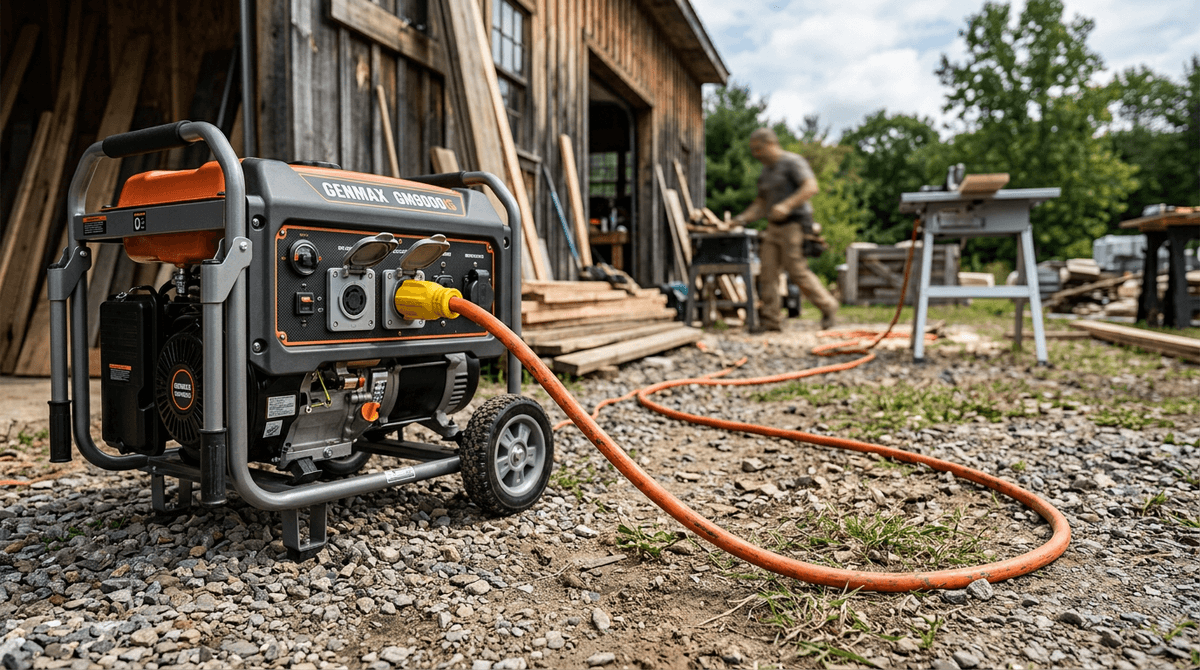
The wrong extension cord can cause voltage drop, overheating, nuisance trips, and motor startup problems. Cord sizing should be based on current, distance, and allowable voltage drop.
For complete load checks, use the WattSizing Calculator.
Quick Answer
- Determine load amps from watts and voltage.
- Keep voltage drop typically under 3% for sensitive/motor loads.
- Increase wire gauge (lower AWG number) as run length or current increases.
Step-by-Step Sizing Method
- Calculate current:
Amps = Watts / Volts(single-phase approximation)
- Measure one-way cord length.
- Set target voltage drop (often 3% for critical loads).
- Choose AWG that keeps drop and heat within safe limits.
For motors/compressors, be conservative because startup current spikes are much higher.
Quick Cord Gauge Table (120V Portable Loads)
| Load Current | Up to 25 ft | 26 - 50 ft | 51 - 100 ft |
|---|---|---|---|
| Up to 10 A | 16 AWG | 14 AWG | 12 AWG |
| 10 - 15 A | 14 AWG | 12 AWG | 10 AWG |
| 15 - 20 A | 12 AWG | 10 AWG | 8 AWG |
These are practical planning values; always confirm cord amp rating, connector type, and local code requirements.
Worked Examples
Example 1: 1,200 W load at 120V, 40 ft run
Amps = 1,200 / 120 = 10 A- 40 ft at 10 A suggests 14 AWG minimum; 12 AWG gives extra margin.
Example 2: 1,800 W heater at 120V, 80 ft run
Amps = 1,800 / 120 = 15 A- At 80 ft and 15 A, use 10 AWG to control voltage drop.
Example 3: Well pump with startup surge
Even if running current suggests 12 AWG, long runs and startup surge often justify 10 AWG or heavier.
Related:
Safety and Performance Tips
- Do not daisy-chain multiple cords.
- Uncoil cords fully to avoid heat buildup.
- Use outdoor-rated cords and weather-protected connections.
- Match plug/receptacle ratings exactly.
- Replace damaged cords immediately.
FAQs
Can I use a longer thin cord if the load is small?
You can for very small loads, but voltage drop still increases with distance. Verify both amp rating and drop.
Why does my motor fail to start through an extension cord?
Likely causes are high startup current plus voltage drop from undersized or too-long cable.
Is 14 AWG okay for a 15A circuit?
For short runs it may work, but many real-world generator scenarios perform better with 12 AWG for margin.
Do I size cords from running watts or surge watts?
Use running watts for thermal loading, but account for surge behavior to avoid startup voltage collapse.
CTA
Need to check generator load, startup surge, and practical wiring margins together? Use the WattSizing Calculator to plan safer, more reliable backup setups.


