
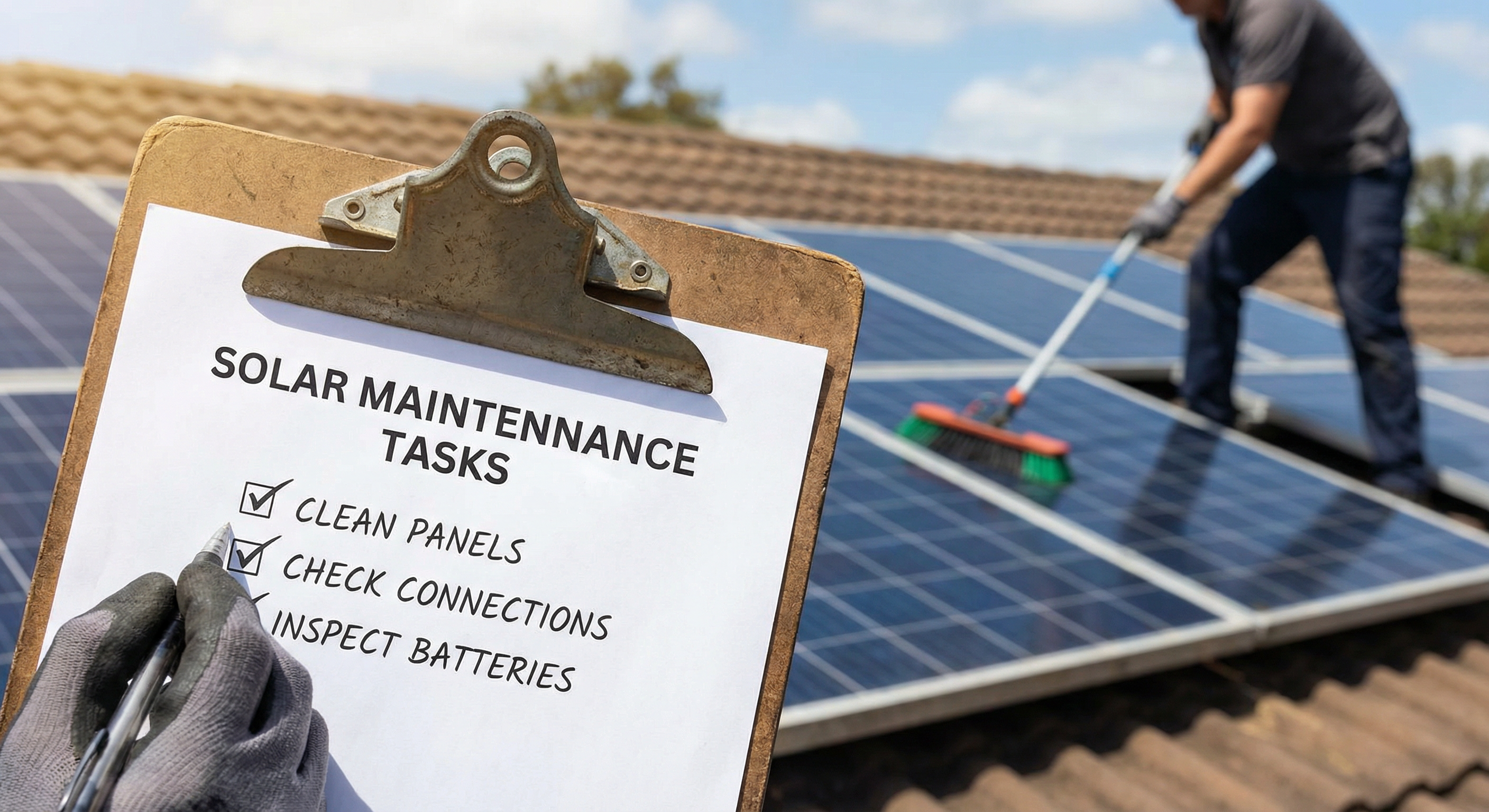
One of the best things about solar power is reliability. With no moving parts, panels can last 25+ years. However, "low maintenance" is not the same as "no maintenance." Neglecting your system can lead to reduced efficiency, battery failure, or even fire hazards.
Perform this inspection every 6 months (or seasonally).
1. Solar Panels (The Array)
Dirty panels can lose 5-20% of their output.
- [ ] Clean the Glass: Use water and a soft sponge/brush. Do not use harsh detergents or abrasive scrubbers. Ideally, clean them early in the morning when they are cool to avoid thermal shock (cracking glass with cold water).
- [ ] Check for Shading: Trees grow. Check if new branches are casting shadows on your array during peak sun hours (10am - 2pm). Trim as needed.
- [ ] Inspect Mounting: Check that bolts and clamps are tight. Wind vibration can loosen them over time.
- [ ] Check Wire Management: Look underneath the panels. Are wires hanging down? Are squirrels chewing on them? Zip-tie loose cables to the frame.
2. Battery Bank (The Heart)
This is the most likely component to fail if neglected.
For Lead Acid (Flooded)
- [ ] Check Water Levels: Add distilled water if plates are exposed. Never use tap water.
- [ ] Equalize: Run an equalization charge (controlled overcharge) to de-sulfate the plates (check your manual first).
- [ ] Check Terminals: Look for white/green corrosion. Clean with baking soda and water, then coat with petroleum jelly or terminal spray.
For LiFePO4 (Lithium)
- [ ] Check State of Charge (SOC): Ensure the BMS is reporting correctly. Occasionally fully charge to 100% to let the BMS "top balance" the cells.
- [ ] Check Terminals: Torque the terminal bolts to spec. Loose connections cause heat and melting.
- [ ] Check Temperature: Ensure batteries are not getting too cold (below freezing) or too hot (>45°C).
3. Electrical Connections (The Safety Check)
Loose wires cause fires.
- [ ] "The Wiggle Test": Gently wiggle wires at the inverter, charge controller, and breakers. If they move, tighten the screw terminals. (Turn off power first!)
- [ ] Thermal Inspection: If you have an infrared thermometer (or thermal camera), scan your breaker box and connections while the system is under load. Hot spots indicate loose connections or corrosion.
- [ ] Check Fuses/Breakers: Ensure they are not hot to the touch.
4. Inverter & Charge Controller
- [ ] Clean Vents: Dust accumulation clogs cooling fans. Use compressed air to blow out the vents of your inverter and charge controller.
- [ ] Check Error Logs: Most modern MPPTs and inverters have a screen or app. Check the history for any fault codes or warnings you might have missed.
- [ ] Firmware Update: Check the manufacturer's website for firmware updates that might improve efficiency or fix bugs.
5. Safety Gear
- [ ] Fire Extinguisher: Is it charged? Is it the right type (Class C for electrical)?
- [ ] Labels: Are your disconnects clearly labeled? If emergency responders come, do they know how to shut off the solar?
Troubleshooting
If you find an issue during your inspection, don't ignore it. A small loose wire today is a melted inverter tomorrow. For help diagnosing issues, read our guide on Troubleshooting Common Off-Grid Solar Problems.


