
Solar and battery sizing use watt-hours (Wh) and amp-hours (Ah). Both describe energy capacity, but Wh is voltage-independent and easier for system sizing. This guide explains the difference and how to convert.
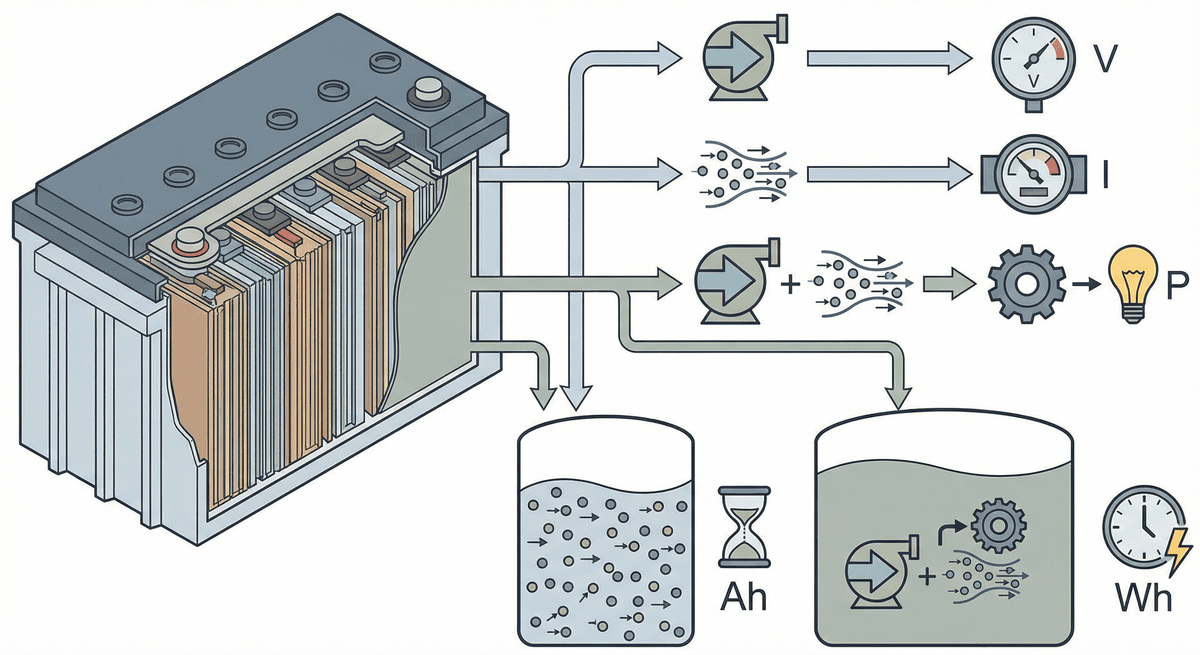
What They Mean
- Watt-hour (Wh): Energy = power × time. 1 Wh = 1 watt for 1 hour. A 100 Wh battery can supply 100 W for 1 hour (or 50 W for 2 hours, etc.). Wh doesn’t depend on voltage—so 500 Wh is 500 Wh at 12V or 48V.
- Amp-hour (Ah): Charge capacity at a given voltage. Ah × voltage = Wh. So 50 Ah at 12 V = 600 Wh; 50 Ah at 24 V = 1,200 Wh. Ah alone doesn’t tell you energy unless you know the voltage.
Why Wh Is Better for Sizing
Your daily energy use is in Wh. Panel output and battery capacity in Wh make the math simple: “I need 2,000 Wh/day; my battery is 5,000 Wh.” When batteries are rated in Ah, convert: Wh = V × Ah (using the system voltage).
Converting Ah to Wh
Wh = Voltage (V) × Amp-hours (Ah)
Example: 12 V, 100 Ah battery → 12 × 100 = 1,200 Wh (1.2 kWh).
When comparing batteries at different voltages, always convert to Wh so you’re comparing the same thing. When sizing your battery bank and daily use, work in Wh (or kWh) and then convert back to Ah at your system voltage if you’re buying Ah-rated batteries. The WattSizing calculator can output both Wh and Ah at your chosen voltage.


