
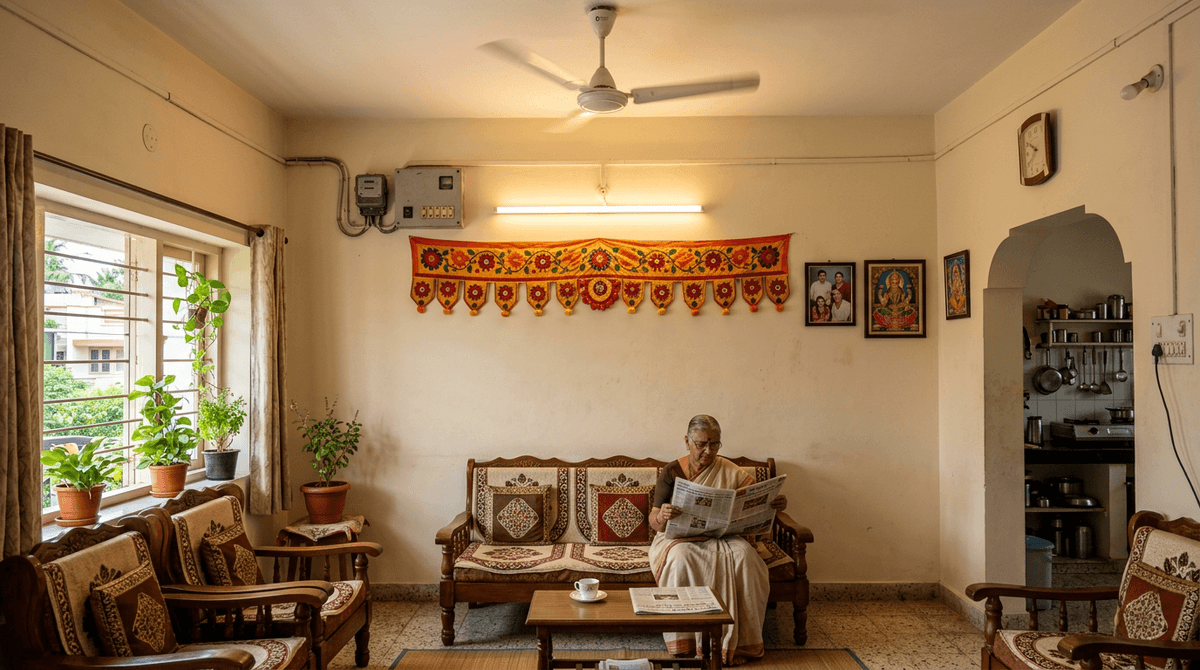
Indian residential bills are built from several layers: energy charges that scale with kWh (often slab-wise), fixed or demand-related charges tied to sanctioned load, and pass-through items such as fuel or power purchase adjustments plus duties and taxes that can move even when your routine does not. Complaining about “high units” without separating those layers leads to the wrong fix.
Ground your usage in Average Home Power Usage in India and practise the arithmetic in How to Calculate Electricity Bill from kWh.
Official context helps: the Ministry of Power portal links policy and consumer-facing programmes; state Electricity Regulatory Commissions publish tariffs and consumer information. As an example of how tariffs are presented to the public, Delhi Electricity Regulatory Commission (DERC) publishes consumer awareness material on how electricity tariffs are determined. Your own state DISCOM site remains the source for your approved schedule.
Bill-first audit in four steps
- Record billing period (reading dates) and total kWh.
- Split energy charge lines (units × slab rates) from fixed/demand lines.
- Note duty, cess, and GST (where shown) separately so you know what scales with kWh.
- Compute kWh per day = total kWh ÷ days in period—use this to compare months with different lengths.
Why slabs make “small changes” surprisingly powerful
If your consumption sits just below a slab boundary, shaving a modest number of kWh can drop the marginal rate on the next block. If you are deep inside a slab, the same habit change saves money linearly but does not change the tariff step.
Summer in the north and coastal humidity in the west and east push air-conditioning and fan hours; those loads dominate many middle-class bills more than lighting ever will.
Fixed charges and sanctioned load
Reducing kWh for one month does not automatically reduce fixed charges based on connected or sanctioned load. If fixed components are a large share of your bill, investigate whether your declared load matches actual need—this is a paperwork and DISCOM process, not a weekend unplugging exercise.
PPAC and similar adjustments
Fuel or power purchase adjustment charges exist because retail tariffs track wholesale input costs. Your bill can rise without you touching the AC remote. That is why savings plans must still be verified against kWh and line items, not vibes.
30-day action plan (order matters)
Days 1–7 — Baseline
Collect two consecutive bills. Tabulate days, kWh, energy subtotal, fixed subtotal, and taxes.
Days 8–14 — Attack runtime
Raise AC setpoint by 1–2 °C where comfort allows, seal obvious gaps around windows and doors, and ensure outdoor AC units have airflow. Shorten geyser heating windows if you heat storage water electrically.
Days 15–21 — Kitchen and wet loads
Batch induction or pressure cooker use instead of long simmering where practical; run washing machines full; reduce dryer reliance if you use one.
Days 22–30 — Standby and refrigeration
Clean fridge coils if accessible, check door seals, and remove the second ageing fridge if it barely holds snacks.
Throughout, pay before the due date so late payment surcharges do not erase your kWh wins.
Illustrative INR example (simplified slab)
Illustrative only; real tariffs, duties, and GST bases vary by state and customer class.
- Period: 30 days
- Consumption: 200 kWh
- Slab energy rates (illustrative): first 100 kWh at ₹5.50; next 100 kWh at ₹7.80
Energy =(100 × 5.50) + (100 × 7.80) = ₹1,330 - Fixed charge: ₹200
- Illustrative “adjustment” at ₹0.25/kWh:
200 × 0.25 = ₹50 - Subtotal before GST:
1,330 + 200 + 50 = ₹1,580 - Illustrative GST 18%:
1,580 × 0.18 = ₹284.40→ total ₹1,864.40
Cut consumption 10% → 180 kWh:
Energy = (100 × 5.50) + (80 × 7.80) = 550 + 624 = ₹1,174
Adjustment: 180 × 0.25 = ₹45
Subtotal: 1,174 + 200 + 45 = ₹1,419
GST: 1,419 × 0.18 = ₹255.42 → total ₹1,674.42
Illustrative saving ≈ ₹190 in the month—real outcomes depend on whether you cross slab edges and how fixed items behave on your tariff.
Check your math with WattSizing
Map major appliances to kWh in the WattSizing Calculator. If the model is far below your bill, you are missing a large runtime load (often cooling or water heating).
FAQs
Where do I find my exact tariff slabs?
On your DISCOM website or the tariff order published by your state electricity regulatory commission for your customer category.
Why did my bill increase when I used fewer units?
Fixed charges, adjustments, or estimated reads can dominate. Compare kWh per day and each line item to the previous bill.
Does running AC at 18 °C save money?
No—it increases compressor runtime and kWh. Higher setpoints with fans and shading usually cost less per unit of comfort.
Can solar rooftop eliminate my DISCOM bill?
It reduces grid kWh you buy; fixed charges and regulatory components may still apply depending on your arrangement and state rules.
How do I contest a wrong reading?
Follow your DISCOM’s complaint and CGRF/ombudsman process with photograph or meter evidence; rules vary by state.
What is the quickest kitchen win?
Stop boiling excess water in the kettle; match water volume to cups actually needed—repeat daily for measurable kWh.
Are “power saver” plugs worth it?
If your bill is high, fix large loads first. Plug-in devices rarely move kWh as much as AC, geysers, or inefficient fridges.
How do I compare two months fairly?
Use kWh per day and, if tariffs changed mid-period, read the DISCOM notice that explains effective dates.
Sources
Use the WattSizing Calculator after you pick one change, then confirm on your next meter reading cycle.


