
Days of autonomy is how many full days your system can run on the battery alone if the sun doesn’t shine. It directly drives how big your battery bank needs to be. This guide explains how to choose the right number and what it costs.
What Are Days of Autonomy?
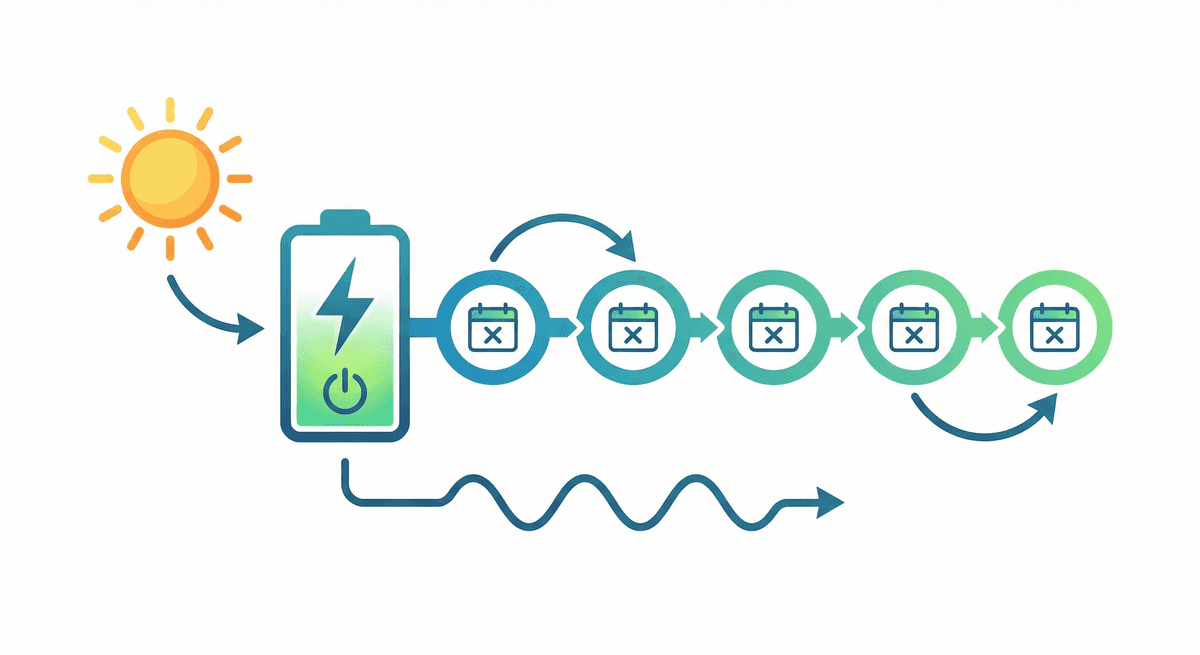
Days of autonomy = the number of days your loads can be powered only from the battery with no solar input. So “2 days” means: after two full days with no sun, the battery would be depleted (to your chosen depth of discharge). More days = bigger battery and higher cost.
Typical Choices
- 1 day: Sunny, reliable climates; minimal backup. Smallest, cheapest battery.
- 2–3 days: Common for cabins, RVs, and many off-grid homes. Good balance of cost and reliability.
- 4–5+ days: Cloudy regions, critical loads (medical, telecom), or peace of mind. Larger, more expensive bank.
How It Affects Battery Size
Battery capacity (Wh) = Daily use (Wh) × Days of autonomy ÷ DoD
So doubling days of autonomy roughly doubles the battery size (and cost). Going from 2 to 4 days is a big step; going from 1 to 2 is a big step too. Choose the minimum you’re comfortable with.
What to Consider
- Weather: If you often get 2–3 cloudy days in a row, plan for at least that many days of autonomy.
- Season: Winter has fewer peak sun hours; some people size autonomy for the worst month.
- Load management: If you can cut non-essential loads on cloudy days, you can get away with fewer days and a smaller battery.
- Chemistry: LiFePO4 supports deeper discharge and more cycles, so “3 days” with LiFePO4 is more practical than with lead-acid over the long term.
Summary
Pick days of autonomy based on your location, how critical your loads are, and your budget. Then plug it into the battery sizing formula or the WattSizing calculator to get the required battery capacity. A little extra autonomy adds resilience; too much adds cost without much extra benefit for most users.


