
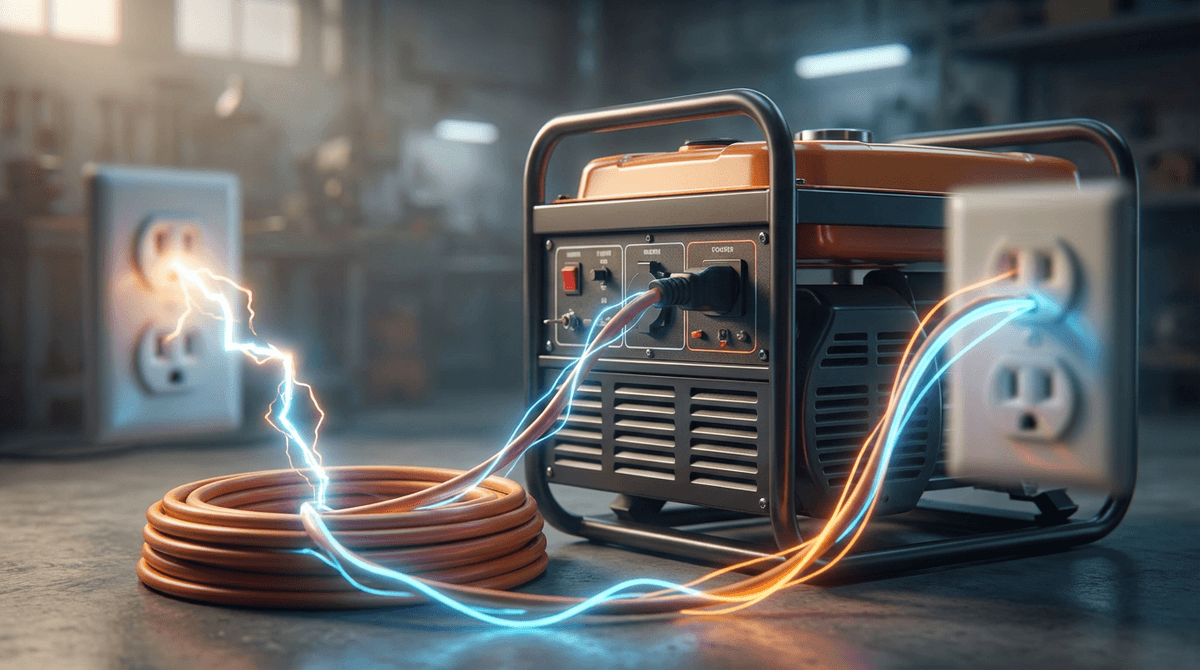
Many generator problems are not from buying a weak unit, but from ignoring startup surge. A generator can handle your steady load, then still trip when one motor kicks on.
For full system planning, use the WattSizing Calculator.
Quick Answer
- Running watts = continuous power your generator can supply.
- Starting watts = short surge power available for motor/compressor startup.
You must check both. If startup demand exceeds surge capacity, the generator may stall, trip, or fail to start the appliance.
Why the Difference Matters
Resistive loads (lights, toasters, heaters) have little to no startup surge. Motor loads (fridges, pumps, AC compressors, power tools) can demand 2x to 4x their running watts for a few seconds.
That is why a setup that "adds up fine on paper" can still fail in practice.
Related reading:
Running vs Starting Watts Table
| Appliance | Typical Running Watts | Typical Starting Watts |
|---|---|---|
| Refrigerator | 120 - 300 W | 600 - 1,200 W |
| Chest freezer | 100 - 250 W | 500 - 1,000 W |
| Sump pump (1/3 HP) | 800 - 1,000 W | 1,500 - 2,200 W |
| Window AC (small) | 500 - 1,200 W | 1,500 - 2,800 W |
| Circular saw | 1,200 - 1,800 W | 2,000 - 3,500 W |
Practical Sizing Method
- Add all loads that run at the same time (running watts total).
- Find the largest startup surge likely to happen.
- Confirm generator surge rating can handle that startup event.
- Add a 15% to 25% real-world margin for heat, altitude, and aging.
Rule of thumb:
Generator size >= (Total running watts + largest extra startup bump) x 1.15 to 1.25
Worked Example
Home backup loads:
- Fridge running: 180 W (startup 900 W)
- Lights and router: 250 W
- Sump pump running: 900 W (startup 2,000 W)
Running total if all active: 180 + 250 + 900 = 1,330 W
Largest startup event above running:
- Sump pump startup bump:
2,000 - 900 = 1,100 W
Required surge-aware base: 1,330 + 1,100 = 2,430 W
With 20% margin: 2,430 x 1.2 = 2,916 W
Practical pick: ~3,000 W+ quality inverter generator (or next size class up if high altitude/hot climate).
Common Mistakes
- Sizing from running watts only.
- Ignoring compressor and motor startup.
- Assuming every listed "peak" number is sustainable continuously.
- Running generator at max output for long periods.
If you are comparing inverter and battery options too, see Inverter Sizing for Off-Grid Solar.
FAQs
Can I start two motor loads at once?
You can, but it increases surge risk significantly. Stagger startups whenever possible.
Are starting watts always listed on appliance labels?
Usually no. You may need manual specs, clamp meter data, or typical surge ranges.
What happens if startup demand is too high?
The generator may bog down, breaker-trip, stall, or fail to start the appliance reliably.
Do inverter generators handle surge better?
Good inverter generators handle surge well within rated limits and provide cleaner power, but you still must size correctly.
CTA
Want a no-guess answer for your exact loads? Use the WattSizing Calculator to model running watts, startup surges, and safe generator headroom.


