
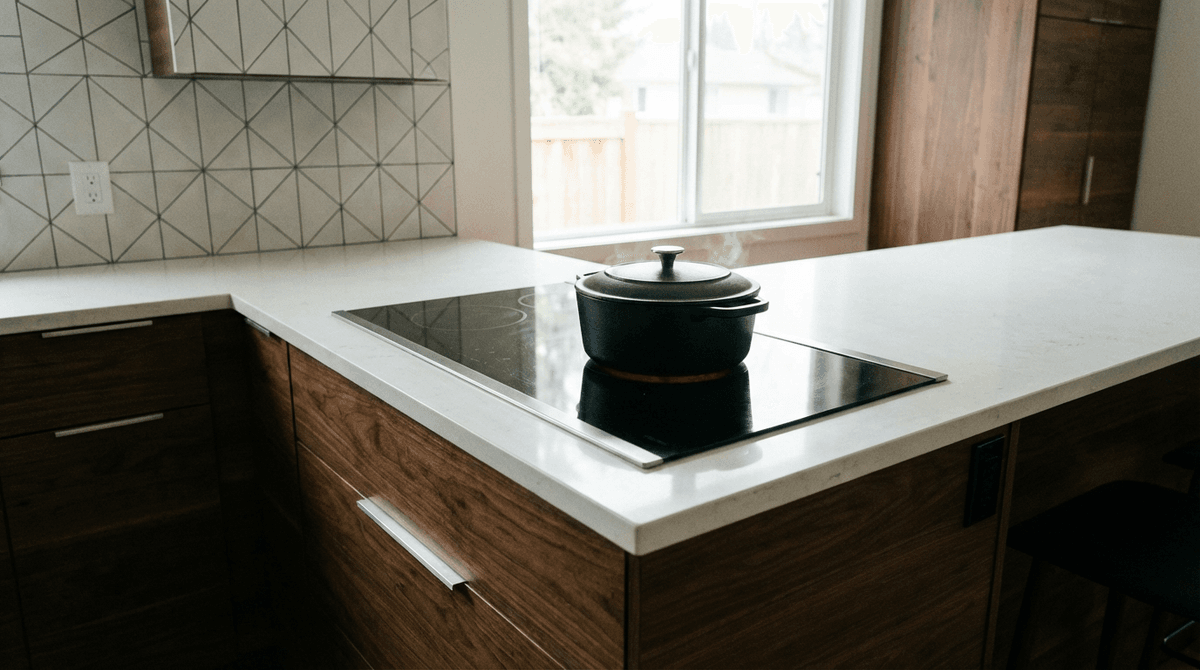
Most electric stoves use about 1,000 to 3,000 watts per active burner, depending on burner size, stove type, and heat level.
For full system planning, use the WattSizing Calculator.
Quick Answer
Most electric stove burners run around 1,000 to 3,000 W when heating. Small burners are often near 1,000 to 1,500 W, while large burners and high-power elements can reach 2,500 to 3,000 W.
Detailed Explanation
Electric stoves are mostly resistive loads, so they usually do not have large motor-style startup surges. Real-world power use changes with:
- Burner size: larger elements draw more watts.
- Heat setting: medium/low settings often cycle power on and off.
- Cookware and food load: heavy pots and cold contents keep elements on longer.
- Cooktop technology: induction can transfer heat more efficiently to the pan.
If your setup includes other kitchen loads, compare stove demand with How Many Watts Does an Electric Oven Use and How Many Watts Does an Electric Kettle Use.
Watt Table
| Electric Stove Type / Burner | Typical Running Watts | Typical Starting Watts |
|---|---|---|
| Small coil or smooth-top burner (6 in) | 1,000 - 1,500 W | 1,000 - 1,550 W |
| Medium burner (7-8 in) | 1,500 - 2,000 W | 1,500 - 2,100 W |
| Large burner (9-12 in) | 2,000 - 3,000 W | 2,000 - 3,100 W |
| Induction element (high setting) | 1,200 - 3,700 W | 1,200 - 3,800 W |
Calculation Example
Example: You run a 2,000 W burner for 45 minutes total in a meal.
- Run time in hours: 45 / 60 = 0.75 h
- kWh = (2,000 x 0.75) / 1000 = 1.50 kWh
- At $0.16/kWh, that cooking session costs about $0.24
For full daily kitchen totals, see How Many Watts Does an Electric Stove Use Per Day and How Many Watts Does a Dishwasher Use.
Tips to Reduce Power Usage
- Match burner size to pan size to reduce wasted heat.
- Keep lids on pots to shorten boil and simmer times.
- Use residual heat by turning burners off slightly early.
- Avoid running multiple high-watt kitchen appliances at the same time on backup power.
FAQs
Is an electric stove usually higher wattage than a microwave?
For active cooking, yes. A single stove burner can match or exceed many microwaves, especially on larger elements.
Do electric stoves draw full wattage all the time?
Not always. On lower settings, many elements cycle on and off, reducing average power over time.
Is induction always lower energy use?
Induction often improves cooking efficiency at the pan, but total energy still depends on power setting and cooking duration.
CTA
Ready to size your setup accurately? Use the WattSizing Calculator to estimate panel, battery, and inverter requirements from your real appliance loads.


