
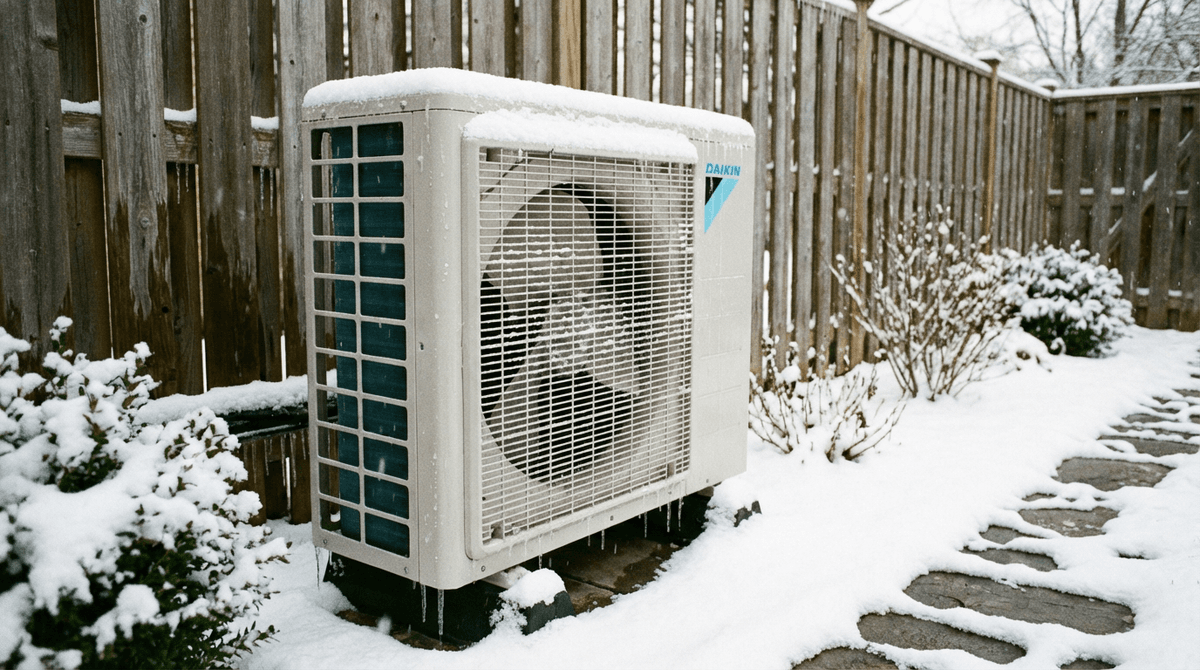
Many homes see roughly 5 to 30 kWh/day of heat pump energy use in heating season, but mild weather can be lower and very cold conditions (especially with auxiliary electric heat) can push daily use much higher.
For full system planning, use the WattSizing Calculator.
Quick Answer
Many homes see roughly 5 to 30 kWh/day of heat pump energy use in heating season, but mild weather can be lower and very cold conditions (especially with auxiliary electric heat) can push daily use much higher.
Detailed Explanation
Daily heat pump energy is best thought of as “average watts across the day,” which changes constantly as conditions change. Key drivers include:
- Outdoor temperature and humidity
- Home insulation/air sealing
- Thermostat setpoint and setbacks
- System size and efficiency
- Auxiliary/backup heat runtime
If auxiliary resistance heat runs, daily kWh can rise quickly because resistance heat converts electricity to heat at roughly 1:1 (unlike the heat pump, which can deliver more heat per watt in many conditions).
For baseline running watt behavior, see How Many Watts Does a Heat Pump Use and compare a resistive alternative in How Many Watts Does a Space Heater Use Per Day.
Watt Table
| Heat Pump Scenario | Typical Running Watts (Average While Operating) | Typical Daily Use (kWh/day) |
|---|---|---|
| Mini split, mild weather | 300 - 900 W | 2 - 10 kWh/day |
| Central heat pump, moderate cold | 1200 - 2800 W | 8 - 25 kWh/day |
| Central heat pump, cold day (no aux) | 1800 - 3500 W | 15 - 30 kWh/day |
| Cold day with auxiliary electric heat | 5000 - 15000+ W (when aux runs) | 25 - 80+ kWh/day |
Calculation Example
Example: A heat pump averages 1,600 W across the full day after cycling/modulation effects.
- kWh/day = (1,600 x 24) / 1000 = 38.4 kWh/day
- At $0.16/kWh, that is about $6.14/day or around $184.32/month
If you’re modeling loads for backup power, combine How to Calculate Daily Energy Use with cooling-season comparisons like How Many Watts Does a Central Air Conditioner Use Per Day.
Tips to Reduce Power Usage
- Improve air sealing and insulation to cut runtime (often the biggest lever).
- Use smaller thermostat setbacks to avoid high-power recovery periods.
- Keep filters clean and outdoor units clear of debris for proper airflow.
- If you have auxiliary heat strips, understand when they activate and reduce unnecessary triggers where possible.
FAQs
Why does my heat pump kWh/day jump during very cold weather?
Efficiency drops as it gets colder, and auxiliary electric heat may run more often. Both can increase daily kWh significantly.
Is 5 to 30 kWh/day typical?
Yes for many homes, but it depends heavily on climate and building envelope. Very efficient homes can be lower; very cold days with auxiliary heat can be much higher.
Can solar and battery run a heat pump daily?
It’s possible, but heat pumps can be one of the largest daily loads. Accurate sizing requires realistic daily kWh estimates and enough inverter capacity for peak draw.
CTA
Ready to size your setup accurately? Use the WattSizing Calculator to estimate panel, battery, and inverter requirements from your real appliance loads.


