
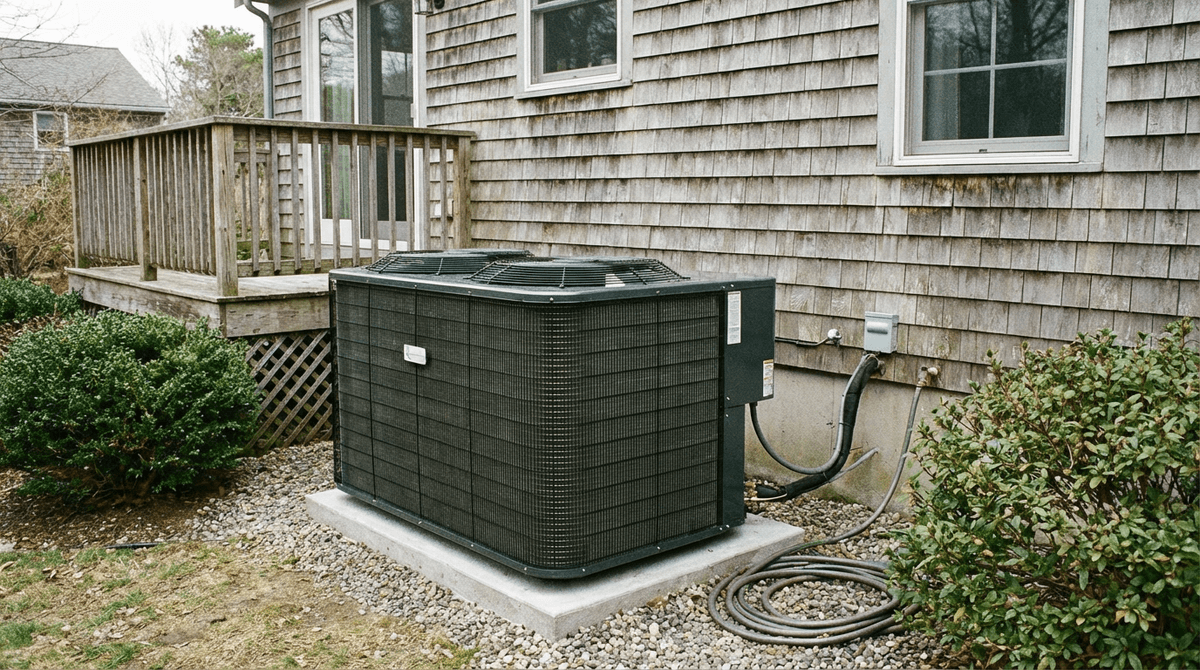
Heat pumps are rapidly becoming the dominant HVAC system in residential homes. Instead of burning gas or using massive electrical coils to create heat, a heat pump uses a small amount of electricity to move heat from the freezing outside air into your living room.
Because they move heat rather than creating it, they are up to 300% more efficient than traditional electric heaters.
However, sizing a backup generator for a heat pump is incredibly complicated. If the outside temperature drops too low (usually below 25°F), the heat pump will automatically activate its "Emergency Heat" strips. These hidden resistive heating coils consume an apocalyptic amount of electricity, instantly stalling almost any portable generator on the market.
In this comprehensive guide, we will break down the exact power consumption of a Heat Pump in both summer and winter, explain the hidden danger of AUX Heat, and show you exactly what size generator you need to survive a winter blackout.
To model your specific heat pump alongside your other household loads, use our free WattSizing Off-Grid Calculator.
The Quick Answer: Heat Pump Power Draw
A heat pump requires a dedicated 240-Volt circuit, usually between 30 Amps and 60 Amps depending on the size of your home.
- Average Running Watts (Compressor Only): A typical 3-ton heat pump uses between 2,500 and 4,500 running watts to heat or cool your home under normal conditions.
- Compressor Startup Surge: Because the large outdoor compressor must overcome inertia, it requires a momentary spike of 6,000 to 12,000 watts every time it clicks on.
- Emergency / AUX Heat (The Danger Zone): If the outside air is too cold, the heat pump activates its backup heating strips. These strips consume a continuous 10,000 to 20,000 watts, doubling or tripling your total power draw instantly.
Heat Pump Wattage by Tonnage Size
Heat pumps are sized in "Tons" (1 Ton = 12,000 BTUs). The larger your house, the higher the tonnage.
Here is a realistic look at what different sizes of heat pumps pull from your electrical panel during normal operation (excluding Emergency Heat):
| Heat Pump Size | Home Size (Sq. Ft.) | Typical Running Watts | Typical Starting (Surge) Watts |
|---|---|---|---|
| 2 Ton (24k BTU) | 1,000 - 1,200 sq ft | 1,500 - 2,500 W | 4,000 - 6,000 W |
| 3 Ton (36k BTU) | 1,500 - 2,000 sq ft | 2,500 - 4,500 W | 6,000 - 10,000 W |
| 4 Ton (48k BTU) | 2,000 - 2,500 sq ft | 3,500 - 5,500 W | 8,000 - 14,000 W |
| 5 Ton (60k BTU) | 2,500 - 3,500 sq ft | 4,500 - 7,000 W | 10,000 - 18,000 W |
Note: The indoor blower fan (located in your attic or basement) runs simultaneously with the outdoor compressor. The wattage figures above include the 400W-800W draw of the indoor fan.
The Danger of Emergency / AUX Heat
This is the number one reason homeowners accidentally destroy their portable generators in the winter.
A heat pump extracts ambient heat from the outside air. But what happens when it's 10°F outside and there is very little heat to extract? The heat pump struggles, and your thermostat notices the house is getting colder.
To prevent you from freezing, the system automatically activates its Auxiliary (AUX) Heat Strips. These are massive electric toaster coils installed inside your indoor air handler.
- A small 10kW heat strip draws 10,000 watts.
- A large 20kW heat strip draws 20,000 watts.
If your 3-ton heat pump (running at 4,000W) suddenly calls for its 10kW heat strip, your total load instantly jumps to 14,000 continuous watts. If you are running on a 9,000W portable generator, the engine will violently stall and your house will go dark.
What Size Generator Do I Need for a Heat Pump?
If you want to run a central heat pump during a power outage, you must have a heavy-duty 240V Generator.
Generator Sizing Guidelines
- For a 2-Ton to 3-Ton Heat Pump (Normal Mode): You need a 10,000W to 13,000W Portable Generator. This provides enough surge capacity to start the compressor (LRA - Locked Rotor Amps) without bogging down the engine.
- For a 4-Ton to 5-Ton Heat Pump: Portable generators will struggle. You usually need a 15,000W to 24,000W Liquid-Cooled Standby Generator (like a Generac) to handle the massive 15,000W startup surge safely.
- If You Must Run Emergency Heat: If you live in a cold climate and expect the AUX heat strips to activate, a portable generator is impossible. A 15kW heat strip requires a 22,000W to 26,000W Whole-Home Standby Generator.
The "Soft Start" Generator Hack
If you have a 3-Ton Heat Pump and only a 9,000W portable generator, the compressor's startup surge (10,000W) will stall the generator. You can fix this by paying an HVAC technician to install a Micro-Air EasyStart (Soft Starter) on the outdoor unit. This device slowly ramps up the voltage, reducing the startup surge by up to 70%. With a soft starter installed, a 9,000W generator can easily run a 3-Ton heat pump.
Off-Grid Solar & Battery Sizing for Heat Pumps
Running a whole-home central heat pump on an off-grid solar system requires a massive, six-figure solar array and battery bank.
Let's assume you run a 3-Ton Heat Pump (averaging 3,000W) for 10 hours a day to keep the house warm.
3,000W × 10 Hours = 30,000 Wh (30 kWh) per day.
To provide 30 kWh of daily energy, you would need:
- A 12,000W 240V Split-Phase Inverter.
- At least six 48V 100Ah Lithium Batteries (30 kWh total capacity).
- A massive 10,000W Solar Panel Array to recharge those batteries during the short 5-hour winter sun window.
The Off-Grid Alternative: If you live off-grid, do not install a traditional ducted heat pump. Instead, install a Ductless Mini Split Heat Pump. Mini splits use variable-speed inverter compressors that have zero startup surge and idle at just 400W, making them infinitely easier to run on a standard solar battery bank. You should also install a wood stove as your primary winter heating source.
4 Tips for Using a Heat Pump on Backup Power
- Disable the Emergency Heat: If you are running on a portable generator, you MUST go to your smart thermostat (like an Ecobee or Nest) and completely disable the "AUX Heat" or "Emergency Heat" function in the settings. If the temperature drops and the heat strips activate, they will instantly kill your generator.
- Install a Soft Starter: As mentioned above, a $300 Soft Starter reduces the LRA surge of the compressor by 70%, allowing you to use a significantly smaller, cheaper, and more fuel-efficient generator.
- Do Not Touch the Thermostat: Heat pumps are designed to "set it and forget it." If you turn the thermostat down to 60°F at night to save generator fuel, and then push it up to 70°F in the morning, the heat pump will realize it is 10 degrees behind and instantly activate the deadly AUX heat strips to catch up. Pick a comfortable temperature and never move the dial.
- Balance Your Generator Loads: If your 10,000W generator is successfully running your heat pump, do not turn on your electric oven, your microwave, or your electric water heater. You do not have the capacity. Wait until the heat pump cycles off before cooking.
Frequently Asked Questions
Can a 5,000W generator run a heat pump?
No. Even a small 2-Ton heat pump requires 4,000W to 6,000W just to start the compressor. A 5,000W generator will instantly trip its breaker.
Why is my heat pump blowing cold air in the winter?
Heat pumps blow air that is roughly 90°F to 95°F. Your body temperature is 98.6°F. Because the air coming out of the vent is cooler than your skin, it feels cold, even though it is successfully heating the 70°F room. This is completely normal for heat pumps.
Is a heat pump cheaper to run than a gas furnace?
In moderate climates (where the temperature rarely drops below 30°F), a heat pump is significantly cheaper to run because it moves heat rather than creating it. However, if you live in Canada or Minnesota, the heat pump will constantly rely on its expensive electrical AUX strips, making a natural gas furnace the cheaper option.
Conclusion
Heat pumps are incredibly efficient, but their reliance on massive 240V compressors and terrifyingly power-hungry Emergency Heat strips makes them a nightmare for portable generators. To survive a winter blackout comfortably, you must understand your unit's tonnage, install a soft starter, and lock out the AUX heat strips to protect your generator.
Want to accurately size a generator for your HVAC system? Use our free Off-Grid & Backup Load Calculator to enter your exact heat pump tonnage, add your other major appliances, and get a precise 240V generator sizing recommendation instantly.


