
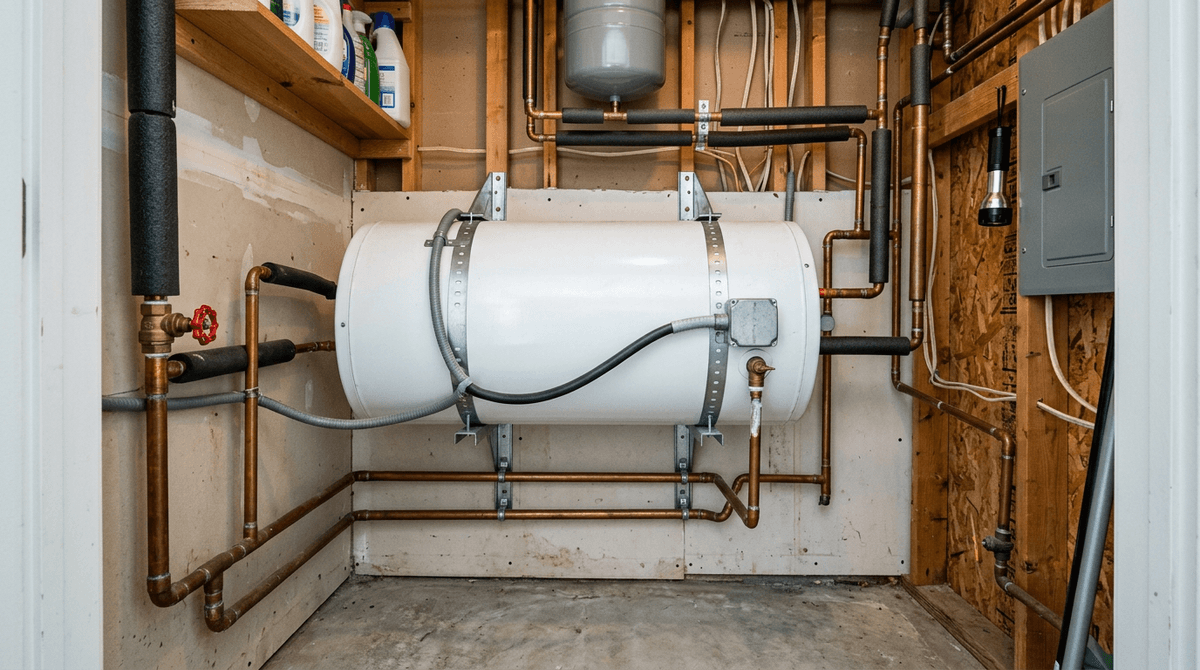
When sizing a backup generator or an off-grid solar system, the electric water heater is the "elephant in the room." While you might obsess over the 150-watt draw of your television, your water heater is quietly pulling thousands of watts in the background.
Electric water heaters rely on massive, 240-volt resistive heating elements to boil water. Unlike gas water heaters (which only use a tiny amount of electricity for digital controls and exhaust fans), purely electric models consume astronomical amounts of power. A standard 50-gallon tank can draw 4,500 continuous watts, while a whole-home electric tankless unit can demand an unbelievable 36,000 watts instantly.
In this comprehensive guide, we will break down the power consumption of Tank, Tankless, and Hybrid water heaters, explain how they impact your monthly electric bill, and detail the heavy-duty generators required to back them up during a grid failure.
To model your specific water heater alongside your other household loads, use our free WattSizing Off-Grid Calculator.
The Quick Answer: Water Heater Power Draw
The power your water heater uses depends entirely on its technology and size.
Here is a quick reference table showing the continuous running watts you must prepare for:
| Water Heater Type | Typical Running Watts | Voltage Required | Daily Energy Usage (kWh) |
|---|---|---|---|
| Gas Tank (Controls Only) | 100 - 500 W | 120V | 0.5 - 1.0 kWh |
| Small Under-Sink Tank | 1,440 - 2,000 W | 120V | 1.0 - 3.0 kWh |
| Standard Tank (40-50 Gal) | 3,500 - 5,500 W | 240V | 10.0 - 15.0 kWh |
| Hybrid Heat Pump (50 Gal) | 500 - 1,500 W | 240V | 3.0 - 5.0 kWh |
| Electric Tankless (1 Bathroom) | 12,000 - 18,000 W | 240V | Depends on flow |
| Electric Tankless (Whole Home) | 24,000 - 36,000+ W | 240V | Depends on flow |
Note: Because electric heating elements are pure resistive loads, water heaters do not have a startup surge. If the sticker says 4,500W, it will pull exactly 4,500W from the moment it turns on until the water reaches temperature.
Deep Dive: Tank vs. Tankless vs. Hybrid
1. Standard Electric Tank Heaters (4,500 Watts)
The vast majority of American homes use a standard 40 or 50-gallon electric tank. These tanks usually contain two 4,500-watt heating elements (an upper and a lower).
- The Catch: They are wired "non-simultaneously." This means only one element ever fires at a time. The total load on your electrical panel is always capped at 4,500 watts.
- The Drawback: They cycle on and off all day and night just to keep the water hot, even when you aren't home (Standby Heat Loss).
2. Electric Tankless Heaters (18,000 to 36,000 Watts)
Electric tankless heaters are incredibly energy-efficient because they only use power when you open the hot water tap. They have zero standby heat loss.
- The Catch: To heat freezing winter groundwater to 120°F instantly as it flows through a pipe at 4 gallons per minute, they require an apocalyptic amount of electricity. A typical whole-home unit requires three dedicated 40-Amp 240V breakers and draws up to 36,000 watts.
3. Hybrid Heat Pump Water Heaters (500 to 1,500 Watts)
Hybrids are the ultimate solution for off-grid and backup power setups. Instead of using a glowing red heating element, they use a tiny air-conditioning compressor in reverse to pull ambient heat out of your garage air and push it into the water.
- The Advantage: They only draw about 500 to 800 watts while actively heating in "Heat Pump Mode," making them incredibly easy to run on solar batteries or a small generator.
What Size Generator Do I Need for a Water Heater?
Sizing a generator for an electric water heater is brutal. Because the wattage is so high and requires 240V split-phase power, you are immediately forced to buy a heavy-duty, expensive generator.
Generator Sizing Guidelines
- For a Gas Water Heater: A tiny 2,000W Inverter Generator is more than enough to power the 120V electronic ignition and power-vent blower motor, with plenty of room left over for your refrigerator.
- For a Standard 4,500W Electric Tank: You need a 7,500W to 10,000W 240V Generator. You must have enough headroom to cover the 4,500W heater plus the startup surge of your refrigerator and well pump.
- For an Electric Tankless Heater: Do not attempt to run an electric tankless heater on a portable generator. A 27,000W tankless heater requires a massive, $15,000+ liquid-cooled standby generator.
Worked Generator Example
You suffer a winter power outage. You have a 50-gallon electric tank heater (4,500W) and a 1/2 HP Well Pump (1,000W Run / 2,500W Surge).
The Math:
4,500W (Water Heater) + 2,500W (Well Pump Surge) = 7,000W Peak Load.
Add a 20% safety margin: 7,000W × 1.2 = 8,400W.
You need an 8,500W minimum generator.
Pro Tip: During an outage, do not leave the water heater breaker turned on permanently. Turn the breaker ON for one hour in the morning to heat the tank for showers, then turn it OFF so your generator can idle down and save massive amounts of gasoline for the rest of the day.
Calculating Your Monthly Hot Water Cost
If you have a standard 4,500W electric tank, you might be shocked by how much of your monthly bill it accounts for.
Formula: (Running Watts × Hours Run) ÷ 1,000 = Kilowatt-Hours (kWh)
Let's assume your family of four takes long showers and runs the dishwasher daily. Your water heater cycles on for a total of 3 hours a day.
4,500W × 3 Hours = 13,500 Wh (13.5 kWh) per day.
At an average electricity rate of $0.15 per kWh:
- Daily Cost: $2.02
- Monthly Cost: $60.75 per month (Over $720 a year just to heat water!)
Upgrading to a Hybrid Heat Pump water heater can cut this cost by up to 75%, paying for itself in less than three years.
4 Tips for Using a Water Heater on Backup Power
- Install a 240V Interlock Kit: You cannot plug a 4,500W water heater into an extension cord. It is hardwired into your breaker box. To power it with a generator, you must hire an electrician to install a Generator Interlock Kit and a 30-Amp inlet box on the side of your house.
- Lower the Thermostat: By default, water heaters are set to 140°F. Lowering the thermostat to 120°F not only prevents scalding but significantly reduces the amount of time the 4,500W element has to run, saving generator fuel.
- Insulate the Tank and Pipes: Wrapping your tank in a fiberglass insulation blanket (and insulating the first 6 feet of copper pipe coming out of the top) dramatically reduces standby heat loss, keeping the water hot for hours while the generator is turned off.
- Off-Grid Solar Limitation: If you live off-grid on solar panels, an electric tank heater is a terrible choice. A 4,500W element will drain a massive Lithium battery bank in hours. Use a Propane Tankless water heater or a Hybrid Heat Pump model instead.
Frequently Asked Questions
Will a 5,000W generator run a 4,500W water heater?
Technically, yes, but it is extremely dangerous. Running a generator at 90% of its maximum capacity continuously will cause the engine to overheat, consume massive amounts of fuel, and drastically shorten its lifespan. Furthermore, you will not be able to run any other appliances in the house at the same time. You need a 7,500W generator for safe operation.
Why does my gas water heater need electricity?
Old-school gas heaters with a standing pilot light required zero electricity. However, modern "Power Vent" gas water heaters use a 120V electric blower motor to force toxic exhaust gases out the side of your house. If the power goes out, the blower cannot run, and the internal computer will shut down the gas valve to prevent carbon monoxide poisoning.
Can I run my water heater on a small solar inverter?
No. Most standard off-grid solar inverters are rated for 3,000W or 5,000W. When your 4,500W heater clicks on, it will overload the inverter instantly if a refrigerator or well pump happens to be running.
Conclusion
Electric water heaters are energy hogs. While they don't possess the violent startup surges of air conditioners or well pumps, their massive, continuous 4,500-watt draw requires careful planning. If you want a hot shower during a hurricane, you must invest in a heavy-duty 240V generator and a properly installed transfer switch.
Want to see how your water heater impacts your exact backup power plan? Head over to our free Off-Grid Load Calculator, enter your water heater's wattage, add your other appliances, and get an exact generator and battery sizing recommendation instantly.


