
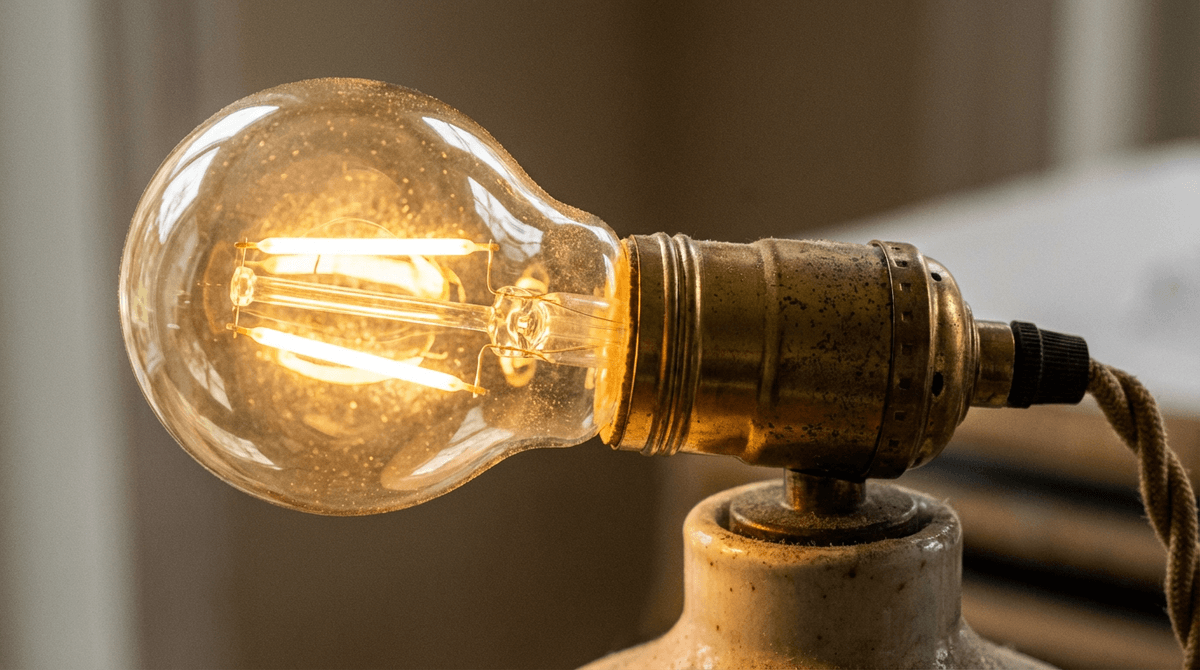
Most household LED bulbs use around 4 to 15 watts each, with many common living-room bulbs landing near 8 to 12 watts.
For full system planning, use the WattSizing Calculator.
1) Load shape and what changes draw
LED lighting is efficient, but wattage still varies by lumen output, color temperature, and fixture style. A 5 W bulb in a hallway and a 15 W high-output bulb in a garage are both "LED," but they serve different brightness goals.
What changes LED watt draw:
- Brightness (lumens): more lumens usually means more watts
- Bulb form factor: A19, BR30, PAR, and smart bulbs have different electronics
- Smart features: Wi-Fi/Zigbee radios and standby behavior can add small overhead
When you estimate whole-home lighting, count how many bulbs are on at the same time, not just the wattage of one bulb.
For related comparisons, see How Many Watts Does a Television Use and How Many Watts Does a Router Use.
2) Typical watt ranges (label first)
| LED Bulb Type / Usage | Typical Running Watts | Typical Starting Watts |
|---|---|---|
| Small LED night bulb | 1 - 3 W | 1 - 3 W |
| Standard A19 LED (40 W equivalent) | 4 - 7 W | 4 - 8 W |
| Standard A19 LED (60 W equivalent) | 8 - 10 W | 8 - 11 W |
| Brighter LED (75-100 W equivalent) | 11 - 16 W | 11 - 18 W |
| Smart LED bulb (color/tunable white) | 8 - 15 W | 9 - 17 W |
3) Session or daily kWh example
Example: One LED bulb uses 9 W for 5 hours in an evening.
- kWh = (9 x 5) / 1000 = 0.045 kWh
- At $0.16/kWh, cost is about $0.01 for that evening
Now scale by quantity: if 8 similar bulbs are on for the same time, total is 0.36 kWh.
4) Practical ways to reduce energy impact
- Use the lowest lumen output that still feels comfortable in each room.
- Install dimmers where compatible; lower brightness usually means lower watts.
- Turn off lights in unoccupied rooms rather than focusing only on bulb efficiency.
- For exterior and hallway lighting, motion sensors can reduce unnecessary runtime.
5) Backup sizing context
Use Generator running watts vs starting watts to model overlap with other home loads, not this row in isolation. For small systems, validate Inverter sizing for off-grid solar and waveform trade-offs in Pure sine vs modified sine.
FAQs
Do LED bulbs have startup surges?
Not in a meaningful way for home energy planning. LED startup is usually close to running power.
Why can two LED bulbs with similar brightness have different watts?
Driver design, color temperature, optics, and product quality all affect efficiency.
Are smart LED bulbs always higher wattage?
Often slightly higher, especially at full brightness, but still generally much lower than old incandescent bulbs.
Sources
- U.S. Energy Information Administration (EIA) - Electricity explained
- U.S. Department of Energy - Energy Saver
- ENERGY STAR - Save Energy at Home
CTA
Want to estimate lighting plus the rest of your household loads in one place? Use the WattSizing Calculator to model realistic watts and usage hours.


