
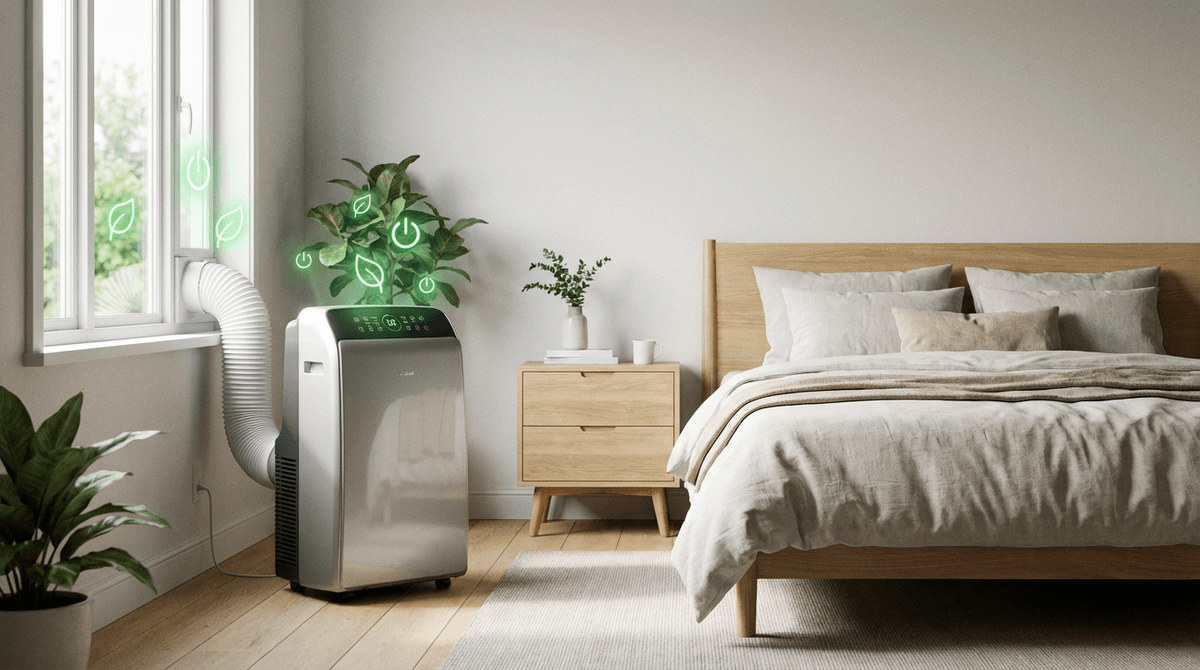
Portable AC systems usually face their highest runtime in summer, especially in sun-exposed rooms and poorly insulated spaces.
For full system planning, use the WattSizing Calculator.
Quick Answer
In summer, portable air conditioners typically run around 1,000 to 1,900 W, with common energy usage near 5 to 14 kWh/day.
Detailed Explanation
Summer demand rises from both high outdoor temperature and indoor heat gain through windows, electronics, and occupancy. Single-hose units can work harder due to negative pressure effects, while dual-hose models often maintain better efficiency.
For related comparisons, see Portable AC vs Window AC Energy Use and How Many Watts Does a Window Air Conditioner Use in Summer.
Watt Table
| Summer Scenario | Typical Running Watts | Typical Daily Energy |
|---|---|---|
| Mild summer days | 1,000 - 1,300 W | 5 - 8 kWh/day |
| Typical hot weather | 1,200 - 1,600 W | 7 - 11 kWh/day |
| Heat wave periods | 1,500 - 1,900 W | 10 - 14 kWh/day |
Calculation Example
If your unit averages 1,400 W for 7 hours/day:
kWh/day = (1,400 x 7) / 1000 = 9.8 kWh/day
Tips
- Minimize direct sun using blinds or reflective film.
- Keep exhaust hose short and straight.
- Clean filters frequently during high pollen/dust months.
- Pre-cool rooms before the hottest afternoon hours.
FAQs
Why does summer usage spike so fast?
Higher outdoor heat and longer runtime increase compressor duty cycle.
Are dual-hose units usually better in summer?
Often yes, because they avoid pulling as much unconditioned air indoors.
Does room size mismatch matter?
Yes, undersized units run nearly continuously in hot weather.
CTA
Estimate your summer cooling budget with the WattSizing Calculator and test efficiency gains from schedule and setup changes.


