
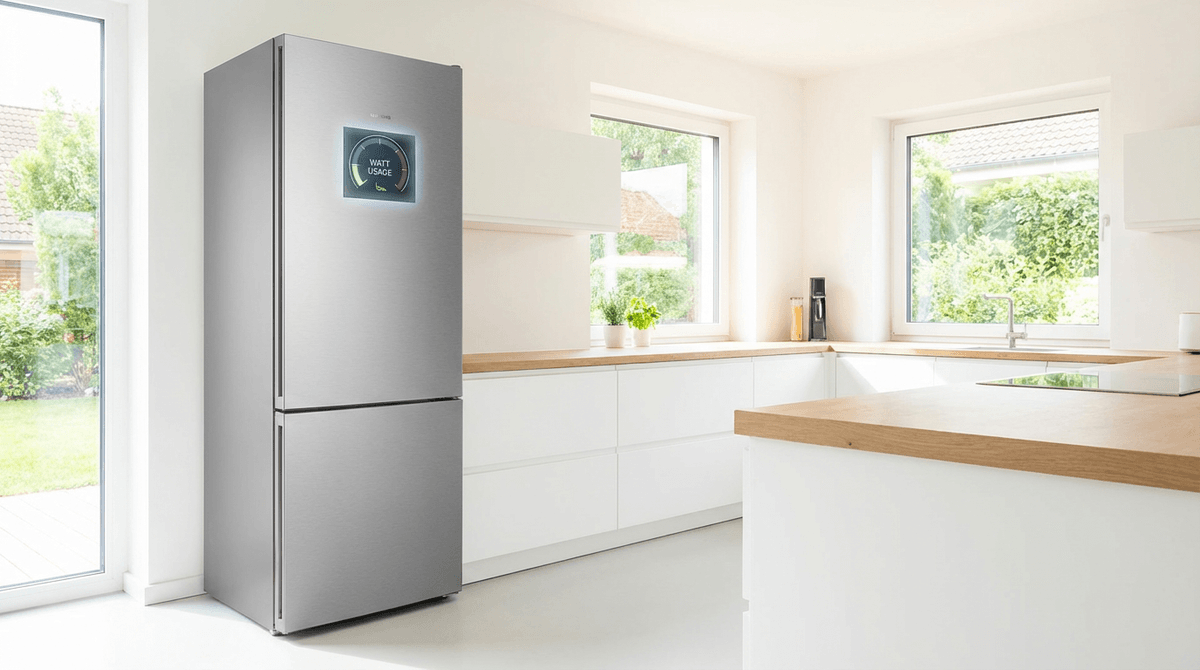
Rainy periods can bring moderate temperatures but higher humidity, which affects door condensation and compressor cycling patterns.
For full system planning, use the WattSizing Calculator.
Quick Answer
In rainy season, refrigerators commonly run at 100 to 280 W when active, with typical use around 1.1 to 2.8 kWh/day.
Detailed Explanation
Humidity does not directly change compressor wattage, but moisture and warmer kitchen air from reduced ventilation can increase cycle frequency. Frequent door opening during meal prep also adds latent and sensible load.
For related load planning, see How Many Watts Does a Refrigerator Use Per Day and How Many Watts Does a Dehumidifier Use.
Watt Table
| Rainy-Season Fridge Context | Typical Running Watts | Typical Daily Energy |
|---|---|---|
| Mild humidity kitchens | 100 - 170 W | 1.1 - 1.7 kWh/day |
| Typical humid homes | 130 - 220 W | 1.5 - 2.2 kWh/day |
| Heavy humidity / old seals | 180 - 280 W | 2.1 - 2.8 kWh/day |
Calculation Example
If average draw is 150 W across the day:
kWh/day = (150 x 24) / 1000 = 3.6 kWh/day (continuous equivalent)
Actual meter readings are usually lower due to compressor cycling.
Tips
- Wipe and inspect gaskets during humid months.
- Keep food covered to reduce internal moisture load.
- Avoid long door-open times during meal prep.
- Ensure adequate ventilation around the appliance.
FAQs
Can rainy humidity increase refrigerator energy use?
Yes, indirectly through warmer/moister kitchen conditions and more defrost activity.
Does anti-sweat heater mode affect consumption?
On some models, yes, it can add small continuous load.
Should I change thermostat in rainy months?
Usually not unless food temperature checks suggest adjustment.
CTA
Build a more realistic seasonal appliance profile with the WattSizing Calculator and include humidity-driven usage changes.


