
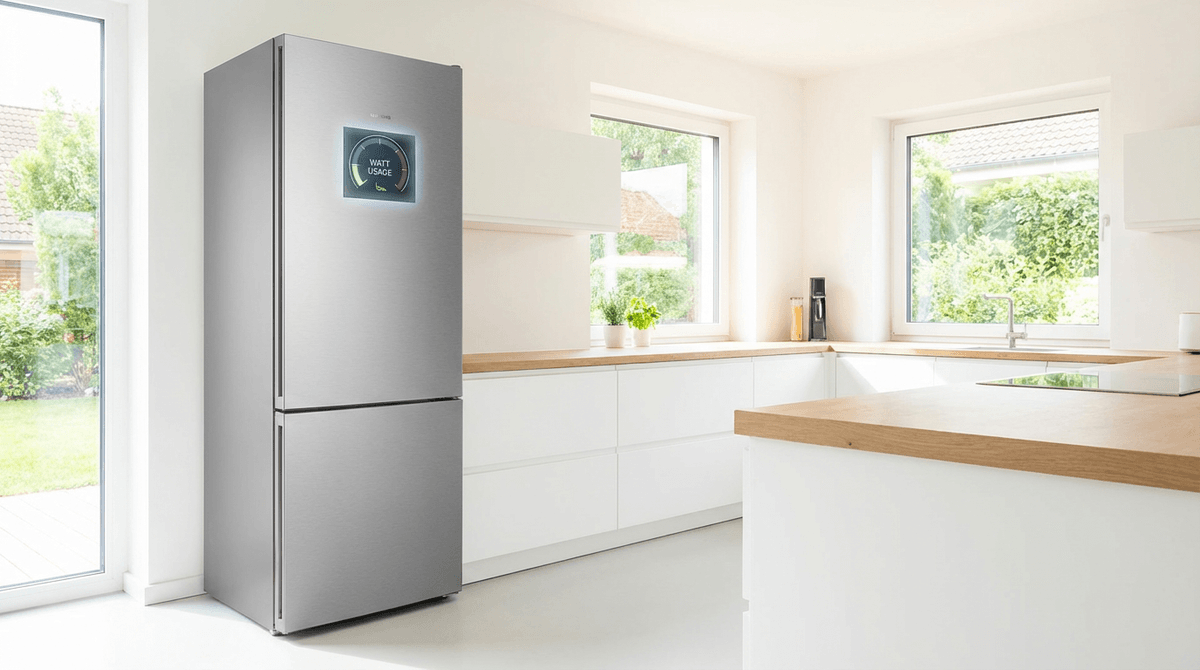
RV refrigeration may run continuously for food safety, making it a priority load in travel and boondocking energy plans.
For full system planning, use the WattSizing Calculator.
Quick Answer
In RV applications, refrigerator compressors typically run around 80 to 220 W, with daily use often near 0.9 to 2.6 kWh/day.
Detailed Explanation
Actual RV energy use depends on insulation quality, sun exposure on the fridge sidewall, and ventilation around condenser compartments. Hot campsites and frequent door opening can raise daily consumption significantly.
For broader RV power context, see What Size Generator for Refrigerator and What Size Generator for RV Air Conditioner.
Watt Table
| RV Refrigerator Scenario | Typical Running Watts | Typical Daily Energy |
|---|---|---|
| Mild climate, efficient unit | 80 - 130 W | 0.9 - 1.4 kWh/day |
| Typical mixed travel use | 110 - 170 W | 1.3 - 2.0 kWh/day |
| Hot climate, frequent access | 150 - 220 W | 1.9 - 2.6 kWh/day |
Calculation Example
If average draw is 120 W over 24 hours:
kWh/day = (120 x 24) / 1000 = 2.9 kWh/day (continuous equivalent)
Real observed values are lower when compressor duty cycle is moderate.
Tips
- Shade RV fridge wall when parked in sun.
- Pre-chill groceries before loading.
- Minimize long door-open events during meal prep.
- Keep exterior vent paths clean and unobstructed.
FAQs
Can an RV inverter run the fridge full-time?
Usually yes for compressor models, if battery capacity supports 24-hour cycling.
Does road vibration affect energy use?
Indirectly, through seal wear and airflow issues over time.
Should I switch modes while driving?
Follow manufacturer guidance and monitor voltage stability.
CTA
Model RV refrigeration endurance with the WattSizing Calculator and confirm your battery and charging plan.


