
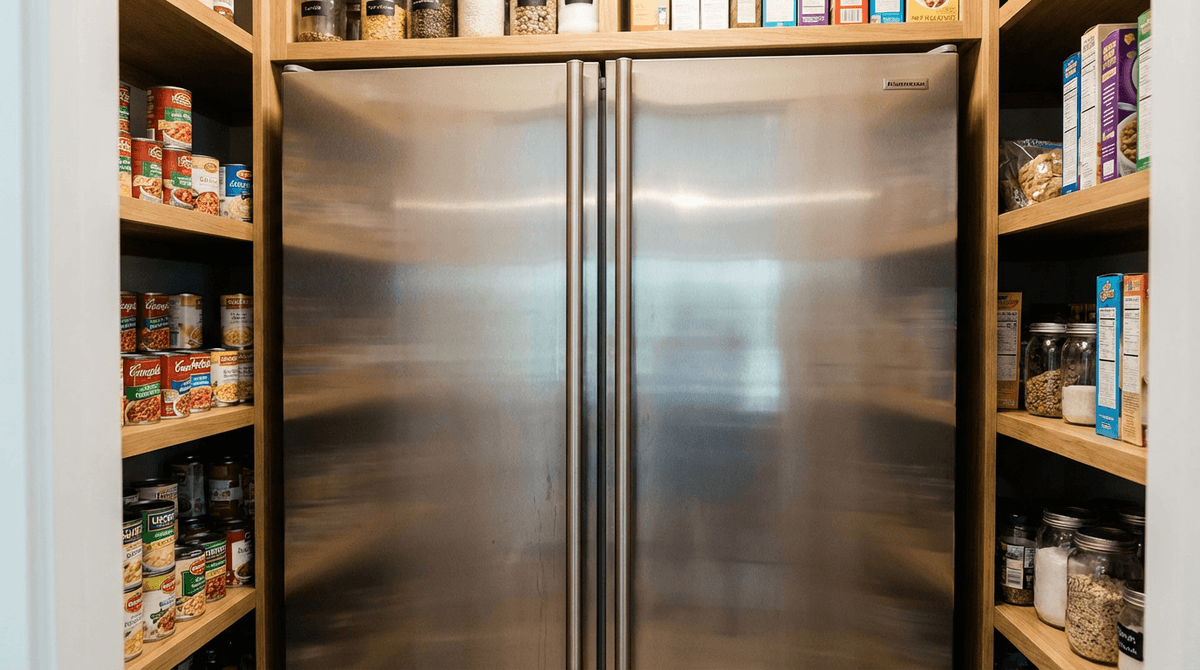
In tiny homes, upright freezers are workable but should be planned as medium-to-heavy daily loads relative to total available energy.
For full system planning, use the WattSizing Calculator.
Quick Answer
Typical operation is 100 to 300 running watts, with 700 to 1,800 startup watts and around 1.9 to 4.2 kWh/day.
Tiny-House Planning
Because system headroom is limited, prioritize efficient placement, clean condenser airflow, and realistic seasonal kWh assumptions.
Typical Ranges
| Size | Running Watts | Starting Watts | Typical Tiny-House kWh/day |
|---|---|---|---|
| Small | 90 - 150 W | 600 - 1,000 W | 1.7 - 2.8 |
| Medium | 120 - 200 W | 800 - 1,300 W | 2.2 - 3.4 |
| Large | 170 - 320 W | 1,100 - 1,900 W | 2.8 - 4.2 |
Practical Example
A unit at 145 W average:
- (145 x 24) / 1000 = 3.48 kWh/day
This can be a large share of a compact tiny-house budget.
FAQs
Is a chest model usually lower energy?
Often yes, but layout and access preferences matter too.
Do I need a larger inverter than running watts suggest?
Yes, compressor startup must be handled reliably.
Can I reduce usage without replacing the unit?
Yes. Improve airflow, reduce warm door openings, and maintain seals.
CTA
Ready to size your setup accurately? Use the WattSizing Calculator to estimate panel, battery, and inverter requirements from your real appliance loads.


