
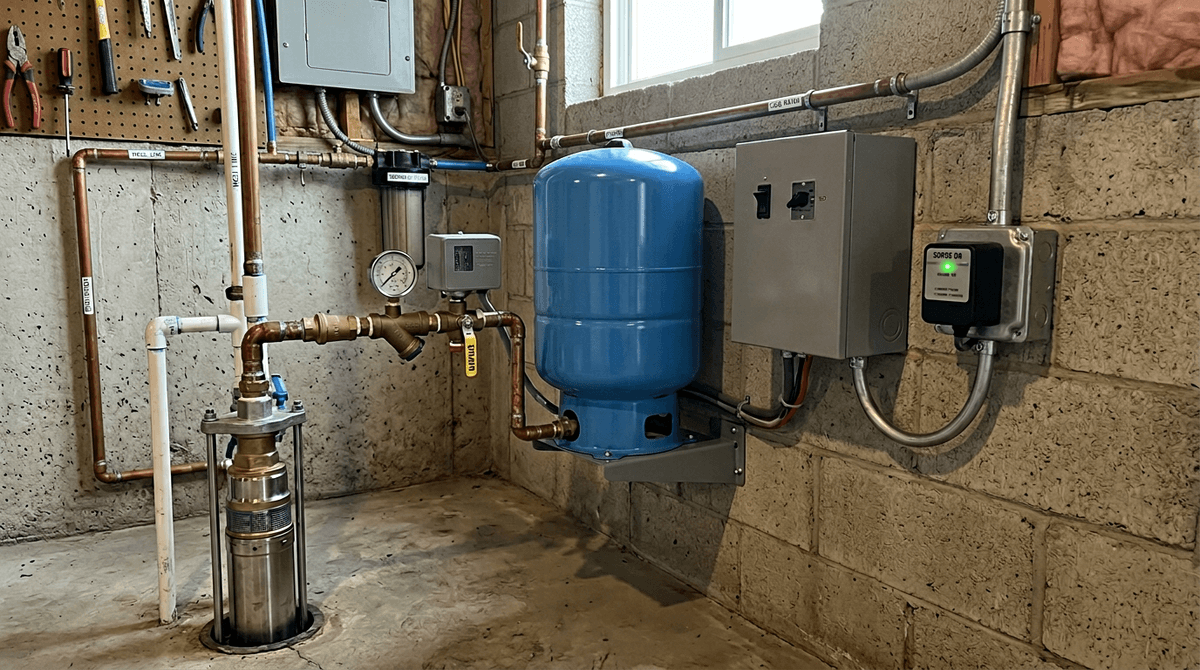
Apartment residents usually do not control the well pump directly, but building backup and energy plans still need realistic motor-load estimates.
For full system planning, use the WattSizing Calculator.
Quick Answer
Shared well pumps often follow the same 700 to 2,000 running watt pattern, with high startup surge. Total kWh/day depends on occupancy and pressure-system design.
Apartment Context
In multi-unit systems, short cycling and peak simultaneous water demand can increase starts per day, which stresses backup equipment.
Typical Ranges
| Building Pump Class | Running Watts | Starting Watts | Typical kWh/day |
|---|---|---|---|
| Light-duty shared | 700 - 1,200 W | 1,500 - 2,800 W | 2.0 - 5.0 |
| Mid-duty shared | 1,000 - 1,800 W | 2,000 - 3,800 W | 3.0 - 7.0 |
| Heavy-duty shared | 1,500 - 2,500 W | 3,000 - 5,500 W | 4.5 - 10.0 |
Practical Example
If a shared pump averages 1,300 W for 3.2 hours/day:
- kWh/day = 4.16
FAQs
Why include this if tenants do not run the pump directly?
Because building backup capacity and service planning still depend on it.
Is surge worse in larger systems?
Often yes, due to bigger motors.
Can VFD systems reduce startup stress?
Yes, in many installations they can.
CTA
Ready to size your setup accurately? Use the WattSizing Calculator to estimate panel, battery, and inverter requirements from your real appliance loads.


