
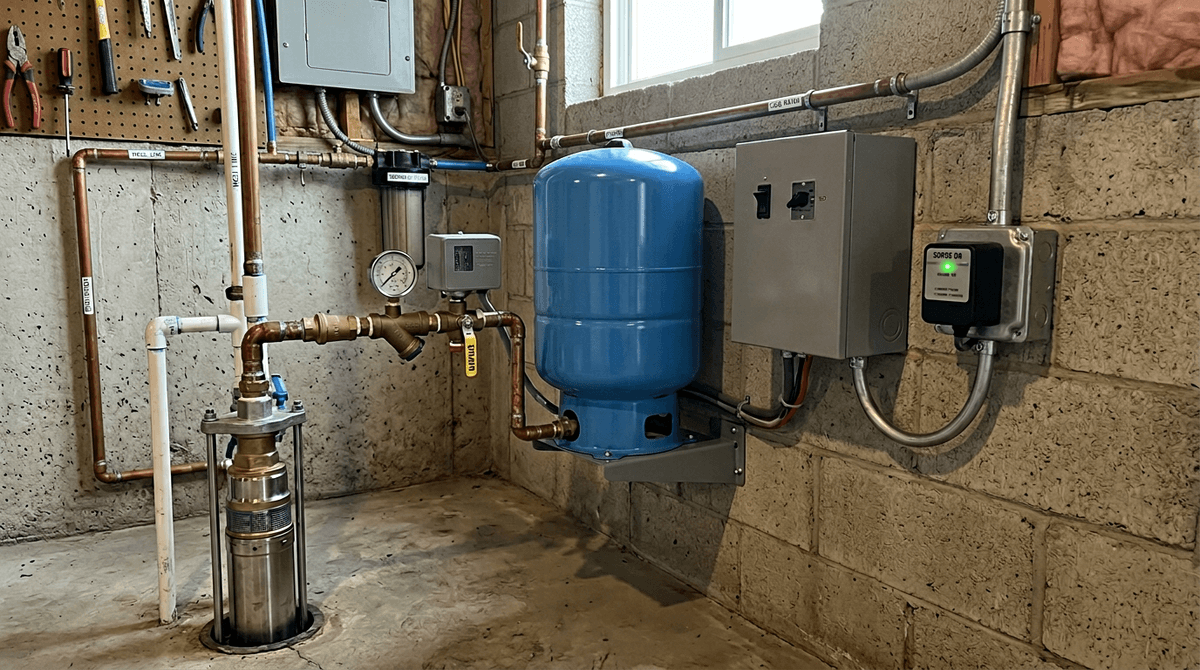
Well pumps are critical during outages, and they often require much higher startup power than their steady running demand suggests.
For full system planning, use the WattSizing Calculator.
Quick Answer
Most residential pumps run at 700 to 2,000 watts and can surge far above that at startup. Backup systems must be sized for both numbers.
Backup Planning Tips
Prioritize pump startup reliability, then validate daily outage energy needs based on expected run hours.
Typical Backup Ranges
| Pump Size | Running Watts | Starting Watts | 24h Outage kWh |
|---|---|---|---|
| 1/2 HP | 700 - 1,100 W | 1,400 - 2,500 W | 1.2 - 3.2 |
| 3/4 HP | 900 - 1,500 W | 1,800 - 3,200 W | 1.7 - 4.1 |
| 1 HP | 1,200 - 2,000 W | 2,400 - 4,200 W | 2.2 - 5.1 |
Practical Example
A pump at 1,300 W for 2 hours during an outage day uses 2.6 kWh, but startup may still demand over 3,000 W.
FAQs
Why do backup inverters trip on well pumps?
Usually from insufficient surge capacity.
Is generator sizing easier than inverter sizing?
Generators often tolerate motor surge better, but sizing still matters.
Should I test under real conditions?
Yes, field testing avoids outage surprises.
CTA
Ready to size your setup accurately? Use the WattSizing Calculator to estimate panel, battery, and inverter requirements from your real appliance loads.


