
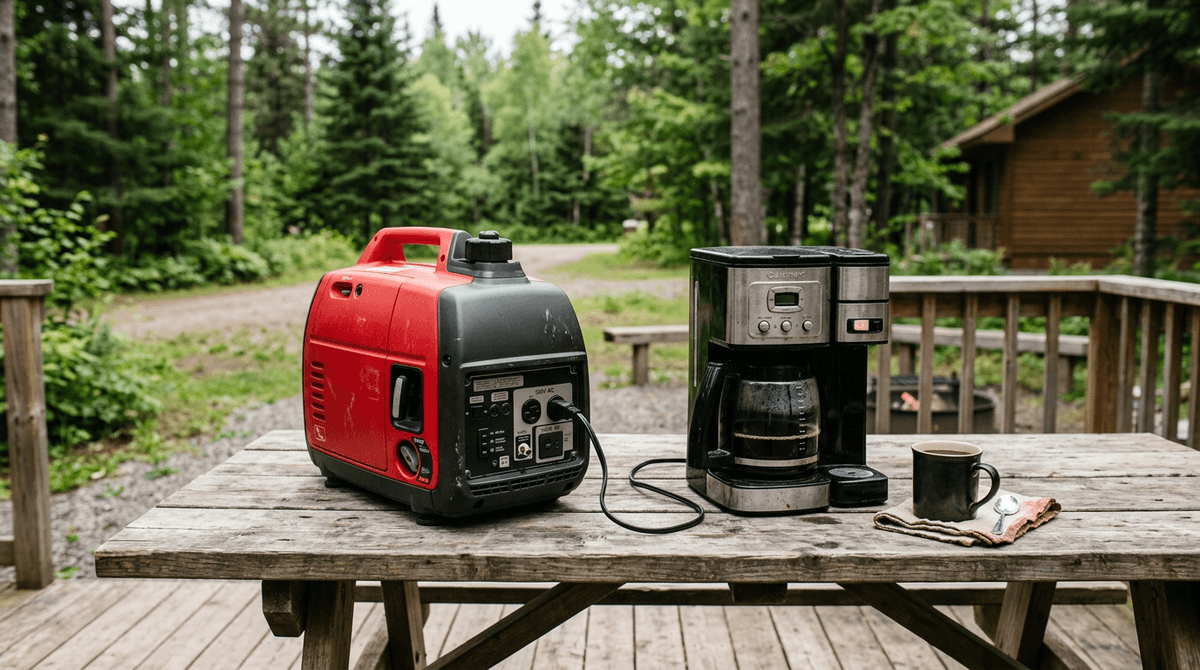
Coffee makers are simple to run on backup power, but many people underestimate total kitchen overlap. The brewer alone might be manageable, yet running it alongside microwaves, kettles, or toaster loads can trip a small generator.
Model your full kitchen loadout with the WattSizing Calculator.
Quick Answer
Most coffee makers run best on a 1,500 to 2,500 watt generator once you include safe headroom and occasional simultaneous loads. Basic drip machines often fit at the low end, while espresso and multi-function machines usually need more capacity.
What to Include in Coffee Maker Generator Sizing
For reliable morning use during outages, count:
- Coffee maker running watts
- Brief startup/inrush margin
- Any overlapping kitchen loads (lights, fridge cycling, microwave, toaster)
- A safety margin of 15% to 25%
For appliance-specific watt references, see How Many Watts Does a Coffee Maker Use and How Many Watts Does a Microwave Use.
Coffee Maker Generator Sizing Table
| Coffee Maker Type | Typical Running Watts | Typical Peak/Startup Watts | Recommended Generator Size |
|---|---|---|---|
| Compact drip (4-5 cup) | 500 - 800 W | 700 - 1,000 W | 1,200 - 1,800 W |
| Standard drip (10-12 cup) | 800 - 1,400 W | 1,000 - 1,700 W | 1,800 - 2,800 W |
| Single-serve pod brewer | 900 - 1,600 W | 1,200 - 2,000 W | 2,000 - 3,000 W |
| Home espresso machine | 1,200 - 1,800 W | 1,600 - 2,400 W | 2,500 - 3,500 W |
Worked Sizing Example
You plan to run:
- 12-cup drip machine: 1,200 W
- Kitchen lights + phone charging: 120 W
- Refrigerator cycling average: 180 W
Calculation:
- Base running load:
1,200 + 120 + 180 = 1,500 W - Add 20% margin:
1,500 x 1.2 = 1,800 W
Practical pick: 2,000 to 2,200 W inverter generator.
If you may also use a toaster at the same time, stepping up to around 3,000 W avoids nuisance trips.
Practical Tips for Reliable Brewing
- Start the generator and stabilize voltage before turning on heating appliances.
- Avoid stacking kettle, toaster, and coffee maker in the same 2 to 3 minute window.
- Use heavy-duty extension cords rated for kitchen appliance loads.
- Prefer inverter generators for cleaner output and quieter operation.
FAQs
Can a 1000W generator run a coffee maker?
Some small drip brewers may run, but most standard units are safer on larger capacity with margin.
Do coffee makers have high startup surge?
Usually not as high as motor loads, but heating elements can still spike briefly above nominal draw.
Should I size only for the coffee machine wattage?
No. Include concurrent kitchen loads and margin, especially during breakfast when multiple appliances overlap.
Is an inverter generator better for coffee makers?
Yes. Inverter models generally provide cleaner and more stable power, especially useful for digital control panels.
CTA
Need a generator that handles real kitchen use, not just one appliance on paper? Use the WattSizing Calculator to size around your exact coffee routine and concurrent loads.


