
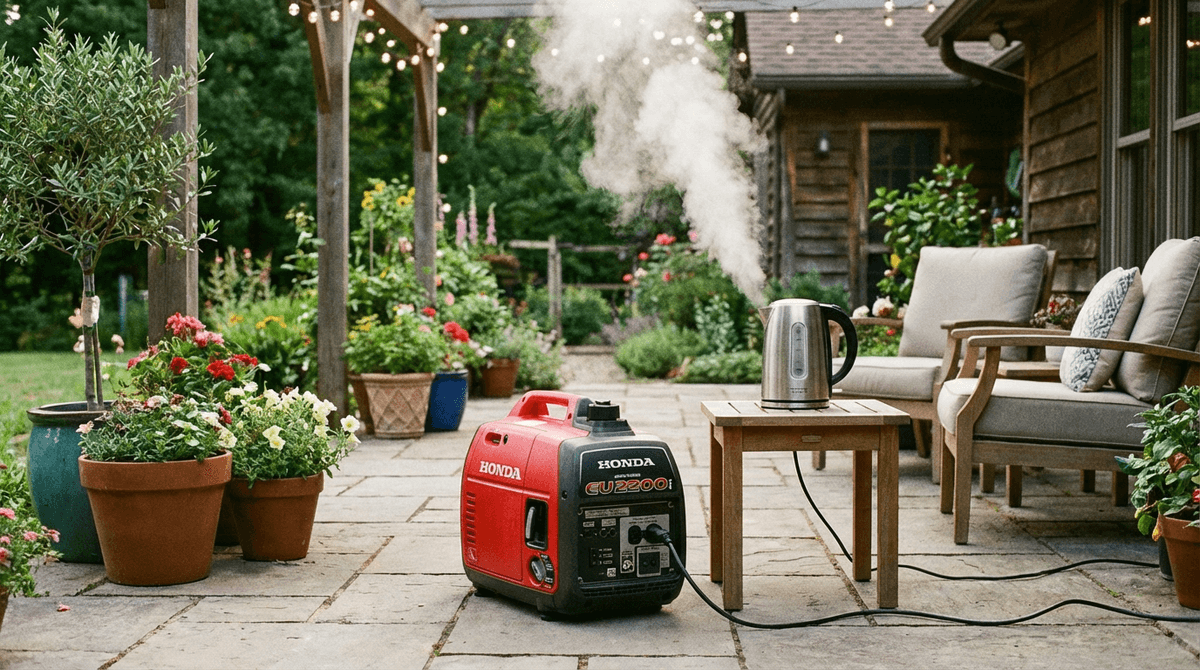
Electric kettles are simple resistive loads, but many models pull near full circuit capacity. A small generator may still overload when kettle use overlaps with fridge cycling, lights, or other kitchen appliances.
For complete outage planning, use the WattSizing Calculator.
Quick Answer
Most homes should plan for a 2,000 to 3,500 watt generator if an electric kettle is part of your outage routine and other essentials run at the same time.
Electric Kettle Generator Sizing Method
- Check kettle watt rating (often 1,200 to 1,800 W).
- Add simultaneous must-run loads (fridge, lighting, internet).
- Include occasional overlap loads (microwave, toaster, chargers).
- Add a 20% to 25% margin.
Kettles have low startup surge, so sizing is mostly about total concurrent demand.
Helpful related guides:
Electric Kettle Generator Sizing Table
| Kettle Use Scenario | Typical Running Watts | Typical Peak Watts | Recommended Generator Size |
|---|---|---|---|
| 1,200 W kettle only | 1,200 - 1,300 W | 1,300 - 1,500 W | 1,800 - 2,500 W |
| 1,500 W kettle + essentials | 1,700 - 2,100 W | 2,000 - 2,500 W | 2,500 - 3,500 W |
| 1,800 W kettle + fridge + lights | 2,100 - 2,700 W | 2,500 - 3,200 W | 3,000 - 4,000 W |
| Kettle + occasional second kitchen load | 2,400 - 3,300 W | 3,000 - 4,200 W | 3,500 - 5,000 W |
Worked Sizing Example
Your outage tea/coffee setup:
- Electric kettle: 1,500 W
- Refrigerator running load: 180 W
- Kitchen lighting: 100 W
- Router + modem: 35 W
Calculation:
- Base running load:
1,500 + 180 + 100 + 35 = 1,815 W - Add 25% margin:
1,815 x 1.25 = 2,269 W
Practical pick: a 2,500 to 3,000 W generator.
This gives comfortable headroom for short overlap events and keeps operation stable.
Practical Kitchen Load Tips
- Avoid running kettle and microwave at the exact same time.
- Boil in batches to reduce repeated high-load cycles.
- Keep one circuit dedicated to must-run appliances during outages.
- Use heavy-duty extension cords rated above your expected load.
FAQs
Can a 2,000W generator run an electric kettle?
Yes for many kettles, but total household load must stay controlled or you can still overload the generator.
Does an electric kettle have startup surge?
Usually very little compared with motor loads. Most of its demand is steady resistive draw.
Can I use a kettle and toaster together?
Often not on smaller generators, because combined draw can exceed available capacity quickly.
Is an inverter generator better for kitchen appliances?
Inverter models are generally quieter and provide stable output, which helps when mixed loads are active.
CTA
Want fast, reliable backup for your kitchen essentials? Use the WattSizing Calculator to size your generator around real concurrent appliance loads.


