
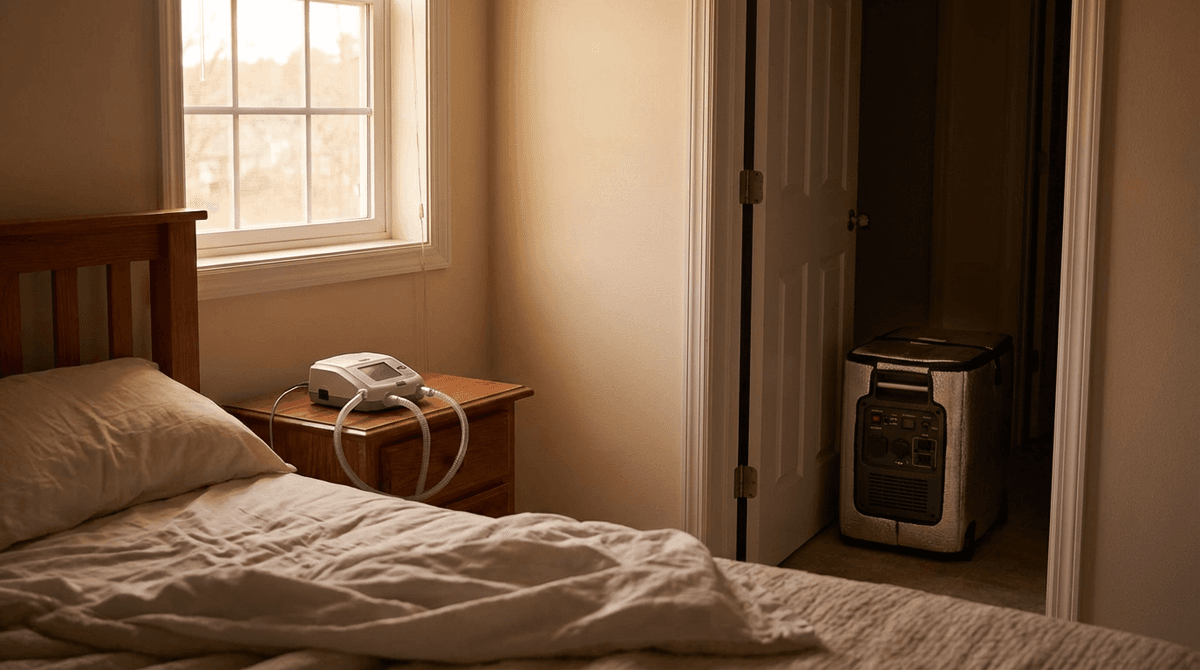
When medical equipment is involved, generator sizing is a safety decision. You want enough capacity for critical devices first, then only the household loads that support safe and stable care.
For a complete load plan and runtime estimate, use the WattSizing Calculator.
Quick Answer
Many homes supporting essential medical equipment use a 3,500 to 8,500 watt generator, but exact requirements vary by device type, oxygen setup, and whether heating/cooling must stay active.
Safety-First Sizing Explanation
Use a tiered load approach:
- Life-critical devices (must-run without interruption)
- Care-support loads (refrigeration for medication, lighting, communications)
- Environment control (fan/AC/heating as medically required)
- Comfort and convenience loads (only if margin allows)
Important: confirm device startup behavior and power quality requirements from medical documentation, and discuss backup planning with your clinician or equipment provider.
Related reads:
Home Medical Backup Sizing Table
| Home Care Scenario | Typical Running Watts | Typical Peak Watts | Recommended Generator Size |
|---|---|---|---|
| Single low-draw medical device + essentials | 400 - 1,200 W | 900 - 2,200 W | 2,000 - 3,500 W |
| Multiple care devices + fridge + comms | 1,000 - 2,500 W | 2,000 - 4,500 W | 3,500 - 6,000 W |
| Medical setup + required climate control | 2,000 - 4,000 W | 4,000 - 7,000 W | 6,000 - 9,000 W |
| High-dependability whole-home critical circuits | 3,500 - 6,500 W | 6,500 - 11,000 W | 9,000 - 14,000 W |
Worked Example
Planned outage loads:
- Medical device set (continuous): 300 W
- Oxygen concentrator: 450 W run / 900 W start
- Medication refrigerator: 180 W run / 600 W start
- Router/phone charging/lighting: 220 W
- Bedroom mini-split for temperature stability: 900 W run / 1,800 W start
Calculation:
- Continuous load:
300 + 450 + 180 + 220 + 900 = 2,050 W - Peak startup moment (mini-split + oxygen surge case): about 3,370 W
- Add 25% reliability margin:
3,370 x 1.25 = 4,212 W
Practical pick: 5,000 W inverter generator.
Also keep short-duration UPS backup for critical devices to bridge generator startup and refueling windows.
Practical Preparedness Tips
- Label critical circuits clearly so nonessential loads stay off during outages.
- Keep backup fuel, extension plans, and maintenance schedule documented.
- Test under supervised conditions before emergency use.
- Store emergency contacts and equipment support numbers with your outage checklist.
FAQs
Should I use an inverter generator for medical equipment?
In many cases, yes. Cleaner and more stable output is typically preferred for sensitive devices.
Do I need automatic transfer equipment?
It depends on your risk profile. Automatic systems reduce manual steps and can improve continuity for critical care.
Can I power only one room for medical backup?
Yes, many homes build a focused critical-load plan for one care area plus refrigeration and communications.
Is a UPS still necessary if I have a generator?
Usually yes. A UPS helps bridge startup delays and brief interruptions during refueling or switching.
CTA
Need a safer backup plan for home medical care? Use the WattSizing Calculator to size generator capacity for your essential devices and required support loads.


