
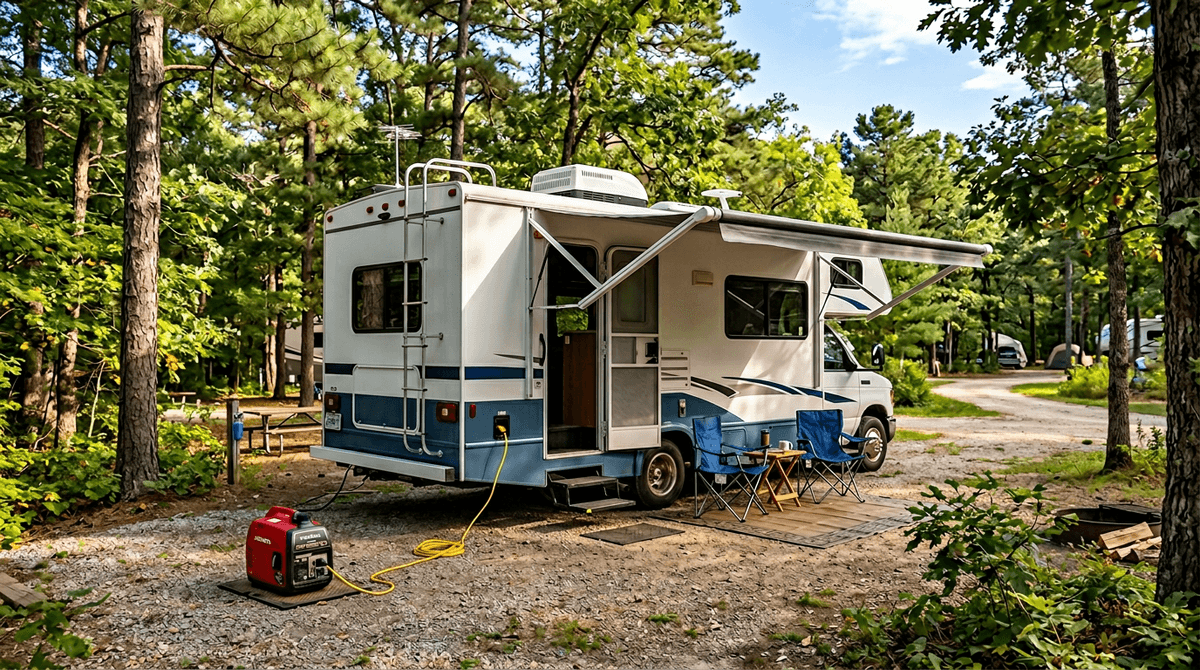
RV air conditioners are one of the most common reasons campers end up underpowered. The unit may run at moderate wattage, but startup surge can be high enough to trip small generators instantly.
To size your whole RV loadout, use the WattSizing Calculator.
Quick Answer
For most single RV rooftop AC units, a 2,500 to 3,500 watt generator is the practical range. Smaller 13,500 BTU units can sometimes run on less with a soft start kit, while 15,000 BTU units are safer with more headroom.
RV AC Sizing Basics
Generator sizing should include:
- Running watts of the AC
- Starting watts (compressor surge)
- Other simultaneous RV loads (converter, fridge, microwave, chargers)
- A 15% to 25% margin for heat, altitude, and generator aging
At high elevation, many portable generators lose power output. In real trips, this is often what turns a "works at home" setup into a nuisance-tripping setup.
Related planning reads:
RV Air Conditioner Generator Sizing Table
| RV AC Size | Typical Running Watts | Typical Starting Watts | Recommended Generator Size |
|---|---|---|---|
| 9,000 BTU | 900 - 1,300 W | 1,800 - 2,500 W | 2,300 - 3,000 W |
| 13,500 BTU | 1,200 - 1,800 W | 2,400 - 3,500 W | 3,000 - 4,000 W |
| 15,000 BTU | 1,500 - 2,000 W | 3,000 - 4,500 W | 3,500 - 5,000 W |
| 15,000 BTU with soft start | 1,500 - 2,000 W | 2,000 - 3,000 W | 2,800 - 4,000 W |
Worked Sizing Example
Your RV has a 13,500 BTU rooftop AC with:
- Running watts: 1,500 W
- Startup watts: 3,000 W (with soft start installed)
- Other steady loads while cooling: 350 W
Calculation:
- Surge requirement with 20% margin:
3,000 x 1.2 = 3,600 W - Total running with extras:
1,500 + 350 = 1,850 W
Practical pick: a 3,500 to 4,000 W inverter generator.
That gives enough startup room in hot weather and avoids running constantly at max throttle.
Practical RV Tips
- Install a soft start module if your AC supports it.
- Turn off microwave/water heater when AC compressor is starting.
- Use heavy-gauge extension cords and keep cable runs short.
- Service air filters and coils regularly to lower compressor strain.
FAQs
Can a 2,000W generator run an RV AC?
Usually no for standard rooftop units, unless AC size is small and startup is reduced significantly with a soft start kit.
Do I need one generator per AC unit?
For dual-AC RVs, a single larger generator is common, but many owners run only one AC at a time unless they have a high-capacity setup.
Is inverter generator output enough for electronics?
Yes, quality inverter generators provide cleaner power for chargers, laptops, and entertainment systems.
How much does altitude affect generator sizing?
Quite a lot. Portable generators can lose noticeable output at elevation, so include extra margin if camping in mountain regions.
CTA
Want a right-sized RV power setup without trial and error? Use the WattSizing Calculator to model AC startup, concurrent loads, and backup runtime in minutes.


