
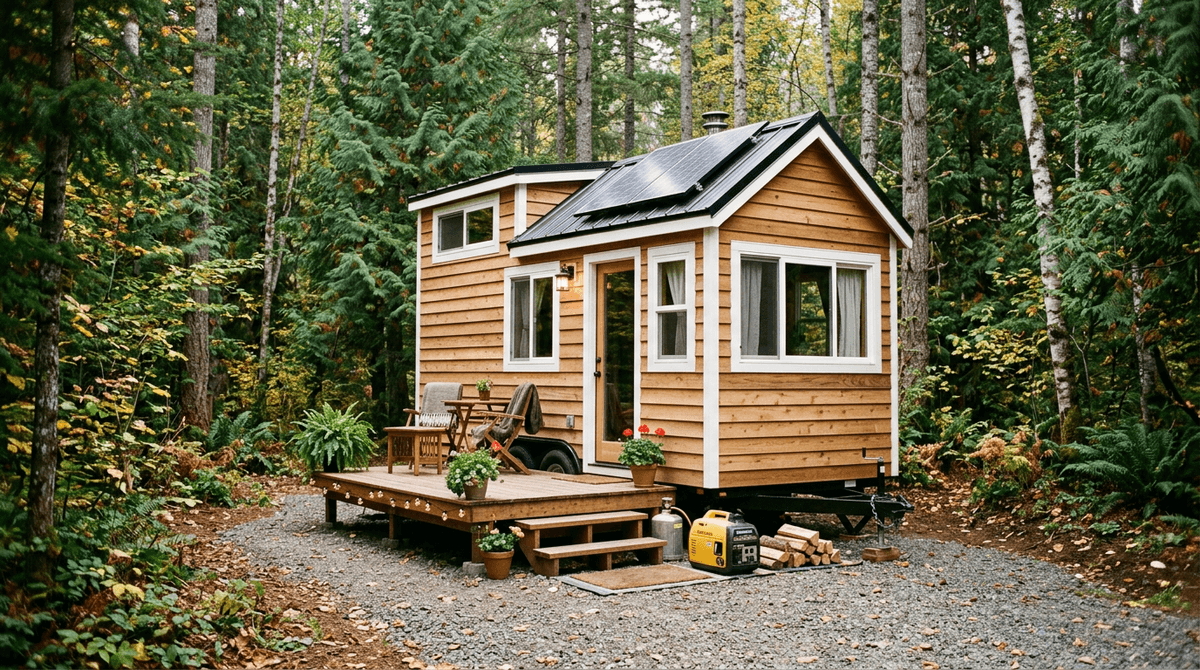
Tiny-house generator sizing is less about total appliances you own and more about what you want to run at the same time. A realistic load plan prevents overspending and avoids frustrating overload trips.
For complete system planning, use the WattSizing Calculator.
Quick Answer
Most tiny houses land in the 3,500 to 7,500 watt generator range depending on heating, cooking method, and whether well pump or air conditioning loads are included.
How Tiny-House Generator Sizing Works
Start by splitting loads into three groups:
- Must-run loads (fridge, lights, internet, phone charging)
- Occasional motor loads (well/sump pump, mini-split, power tools)
- High-heat loads (water heater, electric oven, space heater)
Then size your generator for:
- The highest likely startup event
- Your simultaneous running loads
- 20% operating margin
If you are hybrid/off-grid, this pairs well with Off-Grid Solar Cost by System Size and How Many Solar Panels to Run Appliances.
Tiny House Generator Sizing Table
| Tiny House Scenario | Typical Running Load | Typical Peak/Starting Load | Recommended Generator Size |
|---|---|---|---|
| Essentials only (fridge, lights, internet) | 500 - 1,200 W | 1,200 - 2,200 W | 2,000 - 3,000 W |
| Essentials + mini-split + kitchen use | 1,500 - 2,800 W | 3,000 - 5,000 W | 4,000 - 6,000 W |
| Full electric comfort setup | 2,500 - 4,500 W | 5,000 - 8,000 W | 6,500 - 10,000 W |
| Tiny house with well pump + AC | 2,000 - 3,500 W | 4,500 - 7,500 W | 5,500 - 9,000 W |
Worked Sizing Example
Tiny house load plan:
- Refrigerator: 180 W run / 1,200 W start
- Mini-split: 900 W run / 2,000 W start
- Lights + internet + laptop: 220 W run
- Microwave occasionally: 1,000 W run
Worst practical startup case is mini-split starting while fridge is running:
- Peak event:
2,000 + 180 + 220 = 2,400 W - Add microwave overlap margin:
2,400 + 1,000 = 3,400 W - Add 20% headroom:
3,400 x 1.2 = 4,080 W
Practical pick: a 4,500 to 5,000 W generator.
That size supports normal comfort loads without constant power juggling.
Practical Planning Tips
- Electrify strategically: propane cooking/water heating reduces generator size.
- Avoid running multiple high-heat appliances at once.
- Use load-shedding habits during outages (cook first, then laundry, etc.).
- Track real usage with a plug-in meter before buying generator capacity.
FAQs
Is 3,000W enough for a tiny house?
It can be enough for essential loads only, but often falls short once pumps, AC, or electric cooking are added.
Should I oversize for future appliances?
A little headroom is smart, but large oversizing increases upfront cost and can reduce fuel efficiency at low load.
Can I pair a smaller generator with batteries?
Yes. A generator-battery hybrid setup often gives better fuel efficiency and quieter operation than one very large generator.
Do startup surges matter in tiny houses?
Absolutely. Pumps and compressors can spike 2x to 4x above running watts, and those spikes drive generator sizing.
CTA
Planning a tiny-house backup or off-grid system? Use the WattSizing Calculator to model real appliances, startup surges, and practical generator size in one place.
title: "What Size Generator Do You Need for a Tiny House?" excerpt: "Learn how to size a generator for a tiny house using realistic load priorities, startup surges, and fuel-aware planning. Includes sizing table and worked example." publishedAt: "2028-01-07" readTime: 10 author: "WattSizing Team" category: "Generators" tags: ["Tiny House", "Generator Sizing", "Backup Power", "Off-Grid"] featured: false seoTitle: "What Size Generator for a Tiny House? Practical Load Guide" seoDescription: "Find the right generator size for a tiny house with load-priority planning, startup surge calculations, and practical examples."
Tiny-house generator sizing is less about total appliances you own and more about what you want to run at the same time. A realistic load plan prevents overspending and avoids frustrating overload trips.
For complete system planning, use the WattSizing Calculator.
Quick Answer
Most tiny houses land in the 3,500 to 7,500 watt generator range depending on heating, cooking method, and whether well pump or air conditioning loads are included.
How Tiny-House Generator Sizing Works
Start by splitting loads into three groups:
- Must-run loads (fridge, lights, internet, phone charging)
- Occasional motor loads (well/sump pump, mini-split, power tools)
- High-heat loads (water heater, electric oven, space heater)
Then size your generator for:
- The highest likely startup event
- Your simultaneous running loads
- 20% operating margin
If you are hybrid/off-grid, this pairs well with Off-Grid Solar Cost by System Size and How Many Solar Panels to Run Appliances.
Tiny House Generator Sizing Table
| Tiny House Scenario | Typical Running Load | Typical Peak/Starting Load | Recommended Generator Size |
|---|---|---|---|
| Essentials only (fridge, lights, internet) | 500 - 1,200 W | 1,200 - 2,200 W | 2,000 - 3,000 W |
| Essentials + mini-split + kitchen use | 1,500 - 2,800 W | 3,000 - 5,000 W | 4,000 - 6,000 W |
| Full electric comfort setup | 2,500 - 4,500 W | 5,000 - 8,000 W | 6,500 - 10,000 W |
| Tiny house with well pump + AC | 2,000 - 3,500 W | 4,500 - 7,500 W | 5,500 - 9,000 W |
Worked Sizing Example
Tiny house load plan:
- Refrigerator: 180 W run / 1,200 W start
- Mini-split: 900 W run / 2,000 W start
- Lights + internet + laptop: 220 W run
- Microwave occasionally: 1,000 W run
Worst practical startup case is mini-split starting while fridge is running:
- Peak event:
2,000 + 180 + 220 = 2,400 W - Add microwave overlap margin:
2,400 + 1,000 = 3,400 W - Add 20% headroom:
3,400 x 1.2 = 4,080 W
Practical pick: a 4,500 to 5,000 W generator.
That size supports normal comfort loads without constant power juggling.
Practical Planning Tips
- Electrify strategically: propane cooking/water heating reduces generator size.
- Avoid running multiple high-heat appliances at once.
- Use load-shedding habits during outages (cook first, then laundry, etc.).
- Track real usage with a plug-in meter before buying generator capacity.
FAQs
Is 3,000W enough for a tiny house?
It can be enough for essential loads only, but often falls short once pumps, AC, or electric cooking are added.
Should I oversize for future appliances?
A little headroom is smart, but large oversizing increases upfront cost and can reduce fuel efficiency at low load.
Can I pair a smaller generator with batteries?
Yes. A generator-battery hybrid setup often gives better fuel efficiency and quieter operation than one very large generator.
Do startup surges matter in tiny houses?
Absolutely. Pumps and compressors can spike 2x to 4x above running watts, and those spikes drive generator sizing.
CTA
Planning a tiny-house backup or off-grid system? Use the WattSizing Calculator to model real appliances, startup surges, and practical generator size in one place.


