
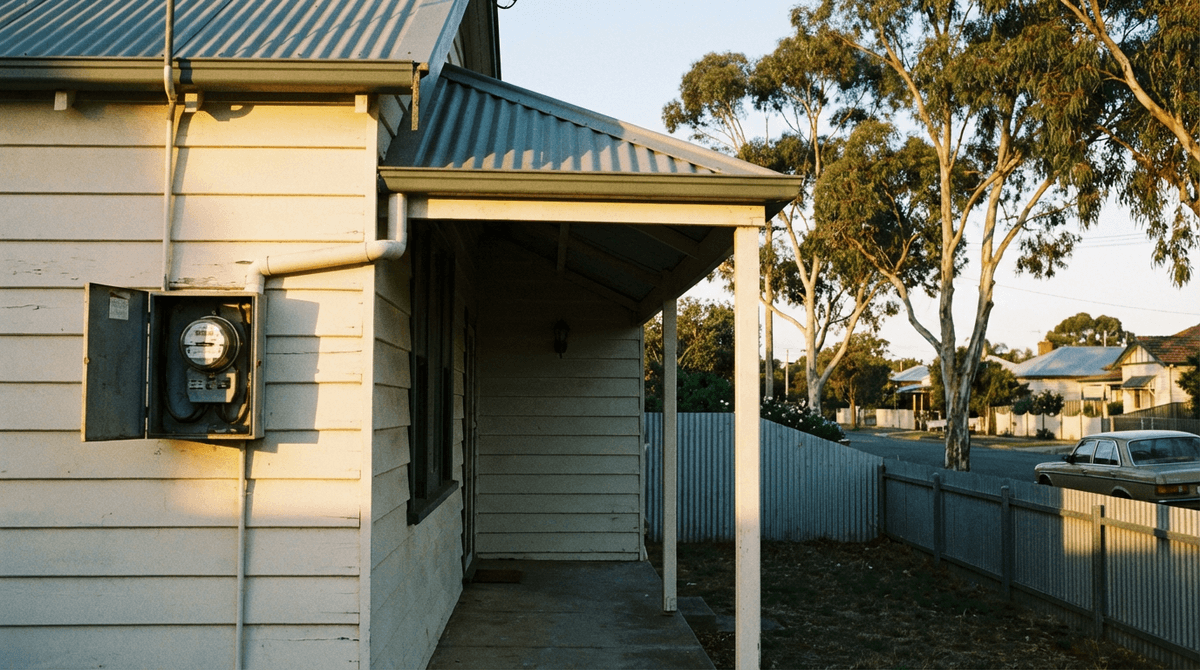
Australia’s homes sit in one of the world’s most climate-stretched electricity markets: long cooling seasons in the north, heating demand in the south, and a National Electricity Market (NEM) where retailers—not a single national utility—sell power. That is why copy-paste “global averages” fail here: your benchmark depends on state, dwelling, and whether space conditioning is electric.
If you only read one paragraph: Typical grid-connected households often land in a wide band of roughly 4,000–9,000 kWh per year (about 330–750 kWh per month), with higher use common in states with larger floor areas and heavier reverse-cycle AC use. Treat any single number as an illustration—your meter is the ground truth.
Helpful tools: How to Calculate Electricity Bill from kWh · How to Calculate kWh from Watts and Hours · WattSizing Calculator
Why this guide goes deeper than most
Most top-ranking articles stop at one national kWh figure and a bullet list of “tips.” This page adds: who publishes credible Australian electricity stats, how NEM retail bills are structured, what short articles usually skip (standby, pools, solar export), and six FAQs that answer the follow-up questions readers usually ask next.
National context: NEM, retailers, and where numbers come from
- Market: Much of the population is served via the NEM (eastern/southern states). Western Australia and the Northern Territory have different market structures—benchmarks are not interchangeable.
- Useful authorities: The Australian Energy Regulator (AER) publishes retail market reporting; energy.gov.au hosts consumer guidance on bills and efficiency. For official statistics, see Australian Bureau of Statistics (ABS) energy publications.
Typical usage: ranges, not a single “average Australian”
| Home / usage profile | Typical band (illustrative) |
|---|---|
| Compact apartment, efficient lighting, limited cooling | ~150–350 kWh/month |
| Detached house, mixed heating/cooling, standard appliances | ~400–900 kWh/month |
| Large home, heavy reverse-cycle AC, pool pump, multiple fridges | Often 900+ kWh/month in peak summer months |
Drivers that move you up or down: floor area, insulation, cooling setpoints, electric hot water vs gas/solar thermal, pool equipment, EV charging at home, and standby loads from entertainment and networking gear.
What most short articles skip
- Seasonal shape: Australian bills often spike in summer (cooling) and sometimes winter (heating) depending on state—monthly kWh is not a flat line.
- Solar export: If you have PV, your import kWh can look “low” while your gross consumption is higher—compare both import and export lines if shown.
- Demand charges & time-of-use: Some tariffs reward shifting load; generic “kWh × rate” examples miss that structure.
Example bill math (illustrative only)
If your imported usage is 650 kWh for the month and your blended retail rate is AUD 0.32/kWh (example only):
650 × 0.32 = AUD 208 (before fixed charges, green schemes, or network tariffs shown on your bill)
Always use the rates and line items printed on your invoice—retail offers vary widely.
How to read your Australian electricity bill (high level)
- Find the billing period (days) and total kWh supplied (import).
- Split usage charges vs fixed daily supply charges.
- If you have solar, check export kWh and feed-in tariff.
- Compare the same month year-on-year to see behaviour or weather effects.
Actionable steps (high impact first)
- Air conditioning: Raise cooling setpoints slightly and shorten pre-cooling where safe; service filters and coils.
- Hot water: If electric storage, review tariff fit and timer options; fix leaks.
- Pool: Right-size pump runtime; variable-speed pumps where appropriate.
- Plug loads: Smart power strips for entertainment centres; measure with a plug-in meter if unsure.
Model scenarios with the WattSizing Calculator.
FAQs
How many kWh per month is “normal” for a house in Australia?
There is no single normal—state, size, and cooling dominate. Use the bands above as a conversation starter, then compare to your own last 12 months of bills.
Is 1,000 kWh/month high?
It can be high for a small apartment but unremarkable for a large, AC-heavy home in a hot climate. Context is everything.
Do renters have options?
Yes—behaviour, thermostat discipline, draught sealing (with permission), and efficient plug-in devices often help without major capex.
Why did my usage jump this summer?
Often cooling hours, extra occupants, or a faulty AC/heat pump component. Compare degree-days informally: was it hotter than last year?
How does solar change the picture?
Your net import may fall while total consumption stays similar—evaluate import, export, and self-consumption if your portal shows it.
Where can I verify national context?
Start with energy.gov.au and AER publications; for deeper stats see ABS.
Sources & further reading
- Australian Energy Regulator (AER) — market monitoring and retail reporting.
- energy.gov.au — household energy guidance (Australia).
- Australian Bureau of Statistics (ABS) — official statistics (search energy / electricity releases).
Sources
- U.S. Energy Information Administration (EIA) - Electricity explained
- U.S. Department of Energy - Energy Saver
- ENERGY STAR - Save Energy at Home
CTA
Use the WattSizing Calculator to turn appliance wattages and hours into monthly kWh—then compare to your bill with clearer assumptions.


