
When you invest in an off-grid solar system, you want to extract every possible watt of power from the sun. But over time, a silent enemy slowly degrades your system's performance: dirt.
Dust, pollen, bird droppings, leaves, and smog can accumulate on the surface of your solar panels, blocking sunlight and significantly reducing their efficiency. In severe cases, a heavily soiled panel can lose up to 25% of its power output.
In this comprehensive guide, we'll teach you exactly how to clean solar panels safely and effectively without damaging the delicate anti-reflective coating on the glass. By keeping your array spotless, you ensure your off-grid solar system operates at peak performance year-round.
Why Cleaning Your Solar Panels is Crucial
Solar panels work by allowing photons from sunlight to pass through the protective glass and strike the photovoltaic cells beneath. Anything that blocks that light—even a thin layer of dust—reduces the number of photons reaching the cells, thereby reducing the electricity generated.
The Impact of Dirt on Efficiency
The impact of dirt on your solar array depends heavily on your environment:
- Light Dusting: A thin layer of dust might only reduce efficiency by 1% to 5%.
- Heavy Soiling: In agricultural areas, near construction sites, or in regions with high pollen counts, heavy soiling can reduce output by 10% to 15%.
- Bird Droppings: Because bird droppings are opaque, they completely block sunlight from reaching the cells beneath them. Even worse, they can create "hot spots" where the shaded cell overheats, potentially causing permanent damage to the panel.
If you've noticed a drop in your system's performance, cleaning the panels should be your first troubleshooting step. If you're still not getting enough power after a thorough cleaning, it might be time to use our WattSizing calculator to see if you need to expand your array.
How Often Should You Clean Solar Panels?
The frequency of cleaning depends entirely on where you live and the angle of your panels.
The Role of Rain
If you live in a climate with regular rainfall, nature will do most of the work for you. A good rainstorm is often enough to wash away light dust and pollen. In these areas, you may only need to manually clean your panels once or twice a year. (Curious about how rain affects solar output? Read our guide: Do Solar Panels Work in the Rain or Snow?).
When Manual Cleaning is Necessary
You will need to clean your panels more frequently (every 3 to 6 months) if:
- You live in a dry, dusty climate (like the desert Southwest).
- You live near agricultural fields where plowing kicks up massive amounts of dust.
- You live near a busy highway or industrial area where smog and exhaust soot accumulate.
- You have a flat or low-tilt array. Rain easily washes dirt off steeply angled panels, but dirt tends to pool and stick on flat panels.
- You have a bird problem. If birds frequently roost near your array, you must clean their droppings immediately to prevent hot spots.
The Safest Way to Clean Solar Panels
Cleaning solar panels is not like washing a car. The glass on a solar panel is coated with a special anti-reflective layer designed to maximize light absorption. If you scratch or degrade this coating, you will permanently reduce the panel's efficiency.
Here is the step-by-step process for cleaning your panels safely.
Step 1: Choose the Right Time of Day
Never clean solar panels in the middle of a hot, sunny day.
Solar panels get incredibly hot under direct sunlight. If you spray cold water onto hot glass, the sudden temperature change (thermal shock) can cause the glass to shatter instantly. Furthermore, the water will evaporate too quickly, leaving behind hard water stains and mineral deposits that block sunlight.
The best time to clean your panels is early in the morning or late in the evening when the panels are cool to the touch. Overcast days are also excellent for cleaning.
Step 2: Gather the Right Tools
You do not need expensive, specialized equipment to clean solar panels, but you must avoid abrasive tools.
What to Use:
- A standard garden hose with a spray nozzle.
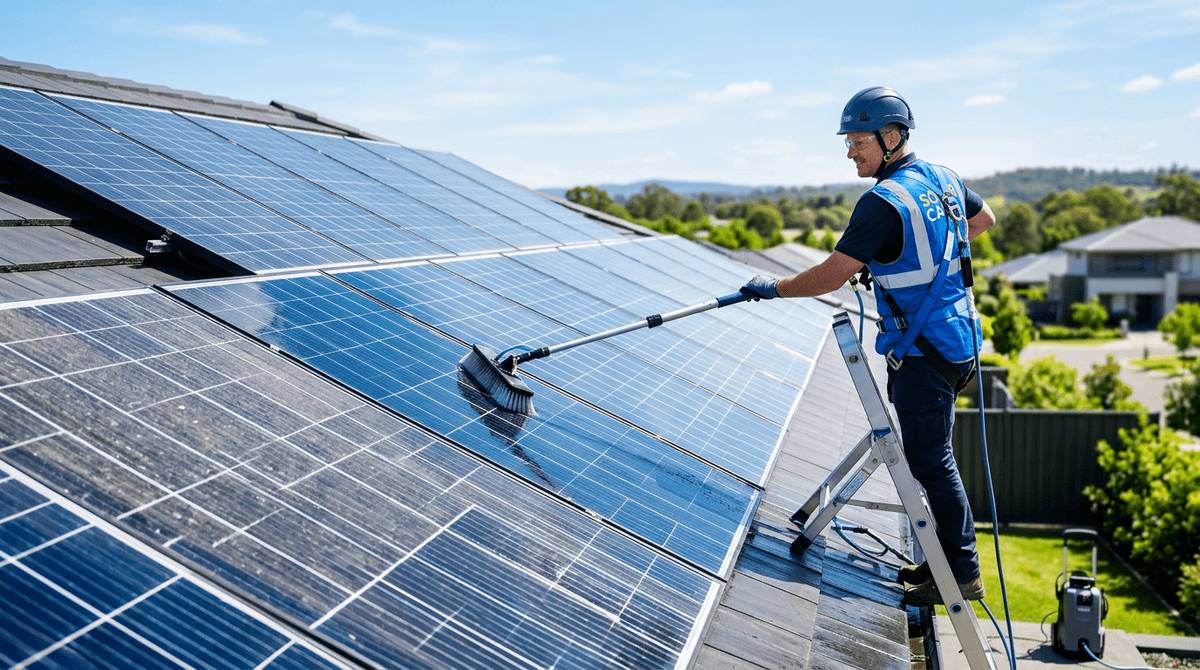
- A soft-bristle brush on an extension pole (a brush designed for washing RVs or cars is perfect).
- A squeegee with a plastic blade.
- A bucket of clean water.
What NOT to Use:
- High-Pressure Washers: The intense pressure can force water past the weather seals, destroying the panel's internal electronics. It can also strip the anti-reflective coating.
- Abrasive Sponges or Brushes: Never use scouring pads, steel wool, or stiff-bristled brooms. They will scratch the glass.
- Harsh Chemicals: Avoid bleach, ammonia, Windex, or strong detergents. They can leave a hazy film or degrade the seals.
Step 3: Rinse with a Hose
Start by simply spraying the panels with your garden hose. In many cases, a thorough rinse is all that's needed to remove loose dust and pollen.
If your tap water is extremely "hard" (high in minerals like calcium and magnesium), consider using a hose attachment with a water deionizer or water softener. Hard water can leave white spots on the glass as it dries.
Step 4: Gently Scrub Stubborn Dirt
If a simple rinse doesn't remove bird droppings or sticky sap, you'll need to scrub.
Dip your soft-bristle brush into a bucket of plain water. If the grime is particularly stubborn, you can add a tiny amount of mild, biodegradable dish soap (like Dawn) to the water.
Gently agitate the dirt with the brush. Let the soapy water sit on the bird droppings for a few minutes to soften them before scrubbing again. Do not apply heavy pressure.
Step 5: Final Rinse and Squeegee
Once the dirt is loose, thoroughly rinse the panels with the hose to remove all soap residue. If soap dries on the glass, it will leave a film that attracts more dirt.
Finally, use a squeegee to remove the excess water. This prevents water spots from forming as the panels dry.
Safety Precautions for Roof-Mounted Arrays
If your off-grid system is mounted on a roof, safety must be your top priority.
- Don't climb on the roof if you don't have to. If possible, use a long extension pole to clean the panels from the ground or a stable ladder.
- Never step or lean on a solar panel. They are not designed to support human weight. You will cause invisible micro-cracks in the silicon cells, permanently damaging the panel. (For more on panel longevity, read: Solar Panel Lifespan: How Long Do They Really Last?).
- Beware of slipping. A wet, soapy roof is incredibly dangerous. Wear shoes with high-traction soles and use a safety harness if you must be on the roof.
- Hire a professional. If your roof is steep, high, or difficult to access, it is always safer to hire a professional solar cleaning service.
Frequently Asked Questions (FAQ)
Can I use Windex to clean my solar panels? No. Windex and other commercial glass cleaners contain harsh chemicals that can degrade the anti-reflective coating on the solar panel glass. Stick to plain water or a very mild dish soap.
Will cleaning my panels void the warranty? Cleaning your panels will not void the warranty, provided you follow the manufacturer's guidelines. However, using a pressure washer, harsh chemicals, or abrasive tools will void the warranty if they cause damage.
Do I need to turn off my solar system before cleaning? It is generally recommended to turn off your solar array at the disconnect switch before cleaning. While the panels are sealed and waterproof, turning the system off eliminates any risk of electrical shock if there is exposed wiring or a damaged panel you aren't aware of.
Conclusion
Keeping your solar panels clean is one of the easiest and most effective ways to maximize the performance of your off-grid system. By establishing a regular cleaning routine and using the safe, gentle methods outlined above, you can ensure your array captures every available ray of sunlight.
If you've cleaned your panels and are still struggling to generate enough power, your system might be undersized for your current needs. Head over to our WattSizing calculator to accurately size a battery bank and solar array that will keep your lights on, no matter how dirty the panels get!


