
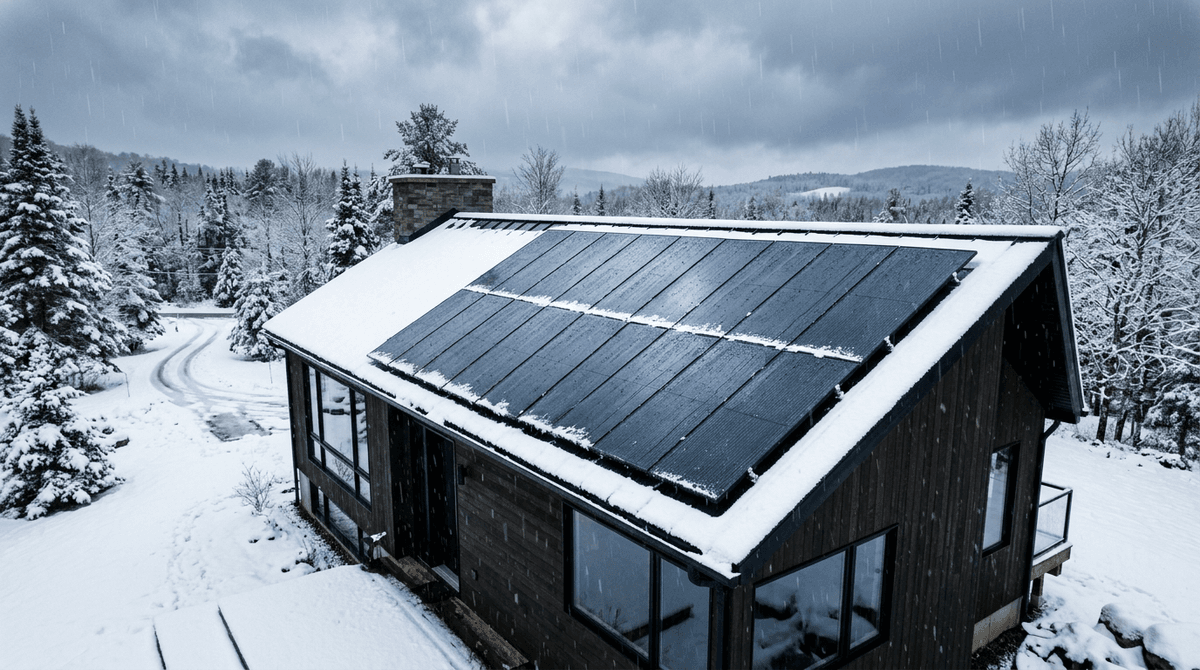
When planning an off-grid solar system, one of the biggest concerns is whether it will produce enough power during the dark, cold days of winter. A common question we hear is: "Do solar panels work in the rain or snow?"
The short answer is yes, they absolutely do. However, their efficiency and total power output will be affected by the weather conditions. In fact, many people are surprised to learn that cold temperatures actually improve solar panel efficiency!
In this comprehensive guide, we'll explore exactly how rain, snow, and winter weather impact your solar panels, and how you can optimize your off-grid setup to ensure you never run out of power. If you're designing a system for a cloudy climate, be sure to use our off-grid solar calculator to accurately size your battery bank and solar array.
How Rain Affects Solar Panels
It's a common misconception that solar panels need direct, blazing sunlight to generate electricity. While direct sunlight is ideal, solar panels work by capturing photons from daylight, not just direct sunbeams.
Power Generation on Rainy Days
On a rainy or heavily overcast day, your solar panels will still produce electricity, but at a reduced rate. Depending on the thickness of the cloud cover, you can expect your panels to produce anywhere from 10% to 25% of their normal output.
While this sounds like a massive drop, it's usually enough to keep your batteries topped up if you've sized your system correctly. This is why having a properly sized battery bank is crucial for off-grid living.
The Hidden Benefit of Rain
Rain actually provides a significant benefit to your solar array: it cleans them.
Over time, dust, pollen, bird droppings, and other debris accumulate on the surface of your panels, blocking sunlight and reducing efficiency. A good rainstorm acts as a natural car wash for your solar panels, washing away the grime and restoring them to peak performance.
If you live in an area with long dry spells, you'll need to clean them manually. Read our guide on how to clean solar panels safely for more information.
How Snow Affects Solar Panels
Snow presents a more complex challenge for solar panels than rain. While a light dusting might blow off in the wind, heavy snowfall can completely cover the panels, blocking all sunlight.
Does Snow Stop Power Production?
If your solar panels are completely covered in a thick layer of opaque snow, they will not produce any electricity. The sunlight simply cannot reach the photovoltaic cells.
However, if the snow is light or only partially covers the panel, some sunlight can still penetrate. Interestingly, the white surface of the snow surrounding your panels can actually reflect additional sunlight onto the exposed parts of the array, temporarily boosting their output!
How to Deal with Snow on Solar Panels
Fortunately, solar panels are designed to shed snow naturally.
- The Angle Matters: Most solar panels are installed at an angle. Because the surface of the panel is smooth, tempered glass, snow tends to slide right off as soon as it begins to melt.
- Internal Heat: Even when covered in a thin layer of snow, solar panels generate a small amount of heat as they absorb whatever light penetrates the snowpack. This heat helps melt the bottom layer of snow, causing the rest to slide off.
- Manual Removal: If you live in an area with massive snow dumps, you may need to manually clear your panels. Never use a standard snow shovel or a broom with stiff bristles, as this can scratch the glass. Instead, use a specialized soft-foam snow rake designed specifically for solar panels.
The Surprising Truth About Cold Weather and Solar Efficiency
Here is a fact that surprises many new solar owners: Solar panels are more efficient in cold weather than in hot weather.
Like all electronic devices, solar panels operate more efficiently when they are cool. When a solar panel gets too hot (such as on a 100°F summer day), the voltage drops, which reduces the overall power output.
Conversely, on a crisp, clear, sub-freezing winter day, the voltage increases. If the sun is shining brightly, your panels might actually produce more power per hour than they would on a sweltering summer afternoon!
Understanding the Temperature Coefficient
Every solar panel has a specification called the "Temperature Coefficient." This number tells you how much the panel's efficiency drops for every degree Celsius above 25°C (77°F).
For example, if a panel has a temperature coefficient of -0.35%/°C, its output will drop by 0.35% for every degree above 25°C. But the reverse is also true! For every degree below 25°C, the panel's efficiency increases by 0.35%.
This is why winter solar production can be surprisingly robust, provided the sun is shining.
Designing an Off-Grid System for Winter
If you live in an area with harsh winters, frequent rain, or heavy snow, you need to design your off-grid system with these factors in mind.
1. Oversize Your Solar Array
The most effective way to combat the reduced output of cloudy, rainy days is to simply add more panels. If your panels are only producing 20% of their rated capacity on a rainy day, having twice as many panels means you'll still generate a usable amount of power.
2. Increase Your Battery Capacity
In the winter, the days are shorter, and the nights are longer. You will have fewer hours of daylight to charge your batteries, and more hours of darkness where you are relying entirely on stored power.
You need a battery bank large enough to carry you through several consecutive days of bad weather (often called "days of autonomy"). Use our WattSizing calculator to determine exactly how many batteries you need for your specific winter climate. If you're wondering about specific battery runtimes, check out our guide: How Long Will a 100Ah Battery Run an Appliance?.
3. Optimize the Tilt Angle
In the winter, the sun is much lower in the sky. If you have adjustable solar mounts, you should increase the tilt angle of your panels in the winter to face the sun more directly.
A steeper angle has a massive secondary benefit: it helps snow slide off much faster!
4. Have a Backup Generator
No matter how large your solar array and battery bank are, there may be times when a week-long blizzard completely depletes your system. For true off-grid reliability in harsh climates, a backup gas or propane generator is essential to recharge your batteries when the sun simply won't cooperate.
Frequently Asked Questions (FAQ)
Do solar panels work at night? No. Solar panels require photons from a light source to generate electricity. At night, they produce zero power. You must rely on your battery bank.
Will hail destroy my solar panels in a winter storm? Most modern solar panels are built with tempered glass and are tested to withstand 1-inch hail at 50 mph. While extreme weather can cause damage, standard winter storms are rarely an issue. Read our guide on protecting solar panels from extreme weather for more details.
Should I spray antifreeze on my panels to melt snow? Absolutely not. The chemicals in antifreeze can permanently damage the anti-reflective coating on the solar panel glass and degrade the weather seals around the aluminum frame. Stick to a soft foam snow rake.
Do I need special "winter" solar panels? No. Standard monocrystalline or polycrystalline solar panels work perfectly fine in the winter. However, high-efficiency monocrystalline panels are generally recommended for off-grid setups because they generate more power in a smaller footprint, which is crucial when sunlight is scarce.
Conclusion
Rain, snow, and cold weather will absolutely impact your solar system, but they won't stop it from working. While rain and clouds reduce total output, the cold temperatures actually boost the panels' underlying efficiency.
By understanding how winter weather affects your system, oversizing your array, and maintaining a robust battery bank, you can enjoy reliable, off-grid power 365 days a year.
Ready to design a winter-proof off-grid system? Try our free off-grid solar calculator today!


