
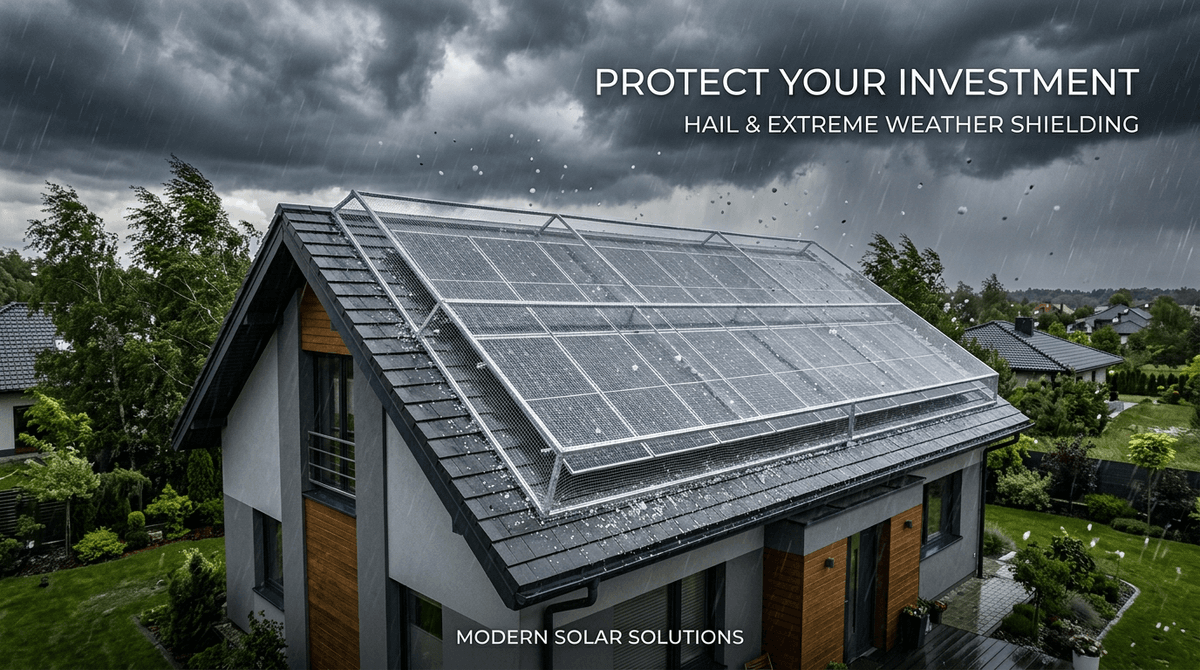
When you install an off-grid solar system, you are placing a significant investment directly in the path of Mother Nature. It is entirely natural to wonder: "Will a massive hail storm shatter my solar panels?" or "Can my array survive a hurricane?"
The good news is that modern solar panels are incredibly tough. They are engineered to withstand decades of harsh environmental conditions. However, "tough" does not mean "indestructible." Extreme weather events—like golf-ball-sized hail, Category 5 hurricane winds, or massive snow dumps—can still cause catastrophic damage.
In this comprehensive guide, we will explore exactly how durable solar panels are, what kind of weather they can survive, and the proactive steps you can take to protect your off-grid investment. If you are planning a new system in a storm-prone area, use our off-grid solar calculator to ensure you have the right equipment for the job.
How Tough Are Solar Panels? The Industry Standards
Before you start building protective covers for your array, it's important to understand just how resilient a standard solar panel is out of the box.
Solar panels are not made of the same fragile glass used in your home's windows. They are constructed using tempered glass, which is up to six times stronger than standard plate glass. This glass is specifically designed to flex under pressure and resist shattering upon impact.
Hail Testing and Certification
To be sold in most markets, solar panels must pass rigorous durability tests, specifically the Underwriters Laboratories (UL) 1703 or International Electrotechnical Commission (IEC) 61215 standards.
During these tests, manufacturers fire solid ice balls at the panels using a pneumatic cannon. To pass the standard test, a panel must survive a direct hit from a 1-inch (25mm) hailstone traveling at 50 mph (80 km/h) without shattering or losing electrical output.
Many premium panels go far beyond this baseline. For example, some tier-1 manufacturers test their panels against 2-inch hailstones traveling at over 70 mph.
Wind and Snow Load Ratings
Solar panels are also rated for the amount of physical weight or pressure they can withstand before the aluminum frame bends or the glass breaks.
- Wind Load: Most panels are rated to withstand at least 2,400 Pascals (Pa) of wind pressure, which equates to winds of roughly 140 mph (a Category 4 hurricane).
- Snow Load: Most panels are rated to handle at least 5,400 Pa of downward pressure, which means they can support over 110 pounds of snow per square foot.
If you live in an area with extreme winters, you might be wondering how snow affects power output. Check out our guide: Do Solar Panels Work in the Rain or Snow?.
When Extreme Weather Overwhelms Your Panels
Despite these impressive ratings, Mother Nature occasionally throws something at your array that it simply cannot handle.
The Threat of Giant Hail
While 1-inch hail is common, severe thunderstorms in places like "Hail Alley" (Texas, Oklahoma, Colorado) can produce hailstones the size of baseballs or even grapefruits. When a 3-inch block of solid ice hits a solar panel at terminal velocity, the tempered glass will shatter.
Even if the glass doesn't visibly break, the impact can cause microscopic fractures in the silicon cells beneath. These "micro-cracks" disrupt the flow of electricity, significantly reducing the panel's lifespan and output. (Learn more about panel degradation in our guide: Solar Panel Lifespan: How Long Do They Really Last?).
The Threat of Hurricane Winds
While the panels themselves can survive 140 mph winds, the mounting hardware often fails first. If the wind gets underneath the panels, it creates massive aerodynamic lift—like an airplane wing. If the lag bolts securing the racking to your roof or ground mount pull loose, the entire array can be ripped away and destroyed.
Proactive Strategies to Protect Your Solar Panels
If you live in an area prone to extreme weather, you must take proactive steps to protect your off-grid system before the storm hits.
1. Invest in Premium, High-Durability Panels
If you live in Hail Alley or a hurricane zone, do not buy cheap, budget panels. Look for tier-1 panels that explicitly advertise higher durability ratings (e.g., passing tests with 2-inch hail or 4,000 Pa wind loads). The extra upfront cost is far cheaper than replacing a shattered array.
2. Optimize the Tilt Angle
The angle at which your panels are mounted plays a massive role in their survivability.
- Against Hail: A steeper angle is better. If a panel is mounted flat (horizontal), a falling hailstone strikes it with maximum force. If the panel is tilted at a steep angle, the hailstone strikes a glancing blow, deflecting much of the energy.
- Against Snow: A steeper angle allows heavy snow to slide off before the weight crushes the frame.
- Against Wind: This is the tricky part. A steeper angle catches more wind, acting like a sail. If you live in a hurricane zone, a lower profile is safer.
If you live in an area with both hail and hurricanes, you must find a compromise angle or invest in adjustable ground mounts.
3. Use Heavy-Duty Mounting Hardware
Do not skimp on the racking system. If you are building a ground mount, sink the steel posts deep into concrete footings. If you are mounting on a roof, ensure the lag bolts are driven directly into the structural rafters, not just the plywood decking. Use extra brackets and wind deflectors to prevent updrafts from getting under the array.
4. Install Protective Netting or Covers (Temporary)
If you have a ground-mounted system and a severe hail storm is in the forecast, you can temporarily cover the panels.
- Hail Nets: You can purchase heavy-duty, impact-absorbing mesh netting (similar to what car dealerships use) and string it above your array.
- Moving Blankets: Tying thick moving blankets or foam pads over the panels will absorb the impact of massive hail.
Important: You must remove these covers immediately after the storm passes, or your system will not generate power. Never use covers on a roof-mounted system during a storm, as climbing a wet roof in high winds is incredibly dangerous.
5. Trim Overhanging Trees
During high winds or heavy snow, large tree branches can snap and fall directly onto your array. A 50-pound branch falling from 30 feet will destroy any solar panel, regardless of its durability rating. Keep all trees near your array trimmed back. (This also prevents sap and leaves from dirtying your panels. Read our cleaning guide for more info).
What to Do If Your Panels Are Damaged
If the worst happens and a severe storm damages your array, follow these steps:
- Do Not Touch the Panels: Even if the glass is shattered, the panel may still be producing high-voltage electricity. Touching the exposed internal wiring or the aluminum frame can result in a lethal shock.
- Disconnect the System: Safely turn off the disconnect switch between the solar array and the charge controller to isolate the power.
- Document the Damage: Take clear photos of the shattered glass, dented frames, or torn mounting hardware from a safe distance.
- Contact Your Insurance Company: Most homeowners' insurance policies cover roof-mounted solar panels under the dwelling coverage. If you have an off-grid cabin or a ground mount, ensure you have a specific rider for the solar equipment.
Frequently Asked Questions (FAQ)
Are flexible solar panels more resistant to hail? No. While flexible panels don't have glass to shatter, the thin plastic coating offers very little impact protection. A large hailstone will easily crush the delicate silicon cells inside a flexible panel, rendering it useless. Rigid, glass-covered panels are much more durable.
Can I put a clear plastic sheet over my panels permanently? No. Any cover, even clear plastic or Lexan, will significantly reduce the amount of sunlight reaching the cells. Furthermore, the plastic will trap heat, causing the panels to overheat and lose efficiency.
Will my off-grid system survive an EMP or solar flare? A massive Electromagnetic Pulse (EMP) or severe solar flare can damage the sensitive electronics in your charge controller and inverter. However, the solar panels themselves are generally immune to EMPs because they lack complex microchips. To protect your system, you can install specialized EMP surge protectors on the wiring runs.
Conclusion
Modern solar panels are incredibly robust pieces of engineering, designed to survive decades of harsh weather. While a direct hit from a freak, baseball-sized hailstone or a Category 5 hurricane can cause damage, standard storms are rarely a threat.
By investing in high-quality equipment, securing your mounts properly, and taking proactive steps when extreme weather approaches, you can ensure your off-grid system weathers the storm.
Ready to build a rugged, storm-proof off-grid system? Head over to our WattSizing calculator to perfectly size your array and battery bank today!


