
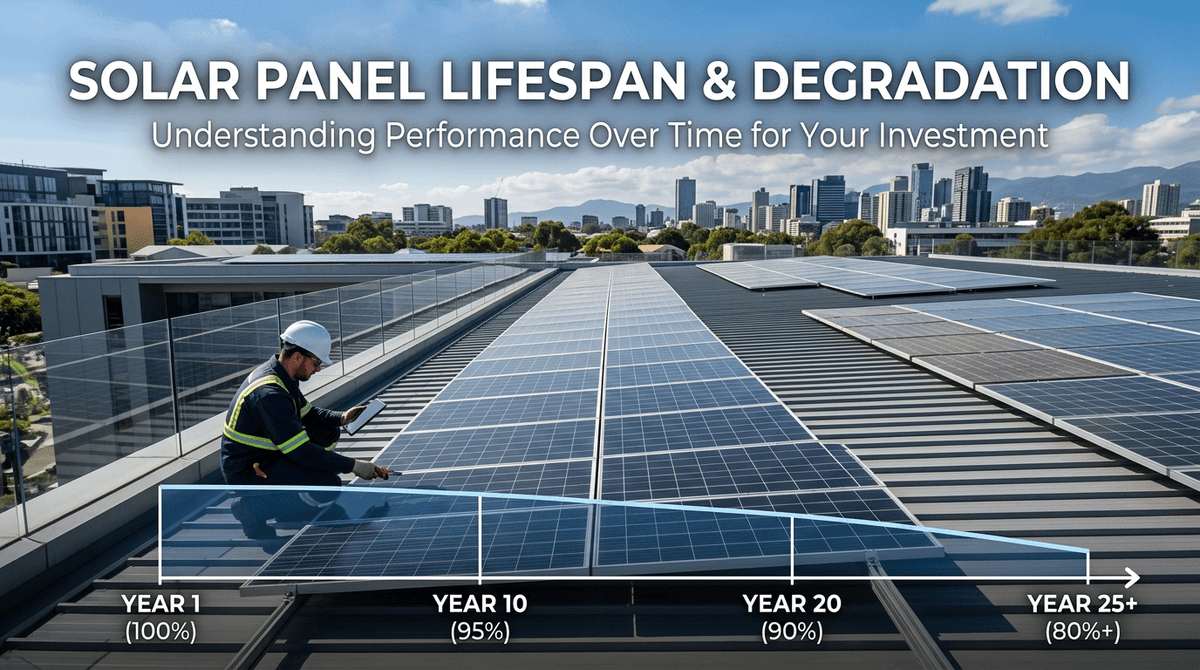
When investing in an off-grid solar system, one of the most common questions is: "How long do solar panels actually last?" It’s a crucial factor in determining the return on investment (ROI) for your energy setup. The short answer is that most modern solar panels are designed to last 25 to 30 years. However, that doesn't mean they stop working after three decades.
In this comprehensive guide, we'll dive deep into the lifespan of solar panels, explain the concept of degradation, and provide actionable tips to ensure your system continues to power your life for decades to come. Don't forget to use our off-grid solar calculator to size your system perfectly for long-term use.
Understanding Solar Panel Lifespan
The "lifespan" of a solar panel isn't like a lightbulb that suddenly burns out. Instead, it refers to the period during which the panel produces a guaranteed percentage of its original power output.
Most tier-1 solar panel manufacturers offer a 25-year performance warranty. This warranty typically guarantees that the panels will produce at least 80% to 85% of their original rated capacity at the end of the 25-year period.
What Happens After 25 Years?
After 25 or 30 years, your solar panels won't suddenly stop generating electricity. They will simply continue to degrade at a slow rate. A panel that is 30 years old might still produce 75% of its original output. For many off-grid applications, this is still plenty of power, especially if you oversized your system initially using a reliable solar calculator.
The Science of Solar Panel Degradation
Solar panel degradation is the gradual loss of power output over time. It is a natural process that affects all photovoltaic (PV) cells.
Average Degradation Rates
The industry standard for solar panel degradation is around 0.5% per year.
Here is a breakdown of what that looks like over time:
| Year | Power Output Capacity |
|---|---|
| Year 1 | 98% - 99% (Initial drop) |
| Year 5 | 96% - 97% |
| Year 10 | 93% - 95% |
| Year 15 | 91% - 92% |
| Year 20 | 88% - 90% |
| Year 25 | 85% - 87% |
Note: Premium panels (like SunPower or Panasonic) often boast degradation rates as low as 0.25% per year, meaning they still produce over 90% of their original power after 25 years.
Causes of Degradation
Several factors contribute to the gradual decline in a solar panel's efficiency:
- Thermal Cycling: As panels heat up during the day and cool down at night, the materials expand and contract. Over thousands of cycles, this causes micro-cracks in the silicon cells and solder joints.
- UV Exposure: Constant exposure to ultraviolet light from the sun slowly breaks down the encapsulant (usually EVA) that protects the solar cells, leading to discoloration and reduced light transmission.
- Moisture Ingress: If the weather seals around the panel frame degrade, moisture can seep in, causing corrosion of the electrical connections.
- Potential Induced Degradation (PID): This occurs when voltage leaks from the solar cells to the panel frame, reducing efficiency. Modern panels are largely PID-resistant.
- Light-Induced Degradation (LID): This happens in the first few hours of sunlight exposure, causing a sudden 1-2% drop in efficiency before stabilizing.
Factors That Affect Solar Panel Longevity
While degradation is inevitable, the rate at which it happens depends on several external factors.
1. Quality of the Panels
Not all solar panels are created equal. Tier-1 manufacturers use higher-quality silicon, better encapsulants, and stronger frames. Investing in high-quality panels is the best way to ensure a long lifespan.
2. Climate and Weather Conditions
Extreme weather can accelerate degradation:
- Extreme Heat: High temperatures can increase the rate of material breakdown. Panels in desert climates may degrade slightly faster than those in temperate zones.
- Heavy Snow and Wind: Constant physical stress from heavy snow loads or high winds can cause micro-cracks in the silicon cells.
- Hail: While panels are tested to withstand 1-inch hail at 50 mph, larger hail can shatter the protective glass. Read our guide on protecting solar panels from extreme weather for more info.
3. Installation Quality
A poor installation can drastically reduce a panel's lifespan. If panels are mounted without adequate airflow underneath, they will run hotter, accelerating degradation. Improper wiring can also lead to localized hot spots that damage the cells.
How to Maximize the Lifespan of Your Solar Panels
You can't stop degradation entirely, but you can take steps to ensure your panels last as long as possible.
Regular Cleaning and Maintenance
Dirt, dust, bird droppings, and leaves can block sunlight and create hot spots, which accelerate cell damage. Regular cleaning is essential. Check out our detailed guide on how to clean solar panels safely for best practices.
Ensure Proper Airflow
When installing your panels, ensure there is at least a few inches of gap between the panels and the roof or mounting surface. This allows air to circulate and cool the panels, reducing thermal stress.
Monitor System Performance
Use a charge controller or inverter with monitoring capabilities. By keeping an eye on your daily energy production, you can quickly spot sudden drops in efficiency, which may indicate a failing panel or a loose connection.
Trim Nearby Trees
Overhanging branches not only cast shade (reducing output) but also drop leaves and sap onto the panels. Furthermore, in strong winds, branches can break and physically damage the glass.
When Should You Replace Your Solar Panels?
Because solar panels degrade so slowly, you rarely need to replace them due to age alone. However, you might consider replacing them if:
- Physical Damage: The glass is shattered due to severe hail or falling debris.
- Water Damage: The seals have failed, and there is visible condensation or corrosion inside the panel.
- Output is Too Low: Your energy needs have increased, and the degraded panels can no longer keep up with your consumption.
- Space Constraints: You need more power but don't have space for more panels, so you upgrade to higher-efficiency models.
If you are planning an upgrade, use our WattSizing calculator to determine exactly how many new panels you need based on your current energy usage.
Frequently Asked Questions (FAQ)
Do solar panels require a lot of maintenance? No, solar panels are generally low-maintenance. Because they have no moving parts, occasional cleaning and an annual visual inspection are usually all that's required.
Will my solar panels survive a hail storm? Most modern solar panels are tested to withstand 1-inch hail at 50 mph. While extreme hail can cause damage, standard storms rarely break the tempered glass.
Can I mix old and new solar panels? Yes, but it requires careful planning. If you wire a new, high-output panel in series with an old, degraded panel, the new panel's output will be dragged down to match the old one. It's best to use a separate charge controller for the new panels or use microinverters.
What happens to solar panels when they die? Solar panels can be recycled. The glass, aluminum frame, and copper wiring are all highly recyclable materials. As the solar industry grows, more dedicated PV recycling facilities are opening worldwide.
Conclusion
Solar panels are an incredibly durable and long-lasting investment. With an expected lifespan of 25 to 30 years and a slow, predictable degradation rate, they will provide reliable off-grid power for decades. By choosing high-quality panels, ensuring a professional installation, and performing basic maintenance, you can maximize your system's longevity.
Ready to start planning your long-lasting off-grid system? Head over to our solar calculator to get started today!


