
Solar systems fall into three main types: off-grid, grid-tied, and hybrid. Each fits different goals and locations. This guide explains the difference and when each makes sense.
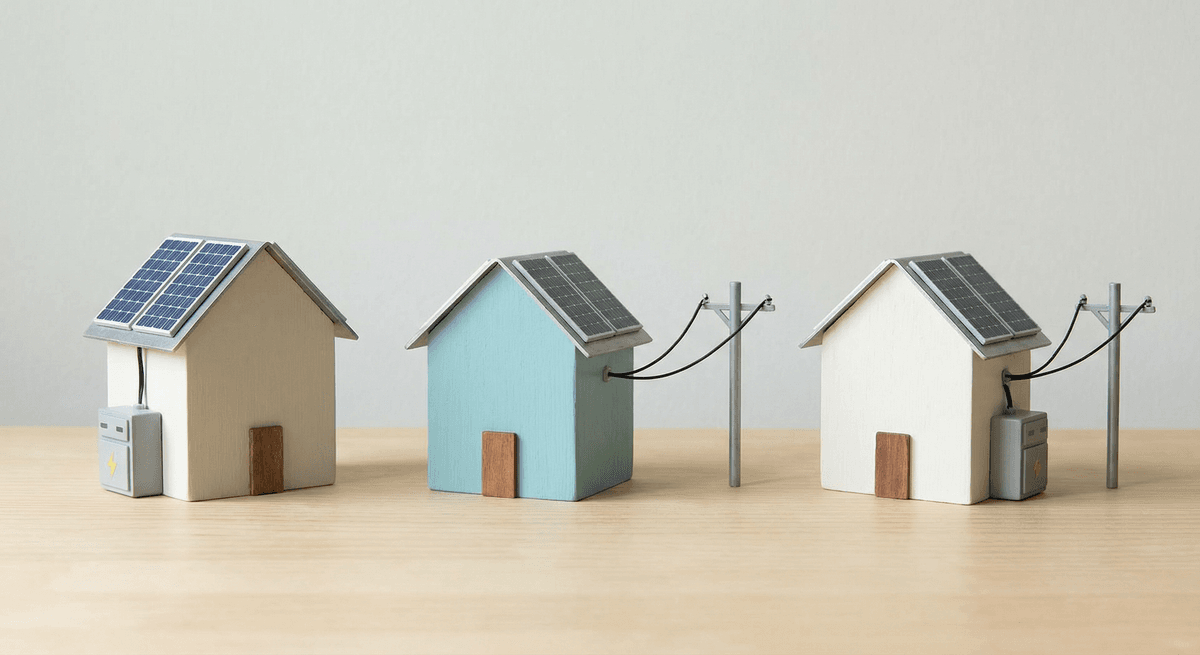
Off-Grid
- What it is: No connection to the utility. Solar charges batteries; loads run from the battery (and sometimes direct from solar). You need enough panel and battery to cover all use and days of autonomy.
- Pros: Independence, works where there is no grid (cabin, boat, RV, remote home).
- Cons: Higher cost per kWh (batteries, sizing for worst case); you must manage your own supply.
Use when: No grid, or you want full independence. WattSizing focuses on off-grid sizing.
Grid-Tied
- What it is: Solar feeds the grid (or your loads); no battery. Excess can be exported if allowed; at night you use grid power.
- Pros: Simpler and cheaper (no battery); can reduce bills and use net metering where available.
- Cons: No backup during grid outage; depends on grid rules and incentives.
Use when: Grid is available, you want lower bills, and you don’t need backup.
Hybrid
- What it is: Solar + battery + grid connection. Can store excess solar, use battery when grid is expensive or down, and sometimes export.
- Pros: Backup during outages; can use stored energy at peak times; flexible.
- Cons: More complex and costly than grid-tied; subject to grid and battery rules.
Use when: You want backup and/or time-of-use shifting while staying connected to the grid.
Summary
- Off-grid: No grid; size everything yourself (panels, battery, inverter, MPPT). Use WattSizing.
- Grid-tied: Grid only; no battery; maximize solar harvest and export.
- Hybrid: Grid + battery; backup and flexibility; sizing often done by installers with hybrid inverters.
Choose based on whether you have a grid, need backup, and what your budget and goals are.


