
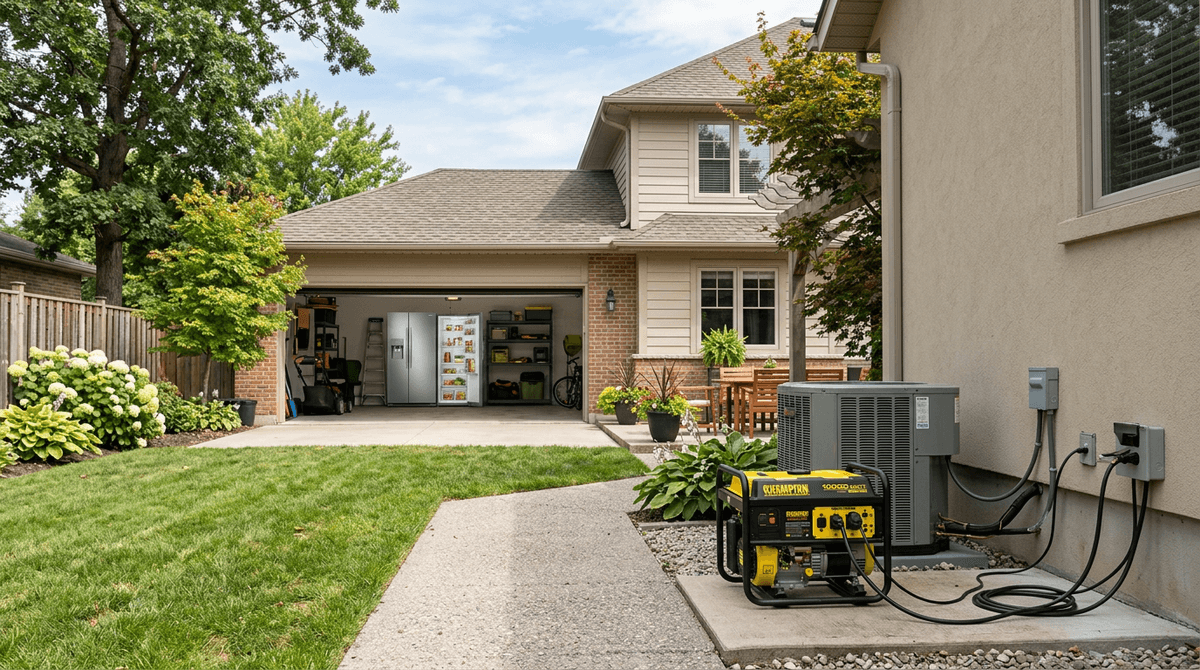
For a 1.5 ton AC and one full-size fridge, most households should target a 6,500 to 8,000 watt generator. That range usually covers compressor startup surge while keeping essential loads online.
To size from your exact appliance labels, use the WattSizing Calculator.
Quick Answer
A 6.5-8 kW generator is the common sweet spot for a 1.5 ton AC plus fridge backup setup.
Load Breakdown
Two separate compressors can start close together: one in the AC condenser and one in the refrigerator. Even if steady watts are modest, overlapping starts can trip undersized generators.
| Appliance | Typical Running Watts | Typical Starting Watts |
|---|---|---|
| 1.5 ton AC system | 1,400 - 2,800 W | 3,000 - 5,500 W |
| Refrigerator (18-22 cu ft) | 120 - 250 W | 600 - 1,200 W |
| Lights + router + misc essentials | 200 - 600 W | 200 - 600 W |
Combined running load often lands around 2,000 to 3,600 W before startup margin.
Recommended Generator Size by Scenario
- Strict essentials only: 6,000-6,500 W
- Normal comfort backup: 6,500-8,000 W
- Extra margin / additional kitchen loads: 8,500+ W
If your AC has a soft starter, your minimum viable size may be lower, but it is still wise to maintain surge margin.
Worked Examples
Example 1: Evening Cooling + Fridge + Essentials
- 1.5 ton AC running: 2,100 W
- Fridge running: 180 W
- Router, lights, fan: 350 W
- Total running: 2,630 W
With startup overhead for both compressors, a 7,000 W generator is a dependable fit.
Example 2: Add Small Kitchen Use
Same setup as above, plus periodic 900 W microwave use (managed). A 7,500 to 8,000 W generator gives better headroom and smoother operation.
Tips to Avoid Overloading
- Let the AC start before running high-watt kitchen appliances.
- Keep fridge and freezer doors closed to reduce compressor cycling.
- Use LED lighting to keep non-critical load low.
- Test startup behavior during a planned outage drill.
For appliance references, see How Many Watts Does a Refrigerator Use and How Many Watts Does a Central Air Conditioner Use.
FAQs
Can a 5,500 watt generator run a 1.5 ton AC and fridge?
It can in some low-load cases, but reliability is inconsistent when both compressors cycle. Most households are better served by 6.5 kW or higher.
Should I use an interlock or transfer switch?
Either can work when installed correctly. A transfer switch with prioritized circuits usually makes load control easier.
Does inverter AC change generator sizing?
Variable-speed/inverter AC units often reduce startup spikes, which can improve generator compatibility. Always verify with your unit's specs.
CTA
Want a precise answer for your exact AC and fridge model numbers? Run your scenario in the WattSizing Calculator and size with confidence.


