
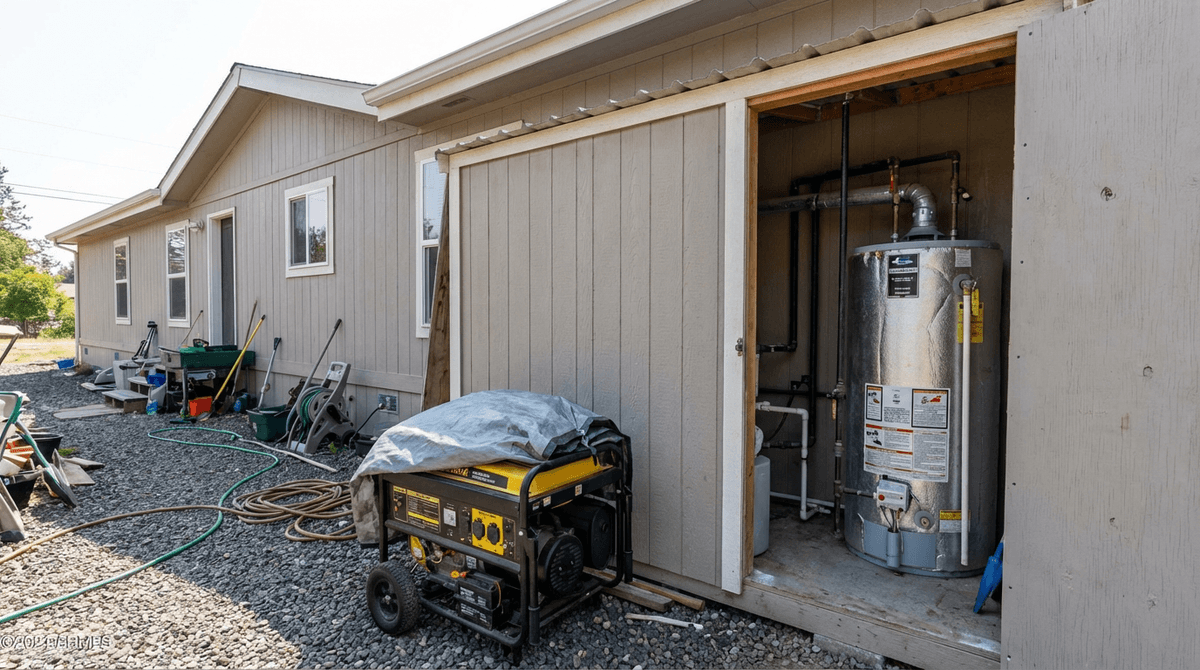
For most standard electric tank water heaters, a generator in the 5,000 to 8,000 watt range is typically needed if the heater is included as an active load. Whole-home electric tankless units often require very large generators beyond portable class.
For load-by-load planning, use the WattSizing Calculator.
Quick Answer
A standard 240V electric tank heater (often 4,500 W element) usually needs at least a 6,000 watt class generator with enough headroom for other essentials.
Whole-home electric tankless systems can need 12,000 to 30,000+ watts, which usually pushes homeowners toward standby systems or alternate outage heating strategies.
Why This Load Is So Demanding
Electric water heaters are mostly resistive loads. That means:
- Draw is high while heating.
- Startup surge is usually modest compared to compressor motors.
- Continuous watt demand can still consume a large share of generator capacity.
In many outage plans, hot water is handled by gas/propane alternatives so the generator can prioritize refrigeration, pumps, and heating controls.
For appliance-specific draw details, see How Many Watts Does a Water Heater Use.
Water Heater Generator Sizing Table
| Water Heater Type | Typical Running Watts | Practical Generator Target |
|---|---|---|
| Point-of-use 120V mini tank | 1200 - 2000 W | 2500 - 4000 W |
| Standard electric tank (single element active) | 3000 - 4500 W | 5000 - 7000 W |
| Large electric tank (high element rating) | 4500 - 5500 W | 6500 - 8500 W |
| Small electric tankless point-of-use | 3000 - 9000 W | 4500 - 12000 W |
| Whole-home electric tankless | 12000 - 36000+ W | 16000 - 45000+ W |
Real generator target depends on what else runs at the same time.
Calculation Example
Example backup plan:
- Standard electric tank element: 4,500 W
- Refrigerator + freezer + lights + internet: 1,300 W
- Furnace blower: 700 W
Step 1: Running total
4,500 + 1,300 + 700 = 6,500 W
Step 2: Startup consideration
Water heater surge is usually near running load, but fridge/furnace motors can spike.
Assume additional surge gap of 700 W.
Step 3: Startup-capable minimum
6,500 + 700 = 7,200 W
Step 4: Add 15% buffer
7,200 x 1.15 = 8,280 W
Practical choice: an 8,000 to 9,000 watt class generator if you truly need electric hot water during outage periods.
Practical Alternatives During Outages
- Temporarily disable electric heating element and prioritize critical circuits.
- Use gas/propane water heating where available.
- Schedule short water-heating windows instead of continuous heating demand.
- Consider hybrid plans with battery backup for smaller loads and generator for heavy loads.
FAQs
Can a 5,000 watt generator run an electric water heater?
It can run some smaller or lower-element systems, but it is usually tight once other household loads are included.
Are tankless electric water heaters practical on portable generators?
Most whole-home models are not practical on portable units because required power is very high.
Should I include water heating in my essential loads?
Only if hot water is mission-critical during outages. Many households treat it as optional and keep generator size smaller.
CTA
Need a realistic backup load plan? Use the WattSizing Calculator to model your heater, appliance loads, and safety margin before you buy a generator.


