
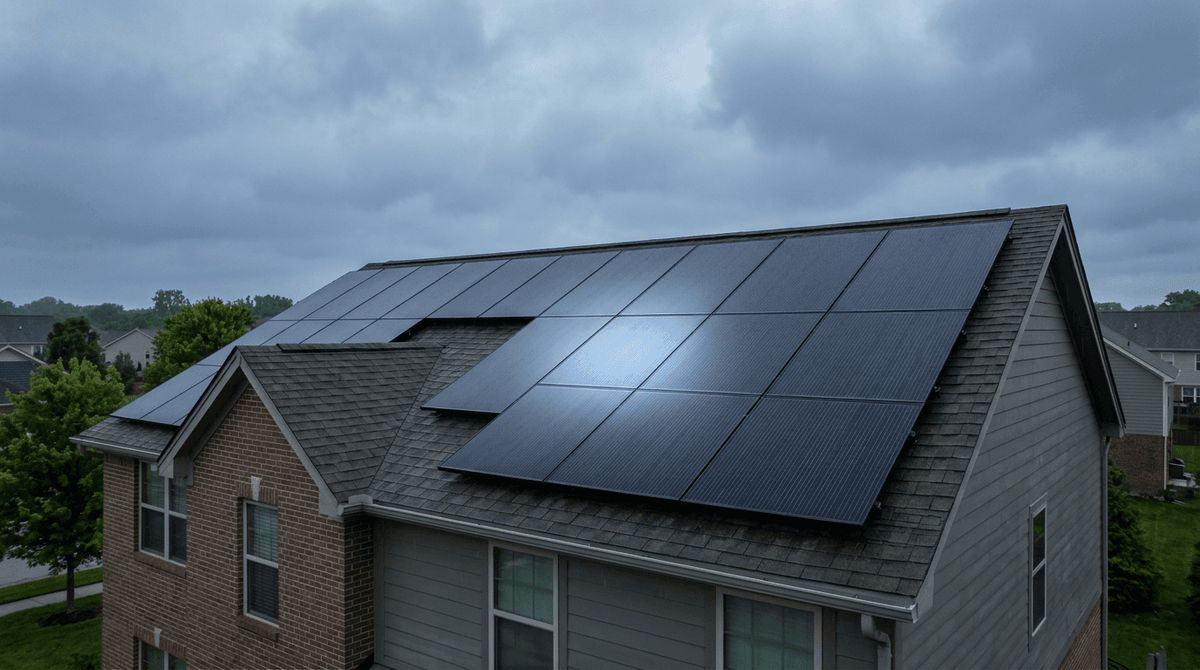
Solar panels still produce power on cloudy days—just less. In 2026, monocrystalline panels lead in low-light and diffuse-light performance, and bifacial designs can add a small boost when there’s reflected light. This guide covers which panels suit cloudy and low-light conditions and how to size your system so it delivers enough energy when the sun isn’t full.
For sizing basics, use peak sun hours (use a conservative or winter value for cloudy regions) and our calculator.
Why Cloudy and Low-Light Performance Matters
Under clouds, light is diffuse: it comes from the whole sky instead of a direct beam. Output can drop to roughly 10–25% of clear-sky production depending on cloud thickness. Panels that respond better to weak or diffuse light deliver more energy over the year in frequently cloudy areas and extend useful hours in the morning and evening. That affects how many panels you need and whether you hit your daily energy target.
What Makes a Panel Better in Low Light?
- Cell type: Monocrystalline (mono) generally outperforms polycrystalline in low light and has higher efficiency overall. In 2026, mono is the default for residential and off-grid. See solar panel efficiency 2026.
- Efficiency: Higher-efficiency panels (e.g. 22–24% mono) produce more watts per square foot in both full and dim light. In space-limited or cloudy sites, that means fewer panels for the same output.
- Temperature coefficient: Output drops as panels heat up. In hot, partly cloudy weather, a better (less negative) temperature coefficient helps. This is secondary to cell type and efficiency for “cloudy” choice.
- Bifacial: Panels that capture light on the back can gain a few percent in diffuse or reflected conditions (snow, light-colored roof, ground mount). The gain is modest but useful in northern or reflective environments.
Best Panel Types for Cloudy and Low-Light (2026)
Monocrystalline (mono): Best overall for cloudy and low-light. Higher efficiency and better spectral response in diffuse light than poly. Choose N-type or HJT mono if you want the highest performance and are willing to pay a premium; standard mono is already very good.
Bifacial mono: Same benefits as mono, plus extra energy from rear-side light. Best when the back of the panel sees reflected light (e.g. ground mount, white membrane roof). Sizing often uses a small production boost (e.g. 5–15% depending on install). See solar panel efficiency and types.
Polycrystalline (poly): Cheaper per watt but lower efficiency and typically worse low-light response than mono. In 2026, rarely the best choice for cloudy or space-limited sites unless budget is the only priority.
Thin film: Can have good performance in diffuse light and hot weather, but lower efficiency means more roof or ground area. Niche for large, unshaded commercial or specialty installs rather than typical home/off-grid.
How to Size for Cloudy Climates
- Use a low peak-sun-hours value: In cloudy regions, use worst month or a conservative annual value (e.g. 2.5–3.5 hours) so you don’t undersize. See peak sun hours explained and winter and low-sun sizing.
- Increase array size: For the same daily energy target, fewer sun hours mean more panel watts. Formula: Panel W ≈ (Daily Wh ÷ peak sun hours) ÷ 0.75. Halving sun hours doubles the panel wattage you need.
- Battery: Cloudy stretches mean more days with little solar. Plan for 1.5–3+ days of autonomy (or more) so the battery carries you through. See days of autonomy and how many batteries.
The WattSizing calculator lets you enter your location and daily use; use a conservative sun-hours value for cloudy areas to get a robust panel and battery size.
Practical Takeaways for 2026
- Prefer monocrystalline for any cloudy or low-light application; skip poly unless cost is the only factor.
- Consider bifacial for ground mount or reflective surfaces to gain a few percent in diffuse light.
- Size with conservative peak sun hours (e.g. worst month) and more battery autonomy so cloudy streaks don’t leave you short.
- Don’t over-optimize for “cloudy” panels: good mono plus proper sizing matters more than chasing the last percent of low-light spec.
For a full comparison of technologies, see solar panel efficiency mono vs poly 2026. For system sizing from daily use, see how many solar panels for off-grid.
Frequently Asked Questions
Do solar panels work on cloudy days?
Yes. Output is lower—often 10–25% of clear-sky production depending on cloud cover. Monocrystalline panels tend to perform better in diffuse light than polycrystalline. Sizing with conservative peak sun hours and adequate battery autonomy ensures you still meet your needs in cloudy weather.
What are the best solar panels for cloudy climates in 2026?
Monocrystalline panels are the best choice for cloudy climates: better low-light and diffuse-light response and higher efficiency than poly. Bifacial mono can add a small boost where there’s reflected light. Size the array using a conservative (e.g. winter or worst-month) peak sun hours value and plan for more days of battery autonomy. See solar panel efficiency 2026.
How much do solar panels produce in cloudy weather?
Roughly 10–25% of clear-sky production, depending on cloud type and thickness. Light overcast might be 20–25%; heavy clouds 10–15%. Production is not zero; it scales with available light. Use a low peak sun hours value when sizing so your system is designed for these conditions.
Should I get more panels if I live in a cloudy area?
Usually yes. Fewer peak sun hours mean you need more panel wattage for the same daily energy. Use a conservative sun-hours value (e.g. worst month) in the formula Panel W ≈ (Daily Wh ÷ sun hours) ÷ 0.75 and round up. Also plan for more battery capacity (days of autonomy) for stretches of cloudy weather. Use the WattSizing calculator with a low sun-hours input to get recommended panel and battery size.
Are bifacial panels worth it for cloudy conditions?
They can add 5–15% production when the back of the panel receives reflected light (e.g. ground mount, white roof). In cloudy, diffuse light, that gain is still present but modest. Bifacial is most valuable when you have both diffuse light and a reflective surface; for a typical roof in a cloudy climate, standard mono is usually sufficient unless you want to maximize every percent.
Size your array with peak sun hours and the WattSizing calculator, and choose mono (or bifacial mono where appropriate) for the best cloudy and low-light performance in 2026.


