
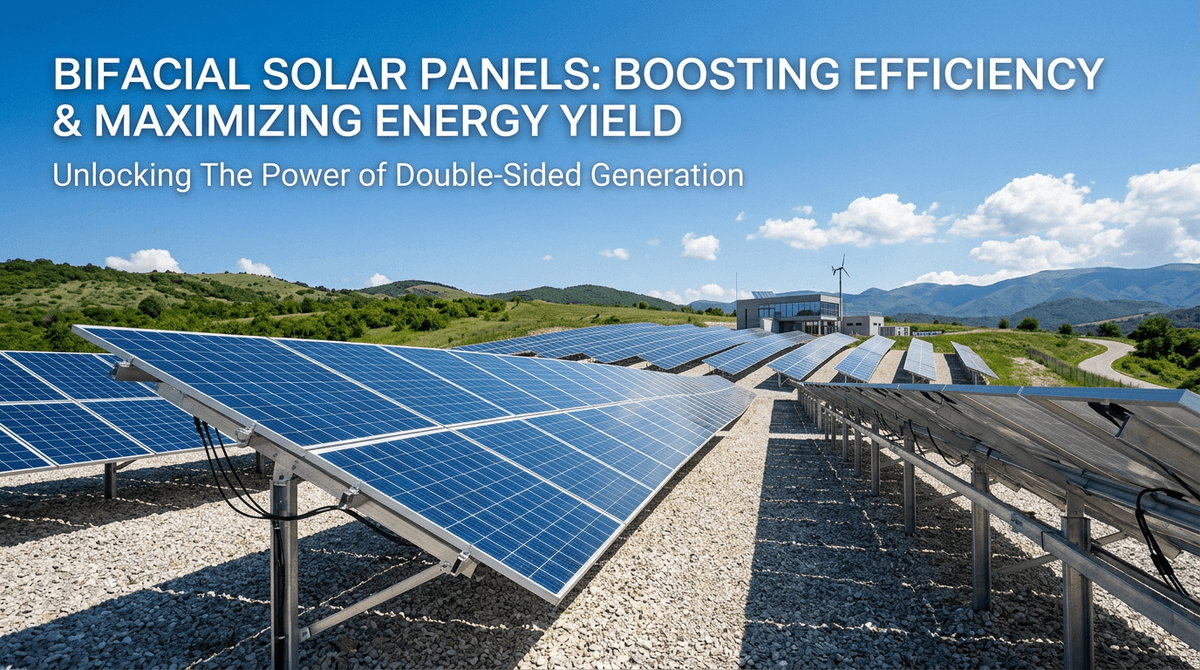
When designing an off-grid solar system, one of the most common questions we hear at WattSizing is: "Are bifacial solar panels worth the extra cost?" As solar technology advances rapidly in 2026, bifacial panels have moved from niche commercial applications to mainstream residential and off-grid setups.
But do they actually deliver on their promise of up to 30% more energy? In this comprehensive guide, we’ll break down exactly how bifacial solar panels work, their real-world performance, and whether they make financial sense for your next off-grid project.
If you're ready to size your system right now, head over to our Off-Grid Solar Calculator to see exactly how many panels you need based on your energy consumption.
What Are Bifacial Solar Panels?
Traditional solar panels (monofacial) only capture sunlight on their front-facing surface. The back is typically covered by an opaque backsheet (usually white or black).
Bifacial solar panels, on the other hand, are designed to capture sunlight from both the front and the back. They feature a transparent backsheet or dual-glass construction that allows reflected light (albedo) from the ground, roof, or surrounding environment to reach the rear solar cells.
How Do They Work?
The front side of a bifacial panel works exactly like a standard panel, absorbing direct sunlight. The magic happens on the back. When sunlight hits the ground beneath the panel, a portion of it reflects upward. The rear cells of the bifacial panel absorb this reflected light and convert it into additional electricity.
The amount of extra energy generated depends heavily on the albedo (reflectivity) of the surface below the panels.
| Surface Type | Albedo (Reflectivity) | Expected Bifacial Gain |
|---|---|---|
| Fresh Snow | 80% - 95% | 20% - 30% |
| White Concrete | 60% - 80% | 15% - 25% |
| Light Gravel | 20% - 30% | 8% - 12% |
| Green Grass | 15% - 25% | 5% - 10% |
| Dark Roof | 5% - 10% | 2% - 5% |
As you can see, installing bifacial panels over a dark asphalt roof won't yield much extra power, but placing them over snow or white gravel can provide a massive boost.
The Pros and Cons of Bifacial Solar Panels
Before deciding if bifacial panels are right for your off-grid setup, it's essential to weigh the advantages and disadvantages.
The Advantages
- Higher Energy Yield: The primary benefit is more power. Depending on the installation environment, you can expect a 5% to 30% increase in total energy production compared to monofacial panels of the same wattage.
- Better Durability: Most bifacial panels use a dual-glass design (glass on the front and back) rather than a polymer backsheet. This makes them more resistant to micro-cracks, moisture ingress, and UV degradation. They often come with longer warranties (up to 30 years).
- Lower Degradation Rates: Dual-glass bifacial panels typically degrade slower than standard panels, meaning they will produce more power over their 25-30 year lifespan.
- Aesthetics: Many people find the transparent, frameless look of dual-glass bifacial panels visually appealing, especially for pergolas or solar awnings.
The Disadvantages
- Higher Upfront Cost: Bifacial panels are generally 10% to 20% more expensive than standard panels per watt (based on the front-side rating).
- Installation Constraints: To get the rear-side benefit, the panels cannot be mounted flush against a roof. They need clearance (usually at least 2-3 feet) to allow light to bounce underneath. This makes them less ideal for standard residential roof mounts.
- Heavier Weight: Dual-glass panels are significantly heavier than standard panels. This requires stronger mounting hardware and can make installation more difficult.
- Unpredictable Yield: Unlike the front side, which has a predictable output based on sun hours, the rear-side gain is highly variable and depends on ground cover, shading, and seasonal changes.
Are Bifacial Panels Worth the Extra Cost in 2026?
The short answer: It depends entirely on how and where you mount them.
When Bifacial Panels Are 100% Worth It
- Ground Mounts: If you are installing a ground-mounted solar array, bifacial panels are almost always worth the investment. Ground mounts naturally provide the clearance needed for rear-side reflection. If you put down light-colored gravel or crushed limestone beneath the array, the extra energy generated will easily pay for the premium price of the panels.
- Solar Pergolas and Awnings: If you are building a solar patio cover, pergola, or awning, bifacial panels are the perfect choice. They let some dappled light through (which looks great) and capture the light bouncing off your patio floor.
- Snowy Climates: If you live in an area that gets significant winter snow, bifacial panels are a game-changer. Snow is highly reflective (high albedo). Plus, the rear-side generation creates slight heat, which helps melt snow off the front of the panel faster than traditional panels.
- Space-Constrained Areas: If you only have room for a few panels but need maximum output, spending extra on high-efficiency bifacial panels makes sense to squeeze every last watt out of your available footprint.
When Bifacial Panels Are NOT Worth It
- Flush Roof Mounts: If you are mounting panels directly to a sloped asphalt shingle roof with only a few inches of clearance, do not buy bifacial panels. The back side will receive almost zero light, meaning you paid a premium for a feature you cannot use. Stick to standard monofacial panels.
- Mobile Applications (RVs and Vans): While some people use them on RVs, they are usually mounted flat on the roof, negating the bifacial benefit. Furthermore, the extra weight of dual-glass panels is a major drawback for vehicles. Unless you are building a custom tilt-mount system that extends over the side of the vehicle, standard flexible or rigid panels are a better choice. (Read our guide on Flexible vs Rigid Solar Panels for more info).
How to Maximize Bifacial Panel Efficiency
If you've decided to invest in bifacial technology, follow these best practices to ensure you get the maximum return on your investment:
1. Optimize the Ground Cover (Albedo)
The surface directly beneath and in front of your solar array dictates your bifacial gain. If you have a ground mount over dark soil or grass, consider laying down white crushed stone, light-colored gravel, or even a specialized reflective ground cover.
2. Increase the Mounting Height
The higher the panels are off the ground, the more uniform the reflected light will be on the rear side. A minimum clearance of 1 meter (about 3.3 feet) is recommended for optimal rear-side generation. If they are too low, the panels will cast a dark shadow on the ground, leaving no light to reflect upward.
3. Avoid Rear Shading
Pay attention to the mounting rails and hardware. If you use thick, bulky rails that run directly across the back of the solar cells, you will block the reflected light. Look for mounting systems specifically designed for bifacial panels that minimize rear shading.
4. Optimize the Tilt Angle
The optimal tilt angle for a bifacial panel might be slightly different than a standard panel. Sometimes, a slightly steeper angle can capture more reflected light from the ground, especially in winter. Check out our Solar Panel Angle and Tilt Guide for detailed calculations.
Sizing Your Charge Controller for Bifacial Panels
One critical mistake DIYers make with bifacial panels is undersizing their solar charge controller.
When you buy a 400W bifacial panel, that 400W rating is for the front side only under Standard Test Conditions (STC). If you get a 20% bifacial gain from the rear, that panel is now producing 480W.
If you design your system assuming a maximum output of 400W per panel, your charge controller might clip the excess power (wasting it) or, worse, overheat and fail.
Rule of Thumb: Always size your charge controller, wiring, and fuses assuming a 20% to 30% increase over the panel's STC rating when using bifacial panels in an optimized setup. Use our WattSizing Calculator to ensure your components are perfectly matched.
Frequently Asked Questions (FAQ)
Do bifacial solar panels work at night?
No. Like all solar panels, bifacial panels require sunlight (or strong artificial light) to generate electricity. They do not generate power from moonlight.
Are bifacial panels harder to install?
They can be. Because most use a dual-glass design, they are heavier than standard panels. Additionally, you must be careful not to block the rear side with thick mounting rails, which requires specialized racking systems.
Can I mix bifacial and monofacial panels in the same system?
Yes, but it requires careful system design. You generally should not put them in the same series string, as the varying current outputs can cause mismatch losses. It's best to put them on separate charge controllers or use microinverters. Read more in our guide on Mixing Different Solar Panels.
How much more do they cost?
In 2026, the price gap has narrowed significantly. Expect to pay about $0.05 to $0.15 more per watt for a bifacial panel compared to a standard panel of similar quality.
Final Verdict
Bifacial solar panels represent a fantastic leap forward in solar technology, offering better durability and higher energy yields. In 2026, the price premium is small enough that they are an excellent choice for ground mounts, pergolas, and snowy environments.
However, if you are installing a standard flush roof mount or outfitting an RV, save your money and stick to high-quality monofacial panels.
Ready to start planning your off-grid system? Head over to the WattSizing Calculator to determine exactly how much solar power and battery storage you need for your specific lifestyle.


